Why Is My Back Arched When I Lay Down?

An arched lower back while lying down is a common phenomenon that many individuals experience when attempting to rest on a flat surface. This visible gap between the lumbar spine and the mattress can range from a slight curve to a significant space that allows a hand to slide through easily. While the human spine possesses natural curvatures designed to absorb shock and support weight, an exaggerated arch in a supine position often indicates underlying muscular imbalances or postural habits developed over time.
Understanding the mechanics of the lumbar spine and the pelvis is essential for identifying why this occurs. When the body is horizontal, the spine should ideally settle into a neutral alignment. If the back remains arched, it suggests that certain tissues are pulling the spine out of its natural resting state. This article explores the anatomical causes, lifestyle factors, and practical solutions for managing this condition.
Anatomical Causes of Lumbar Arching
The primary driver of an arched back when lying down is a condition known as anterior pelvic tilt. This occurs when the front of the pelvis rotates forward and downward, forcing the lower back into an exaggerated curve, or hyperlordosis. Several muscle groups play a critical role in this alignment.
- Tight Hip Flexors
The hip flexors, specifically the psoas major and iliacus, connect the lower spine and pelvis to the upper thigh bone. In modern environments characterized by prolonged sitting, these muscles often remain in a shortened state. When an individual lies down flat, the legs are extended, which stretches the tight hip flexors. Because these muscles are shortened, they pull on the lumbar vertebrae, dragging the lower back upward and away from the mattress.
- Overactive Spinal Extensors
The muscles running along the back of the spine, known as the erector spinae, are responsible for keeping the body upright. If these muscles are chronically overactive or "tight," they hold the lumbar spine in a state of extension even when the body is meant to be relaxed. This tension prevents the vertebrae from settling flat against a surface.
- Weak Core Musculature
The abdominal muscles act as a counterbalance to the lower back muscles. Specifically, the rectus abdominis and the internal/external obliques help pull the front of the pelvis upward into a neutral position. When the core is weak, it cannot resist the forward pull of the hip flexors or the backward pull of the spinal extensors, resulting in a persistent arch.
Lifestyle Factors Influencing Spinal Alignment
Beyond pure anatomy, daily habits and environmental factors dictate how the spine behaves when it finally reaches a resting position.
- Sedentary Habits
Spending eight to ten hours a day sitting at a desk or driving leads to "adaptive shortening" of the muscles. The body adapts to the positions it occupies most frequently. If the hips are constantly flexed while sitting, the nervous system begins to treat that shortened state as the new "normal," making it difficult for the muscles to lengthen fully when lying down.
- Footwear and Gait
The type of shoes worn during the day can influence pelvic positioning. High heels, for example, shift the body’s center of gravity forward. To prevent falling, the lower back compensates by arching. Over time, this shifts the structural baseline of the spine.
- Exercise Imbalances
Weightlifting routines that focus heavily on the "show muscles" of the back and legs without equal attention to deep core stabilization can exacerbate an arched lower back. For instance, heavy squats or lunges performed with poor form can tighten the lower back and hip flexors significantly. Using supportive gear like a waist trimmer or back support from Fivali during exercise can help maintain awareness of spinal positioning, but the underlying muscle tension must still be addressed.

The Role of the Mattress and Sleeping Surface
The surface upon which one lies plays a pivotal role in whether the back arches or flattens. A mattress that is too firm may not allow the hips and shoulders to sink in sufficiently, leaving the lumbar area suspended in mid-air. Conversely, a mattress that is too soft may cause the heavier midsection to sink too far, creating a "hammock" effect that can also strain the lower back.
- Mattress Firmness Levels
-
Extra Firm: Provides high resistance, which can be problematic for those with existing anterior pelvic tilt, as it offers no contouring for the natural curves of the body.
-
Medium-Firm: Generally considered the most supportive for spinal alignment, as it balances the need for support with enough "give" to accommodate the hips.
-
Soft/Plush: May lack the structural integrity to keep the pelvis from tilting further forward.
Physical Indicators of Hyperlordosis
Recognizing whether an arched back is a temporary tension or a chronic postural misalignment involves looking for specific physical signs.
- The Hand Test
A simple way to assess the degree of the arch is the hand test. While lying on a flat surface with legs extended, one should attempt to slide a hand under the small of the back. If there is enough space for the entire hand and even part of the forearm to pass through without resistance, it indicates a significant arch.
- Standing Posture
An arched back while lying down is usually mirrored in a standing posture. If the buttocks appear pushed back and the abdomen protrudes forward (even in lean individuals), this is a hallmark sign of anterior pelvic tilt.
How to Fix an Arched Lower Back
Addressing this issue requires a multi-faceted approach focusing on lengthening tight tissues and strengthening the muscles responsible for pelvic stabilization. Learning how to fix an arched lower back is a process of neuromuscular re-education.
- Stretching the Hip Flexors
To release the tension pulling the spine forward, targeted stretching is required. The half-kneeling hip flexor stretch is particularly effective. By kneeling on one knee and tucking the pelvis under, the psoas is lengthened. Consistency is key, as these muscles are notoriously stubborn due to daily sitting habits.
- Strengthening the Glutes and Hamstrings
The glutes and hamstrings are the "anchor" muscles that pull the back of the pelvis down. Exercises such as glute bridges and deadbugs are essential. During a glute bridge, focusing on a "posterior pelvic tuck" (flattening the back against the floor before lifting) ensures the correct muscles are engaged.
- Developing Deep Core Stability
The transverse abdominis, the deepest layer of the core, acts like a natural corset. Training this muscle involves diaphragmatic breathing and movements that require the lower back to stay glued to the floor, such as the "hollow body hold."
Practical Adjustments for Immediate Relief
While long-term corrective exercises are necessary, immediate comfort can be achieved through small adjustments to the sleeping or resting environment.
- Utilizing Pillow Support
Placing a pillow under the knees while lying on the back is one of the most effective ways to flatten the lumbar spine. This position puts the hip flexors in a "slacked" or shortened state, removing the tension they exert on the lower back. This allows the spine to drop naturally toward the mattress.
- Proper Use of Supports
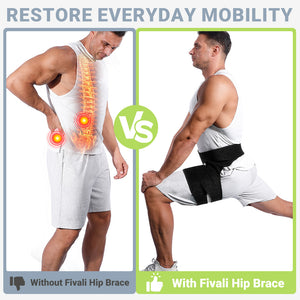
In some cases, using a lumbar roll or a specialized support belt can provide tactile feedback to the body. For example, wearing a light compression support from Fivali during the day can help remind the wearer to avoid over-arching while standing or walking, which may reduce the tension felt when it is time to lie down.
Neuromuscular Re-education and Awareness
The brain controls muscle tone. Sometimes, a back remains arched simply because the body has "forgotten" how to relax those specific muscles.
- Pelvic Tilts
Performing pelvic tilts while lying down can help re-establish the connection between the brain and the pelvic floor. By consciously pressing the lower back into the floor and then releasing it, an individual can learn to identify the "neutral" position where the spine is neither over-arched nor completely flat.
- Mindful Movement
Incorporating movement patterns like yoga or Pilates can be beneficial. These disciplines emphasize the "tucking" of the tailbone and the engagement of the lower abdominals, which directly counters the tendency to arch the back.
Potential Complications of Chronic Arching
Leaving a chronic lumbar arch unaddressed can lead to various secondary issues. When the spine is constantly in extension, the facet joints (the connections between the vertebrae) are compressed.
-
Localized Discomfort: Constant pressure on the posterior elements of the spine can lead to dull, aching sensations.
-
Reduced Mobility: Tight hip flexors and a rigid lower back limit the range of motion in the hips and torso.
-
Compensatory Issues: The body is a kinetic chain. An issue in the lower back can eventually lead to neck tension or knee discomfort as the body tries to redistribute its weight.
Summary of Corrective Strategies
To effectively manage a lumbar arch while lying down, a combination of environmental and physical changes is most effective.
| Focus Area | Action Step |
| Muscular | Stretch hip flexors and strengthen glutes/core. |
| Positional | Place a bolster or pillow under the knees. |
| Habitual | Reduce prolonged sitting and practice pelvic tilts. |
| Equipment | Ensure mattress firmness is appropriate and use supports like Fivali for activity. |
An arched lower back when lying down is rarely a permanent structural defect but rather a functional adaptation to lifestyle and movement patterns. By addressing the imbalance between the front and back of the body, it is possible to achieve a neutral spine and more restorative rest. Consistent effort in stretching, strengthening, and mindful positioning provides the foundation for long-term spinal health.
-
Posted in
Back pain causes, Back pain solutions, Brace