Should an ankle brace be tight or loose?
As we gear up for Memorial Day weekend—the unofficial kickoff to summer—many of us are pulling our hiking boots, running shoes, and sports gear out of the closet, ready to hit the trails and courts. But if you are recovering from a previous injury or trying to prevent a new one, you might be staring at your support gear with one big question: Should an ankle brace be tight or loose?
It is a common dilemma. You know you need support, but you also want to be comfortable enough to actually enjoy your long weekend activities. If you guess wrong, you might end up with throbbing feet or a brace that slips down to your heel halfway through a hike.
Understanding the functional meaning of "tight" versus "loose" is the secret to getting the most out of your gear. Let’s dive into what the perfect fit actually feels like and how you can achieve it every single time.

The "Goldilocks Zone": What Does "Snug" Actually Mean?
If you read the instructions on most packaging, you will almost always see the phrase: "snug but not too tight." But what does "snug" actually mean in a functional sense?
When professionals talk about a snug fit, they are referring to the "Goldilocks Zone." In this ideal state, the material provides enough firm compression to stabilize your joint, limit excessive side-to-side rolling, and boost your body’s spatial awareness (called proprioception). However, it stops short of pinching your skin, restricting your natural range of motion, or acting like a tourniquet.
Think of it like a firm handshake: it should feel secure, supportive, and confidence-inspiring, but it shouldn't crush your fingers.
Objective Signs Your Fit is Too Tight
Over-tightening is one of the most common mistakes people make. It usually stems from the logical, but incorrect, assumption that tighter equals more support. Unfortunately, cranking down the straps or laces can lead to nerve compression and impaired circulation.
If you experience any of the following objective signs, you need to loosen up immediately:
- Numbness or Tingling: If your foot, heel, or toes feel like they are falling asleep or buzzing with "pins and needles," a nerve is likely being pinched.
- Cold Toes: Check the temperature of your toes. If they feel noticeably colder than the toes on your other foot, blood flow is being restricted.
- Color Changes: A healthy foot should maintain its normal skin tone. If your toes start looking unusually pale, bluish, or purple, the tension is too high.
- Throbbing Pain: While an injured joint might ache, a rhythmic, pulsing throb radiating from the edges of the fabric means your circulation is fighting against the material.
- Deep Indentations: When you take the support off, faint fabric marks are normal. Deep, red grooves that take a long time to fade indicate excessive pressure.

Objective Signs Your Fit is Too Loose
On the flip side, being overly cautious and wearing your gear too loosely defeats the purpose of wearing it entirely. A loose fit fails to engage your joint mechanics.
Watch out for these signs of under-tightening:
- Excessive Internal Movement: If you can easily shift your foot around inside the material, or if your joint feels just as unstable as it does bare, it is not snug enough.
- Slippage: The fabric should stay anchored in place. If it slips down toward your heel as you walk, it needs to be tightened.
- Friction and Chafing: Counterintuitively, loose gear causes more blisters than tight gear. When material constantly rubs against your skin with every step, it causes irritation.
The "Finger Test" and Practical Fit Checks
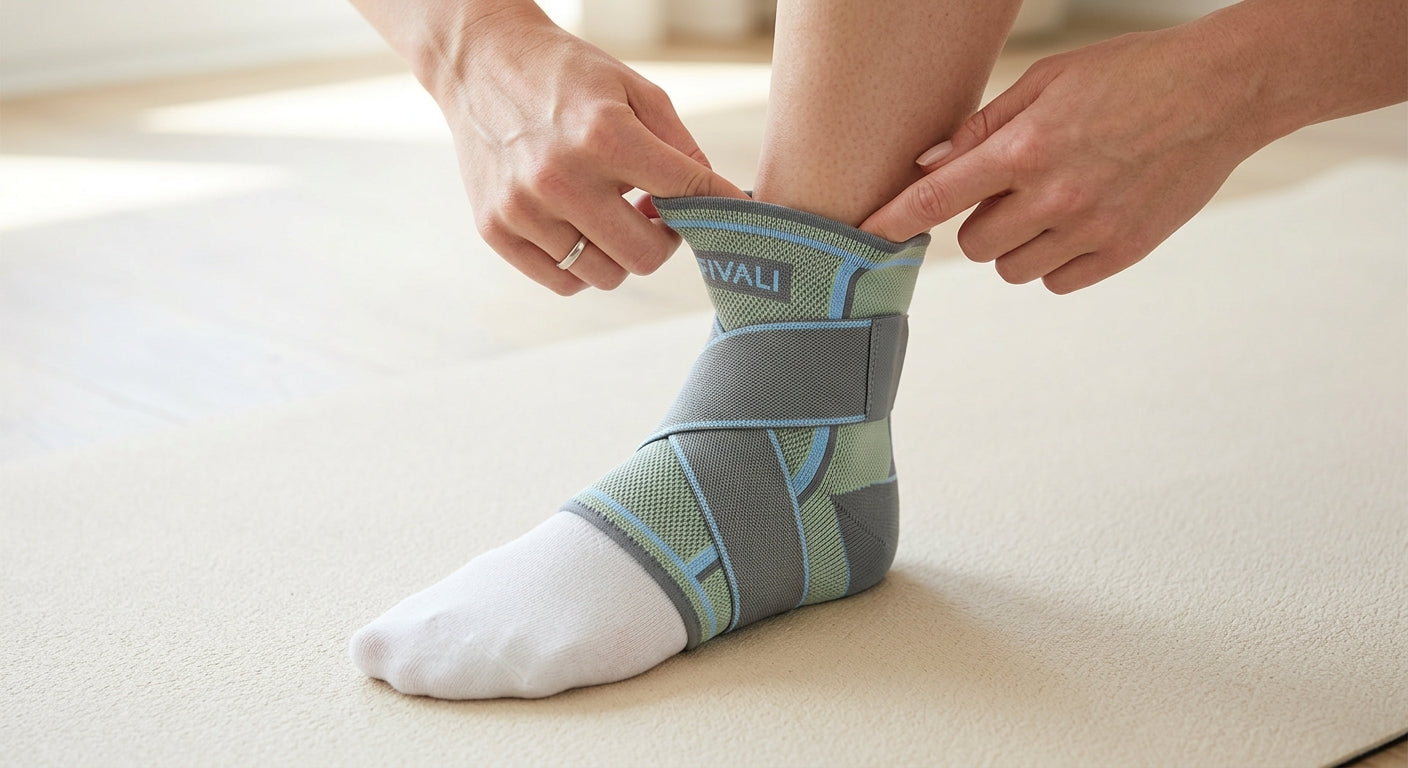
Instead of relying on guesswork when figuring out how to put on an ankle brace, you can use a tactile method known as the "Finger Test."
Once you have secured all straps or laces, slide your index finger under the top edge of the material, right above your ankle bone.
- Too Tight: If you cannot get your finger under the edge, or if it takes significant force to wedge it in, loosen the tension.
- Too Loose: If you can easily slide two or three fingers under the edge with plenty of wiggle room, it is time to tighten things up.
- Just Right: Your single finger should slide under the edge with a bit of resistance, feeling firm pressure against your skin without pain.
Dynamic Fitting: Adapting to Swelling and Activity
Here is an "aha moment" that surprises many beginners: your ideal tension is not a set-it-and-forget-it number. It changes throughout the day based on two massive factors: swelling and activity level.
1. Managing Swelling
If you are recovering from a recent sprain, your ankle will likely swell throughout the day. A fit that felt perfect at 8:00 AM might become dangerously tight by 4:00 PM. Get into the habit of actively monitoring your feet. If you notice signs of impaired circulation in the afternoon, stop and readjust. Conversely, as swelling goes down after icing or elevating your foot, you will need to tighten up to maintain proper compression.
2. Adjusting for Activity Level
The physical demands of your day dictate how much tension you need. If you are sitting at a desk or lounging on the couch, you can afford a slightly looser, more relaxed fit. However, if you are heading out for a Memorial Day weekend hike, stepping onto the tennis court, or looking into youth football ankle support for your child's first summer practice, the tension needs to be dialed up slightly to handle the high-impact, side-to-side movements of active sports.

Frequently Asked Questions (FAQ)
Should I wear it over or under my socks?
In almost all cases, you should wear your support over a thin, moisture-wicking sock. A sock provides a comfortable barrier that prevents chafing, absorbs sweat, and reduces odor. Avoid thick, bulky winter socks, as these can make achieving the correct tension nearly impossible.
Does learning how to wear ankle support correctly mean I can skip my physical therapy?
No! While proper compression and stability are vital tools in your recovery arsenal, they do not replace the need for active strengthening and stretching exercises recommended by a professional.
Should you sleep with an ankle brace on?
Generally, it is not recommended to sleep with supportive gear tightly fastened unless specifically directed by a healthcare provider. While you sleep, you aren't putting weight on the joint, so heavy structural support isn't necessary, and maintaining tight compression overnight can increase the risk of restricting circulation.
The Foundation of Perfect Fit: Starting with the Right Size
No amount of adjusting, lacing, or strapping will fix a product that is simply the wrong size for your body. If you buy a size too large, you will constantly overtighten it to compensate, leading to bunching fabric and pressure points. If you buy a size too small, it will restrict your circulation even on its loosest setting.
Achieving the perfect balance between tight and loose relies heavily on checking comprehensive sizing and fit guides before you make a decision. Always measure your foot and ankle exactly as the manufacturer recommends—usually around the circumference of your heel and instep—rather than just guessing based on your shoe size.
When you are ready to explore options tailored for everyday comfort and athletic performance, taking a few minutes to browse high-quality ankle braces and their accompanying sizing charts is the best first step toward an active, pain-free season.