The Ultimate Athlete's Guide to Ankle Braces for Basketball, Soccer, and Beyond
If you’re an athlete, you’ve faced the dilemma. You need ankle support that’s strong enough to prevent the all-too-common sprain, but flexible enough that it doesn’t kill your agility. It’s a constant trade-off between protection and performance. Do you choose the rigid brace that makes you feel secure but slow, or go with minimal support and risk sidelining yourself with an injury?
What if you didn’t have to choose? Finding a single, versatile solution that adapts to the unique demands of your sport—whether it’s the explosive vertical jumps in basketball or the rapid, lateral cuts in soccer—is the key to unlocking your full potential. This guide will walk you through the biomechanics of ankle stress in different sports and show you how to choose a support system that lets you engage in any activity with total confidence.
Why Your Sport Dictates Your Support: The Biomechanics of Ankle Stress
Not all athletic movements are created equal, and neither is the stress they place on your ankles. A generic brace often fails because it’s designed for a general purpose, not the specific forces you generate on the court or the field. Understanding these differences is the first step in making a smarter choice.
The Vertical War: Landing Shocks in Basketball
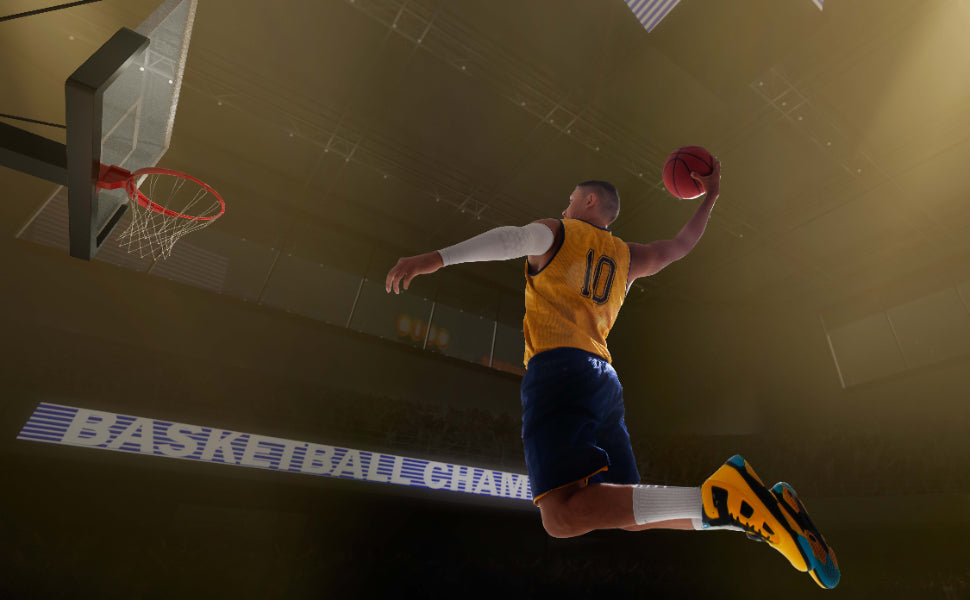
Basketball is a game of explosive, vertical power. Every jump shot, rebound, and layup puts immense strain on your ankles. The real danger, however, is in the landing. Studies on basketball biomechanics show that players are subjected to massive peak vertical ground reaction forces. This is why ankle injuries account for up to 42% of all injuries in the sport, leading to significant missed playing time.
The primary risks in basketball include:
- High-Impact Landings: Absorbing the shock of landing from a jump.
- Sudden Stops & Pivots: Abrupt changes in momentum that stress the ankle joint.
- Lateral Cuts: Quick, sharp movements to evade defenders.
For these reasons, the right ankle support for basketball must provide exceptional stability against these vertical and rotational forces without completely locking the joint.
The Lateral Battlefield: Agility and Sprints in Soccer
Soccer, in contrast, is a game of constant, fluid motion across a horizontal plane. The biomechanics involve larger ranges of ankle plantarflexion (pointing your toes) and rapid, multidirectional sprints. While the impact from jumping for a header is a factor, the more persistent threat comes from cutting, tackling, and kicking.
It’s no surprise that ankle sprains are one of the most common injuries, making up around 17% of all injuries in soccer. The key risks here are:
- Rapid Direction Changes: Sprinting and then cutting sharply to change direction.
- Uneven Surfaces: Playing on natural grass can lead to unexpected twists.
- Kicking Mechanics: The follow-through motion of a powerful kick puts unique rotational stress on the supporting ankle.
Athletes have long debated playing soccer with an ankle brace, fearing it will limit their touch on the ball. This is why a successful soccer ankle brace must offer flexible, adaptive support that moves with the player.
Engineered for Every Move: Fivali’s All-Round Protection
Understanding these distinct biomechanical demands is exactly why Fivali developed its ‘All-Round Protection’ philosophy. Instead of creating a rigid, one-note brace, we engineer solutions that provide both stability and flexibility, adapting to the athlete's specific movements.
Our design directly counters the forces unique to each sport:
- For Basketball's Vertical Impact: Our braces incorporate stabilizing elements that help absorb landing shock and secure the joint during hard pivots, providing the confidence needed to drive to the hoop.
- For Soccer's Lateral Agility: We use materials that offer robust support during side-to-side movements while allowing the natural range of motion required for dribbling and striking the ball.
This means you get targeted stability where you need it most without sacrificing the mobility that defines your game. It’s the end of the trade-off. With the right compression ankle brace, you can protect yourself without compromising performance.
More Than a Game: Support for Your Active Lifestyle
The need for adaptive ankle support doesn't end when the game is over. The same principles of versatile protection apply to a wide range of activities, whether you're a runner, a hiker, or a climber.
The confidence to push your limits comes from knowing you’re protected. Fivali’s All-Round Protection translates seamlessly from the court to the trail, offering support for:
- Running: A lightweight design that helps prevent twists on uneven pavement.
- Hiking: The stability to navigate rocky terrain and steep inclines with less risk of a sprain.
- Climbing: Flexible support that doesn’t interfere with foot placement and control.
By choosing a single, high-quality support system, you’re investing in your ability to pursue every passion confidently. If you're wondering how to pick the right brace for these activities, our guide on compression ankle braces for running and hiking can help you decide.

Play Without Hesitation: The Psychological Edge of True Support
Let's be honest—the biggest challenge after an ankle injury isn't physical. It's the mental hesitation. The fear of planting your foot too hard, cutting too sharply, or landing awkwardly can hold you back long after the swelling has gone down.
Research shows that a history of ankle injury increases the risk of it happening again by nearly five times. That statistic can live in the back of your mind, causing you to play tentatively.
This is where the right support becomes more than just a piece of gear; it becomes a psychological advantage. Feeling secure and stable allows you to trust your body again. It empowers you to move with the explosive power and agility you had before, knowing you have a reliable defense system in place. Fivali’s Ankle Stabilizer for Sprained Ankle Recovery is designed not just to aid physical healing but to restore the confidence you need to get back in the game completely.
Your Questions, Answered
Making a decision about your health and performance gear is important. Here are a few common questions we hear from athletes in your position.
Why do I need different ankle support for basketball than for soccer?
Basketball involves high-impact vertical landings that create massive shock forces, requiring stability against vertical and rotational stress. Soccer is about horizontal agility, with rapid sprints and lateral cuts. An effective brace must adapt to these distinct biomechanical demands to offer targeted protection without hindering sport-specific movements.
What should I look for in an ankle brace for basketball?
For basketball, you need a brace that provides exceptional stability to handle the high-impact forces of jumping and landing. It should help absorb shock and secure the joint during sudden stops and pivots, all while avoiding completely locking the ankle, so you can maintain agility on the court.
Will wearing a brace for soccer affect my agility or touch on the ball?
A common concern for soccer players is that a brace will feel bulky or restrictive. However, a modern brace designed for agility sports should offer flexible, adaptive support. It needs to be strong enough to protect against sprains during rapid direction changes but allow the natural range of motion required for dribbling, kicking, and sprinting.
Can I use the same ankle brace for injury prevention and recovery?
Yes, a high-quality, versatile ankle brace is beneficial for both. For prevention, it offers proactive support during high-stress activities to reduce the risk of a sprain. For recovery, it provides the stability needed to protect the healing joint, helping you return to your sport safely and with greater confidence.
How does an ankle brace help with the mental hesitation after an injury?
After an ankle injury, fear of re-injury can cause athletes to play tentatively. Wearing a reliable ankle brace provides a sense of security and stability, which acts as a psychological advantage. This restored confidence allows you to trust your body again and move with the power and agility you had before the injury.
Don't Compromise. Conquer.
Your passion for sports and an active life shouldn't be limited by fear of injury or bulky, restrictive gear. The old choice between stability and agility is obsolete. Modern athletic support, like Fivali's All-Round Protection, is engineered to give you both.
By understanding the specific biomechanical needs of your sport and choosing a brace that intelligently adapts to your movements, you can protect your ankles, boost your confidence, and unlock a new level of performance.