End Sciatica Pain: Your Expert Guide to Choosing the Best Back Brace for Lasting Relief

Finding the right back brace for sciatica can feel overwhelming. You're dealing with debilitating pain that shoots down your leg, and the market is flooded with options that all promise relief. But how do you cut through the noise and find a solution that actually works? How do you know which features provide genuine nerve decompression versus just general support?
You're not just looking for a product; you're looking for a partner in your recovery—something that helps you get back to your life. This guide is designed to give you that clarity. We'll break down the science of how a proper brace works for sciatica, what non-negotiable features to look for, and how to choose the right one for your specific needs. Because making an informed decision is the first step toward lasting relief.
Understanding Sciatica: It’s More Than Just Back Pain
Before choosing a solution, it helps to understand the problem. Sciatica isn't a diagnosis itself but a symptom of an underlying issue where the sciatic nerve gets compressed or irritated. With a lifetime prevalence affecting up to 40% of the population, it's an incredibly common condition.
This nerve compression can stem from several sources, and knowing the potential cause helps in selecting the right kind of support. While you should always consult a medical professional for a diagnosis, common culprits include:
- Herniated or Bulging Discs: The soft inner material of a spinal disc pushes out and presses on the nerve root.
- Spinal Stenosis: A narrowing of the spinal canal that puts pressure on the nerves.
- Piriformis Syndrome: The piriformis muscle in the buttocks spasms and irritates the nearby sciatic nerve.
- Poor Posture: Chronic misalignment, like having an arched back, can lead to cumulative stress on your lower back and discs.
Understanding what causes sciatica pain is crucial because the goal of a brace is to alleviate the specific mechanical stress causing the nerve irritation.
The Biomechanics of Relief: How a Brace Actually Helps Sciatica
A well-designed back brace does more than just squeeze your midsection. It works on several biomechanical principles to create an environment where your sciatic nerve can heal.
Reduces Intradiscal Pressure (IDP)
This is the most critical function for sciatica caused by disc issues. When you stand or sit, gravity and body weight place significant pressure on your spinal discs. An effective brace provides external compression that can reduce this pressure by up to 40%. This lift creates more space between your vertebrae, taking direct pressure off the compressed nerve root and providing immediate relief.
Stabilizes the Spine and Pelvis
Pain often leads to compensatory movements—subtle shifts and twists that you might not even notice. A good brace limits these harmful micro-motions. By providing rigid yet comfortable support, it stabilizes your lumbar spine and pelvis, preventing movements that could further aggravate the sciatic nerve.
Promotes Healthy Spinal Alignment
A quality brace gently guides your spine into its natural curve, known as lumbar lordosis. This proper alignment distributes weight more evenly across the vertebrae and discs, reducing strain on the lower back structures that may be contributing to your sciatica. It essentially retrains your body to maintain better posture, which is key for long-term management.
Essential Features of an Effective Sciatica Back Brace
When you start comparing back braces, focus on these core features. They are the difference between temporary relief and meaningful support.
- Targeted Lumbar Support: Look for a brace with structured, semi-rigid stays or a contoured panel specifically designed for the lower back. This ensures support is concentrated where the sciatic nerve roots exit the spine.
- Adjustable Dual Compression: A single strap offers basic compression, but a dual-strap system is far superior. It allows you to apply a base level of support with the main wrap and then use a secondary set of straps to add targeted compression directly to your lumbar region. This is crucial for maximizing intradiscal pressure relief.
- Spinal Stability Without Restriction: The ideal brace prevents harmful twisting and side-bending while still allowing for safe, functional movement like walking or bending at the knees. Overly rigid braces can hinder recovery, while flimsy ones offer little benefit.
- Breathable, Comfortable Materials: You'll likely be wearing the brace for several hours a day. Materials that are lightweight, moisture-wicking, and non-irritating are essential for comfort and compliance.
- Secure and Easy-to-Use Fastenings: Strong closures ensure the brace stays in place during activity. The design should be simple enough that you can put it on, adjust it, and take it off without assistance.
Types of Back Braces for Sciatica: A Comparative Look
Not all braces are created equal, and some are better suited for specific sciatica causes.
- Lumbar Support Belts/Corsets: These are the most common type for sciatica. They provide compression and stability to the lower back. They are ideal for pain caused by herniated discs, spinal stenosis, and general postural issues.
- Sacroiliac (SI) Belts: These are smaller belts that wrap around the hips to stabilize the sacroiliac joint. They are specifically for sciatica symptoms caused by SI joint dysfunction, which can mimic "true" sciatica.
- Decompression Braces: These more specialized braces actively pull the upper and lower sections apart, creating a traction effect to decompress the spine. They are often more rigid and used for severe cases of nerve root compression.
For most people experiencing sciatica, a high-quality lumbar support belt with dual compression offers the best balance of targeted relief, comfort, and versatility.

Side-by-side comparison of brace types with Fivali highlighted—see how 'dual compression' and targeted lumbar support map to common sciatica needs for faster evaluation.
Choosing Your Perfect Brace: A Simple Decision Framework
Use this step-by-step process to narrow down your options and make a confident choice.
- Step 1: Assess Your Pain and Activity: Is your pain a dull ache or a sharp, shooting sensation? Do you need support primarily for sitting at a desk, or for more active tasks like gardening or walking? Your needs will dictate the level of support required.
- Step 2: Connect to the Cause: If your pain is linked to disc issues or poor posture, a lumbar support brace is your best bet. If you suspect SI joint issues, an SI belt might be more appropriate.
- Step 3: Evaluate Features Against Your Needs: Revisit the essential features list. Prioritize a brace with dual compression for disc-related pain and excellent adjustability for all-day comfort.
- Step 4: Prioritize Fit: Measure your waist or hips accurately according to the manufacturer's instructions. A brace that is too loose won't provide support, and one that is too tight can restrict breathing and circulation.
Fivali's Solution: Engineered for Sciatica Relief
Based on the essential criteria for effective sciatica management, Fivali's Unisex Back Brace for Posture & Pain Relief was designed to provide targeted, reliable support.
It directly addresses the biomechanical needs we've discussed:
- Dual Compression Strap System: The brace features a wide main closure for foundational support, overlaid with powerful secondary straps. This allows you to dial in the exact level of compression on your lumbar spine, maximizing the reduction in intradiscal pressure and providing immediate relief from nerve impingement.
- Targeted Spinal Alignment: Integrated support stays are strategically placed to stabilize your lower back, preventing harmful movements and promoting the natural lordotic curve of your spine. This not only relieves current pain but also helps correct postural habits that contribute to it.
- All-Day Comfort and Durability: Made from lightweight, breathable materials, the brace is comfortable enough to wear discreetly under clothing during work or activity. Robust construction ensures it provides consistent support day after day.
It's one of our most trusted back pain relief products because it combines clinical support principles with user-focused design.
Frequently Asked Questions
Many wonder, "Do back braces truly help sciatica for everyone?" While individual experiences may differ, a carefully selected brace can be a highly effective component of your pain management. Below are answers to common questions about using back support for sciatica relief.
How exactly does a back brace help alleviate sciatica pain?
A properly designed back brace aids in sciatica relief by reducing intradiscal pressure (IDP) on spinal discs, stabilizing the spine and pelvis to prevent aggravating movements, and promoting healthy spinal alignment to distribute weight evenly. This creates space for the sciatic nerve to heal.
Will wearing a back brace weaken my core muscles?
This is a common concern. A back brace is intended for temporary support and pain relief during activities that might worsen your sciatica. It's not designed for continuous, all-day wear. The aim is to reduce pain, enabling you to engage in gentle core-strengthening exercises as part of your recovery, acting as a bridge to increased activity rather than a permanent support.
What's the recommended duration for wearing a back brace daily?
The duration depends on your individual needs and healthcare provider's advice. Generally, it's recommended to wear a brace during specific activities that trigger your pain, such as prolonged sitting, lifting, or walking. It's typically not advised for use during sleep unless specifically instructed by a doctor.
Can I use a back brace for sciatica relief while driving?
Yes, many individuals find a back brace provides significant comfort and relief during long drives, as sitting can often be a major trigger for sciatica symptoms. Ensure the brace is adjusted to be comfortable and does not impede your ability to safely operate your vehicle.
Is a back brace a standalone solution or a cure for sciatica?
A back brace is a crucial element within a comprehensive management plan for sciatica, but it is not a standalone cure. For long-term effectiveness, it should be used to manage pain while addressing the underlying cause through physical therapy, targeted exercises, and lifestyle adjustments. This integrated approach can sustainably help with lower back pain.
Which specific features are crucial when choosing a back brace for sciatica?
When selecting a back brace for sciatica, prioritize targeted lumbar support, an adjustable dual compression system for maximized pressure relief, spinal stability that still allows functional movement, breathable and comfortable materials for extended wear, and secure, easy-to-use fastenings.
Your Path to Lasting Relief
Choosing the right back brace for sciatica is about understanding the mechanics of your pain and matching them with the right features. By focusing on targeted lumbar support, adjustable dual compression, and proper spinal alignment, you can find a solution that doesn't just mask the pain but actively helps your body heal.
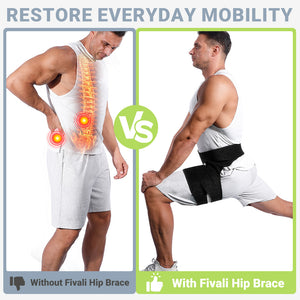
You deserve to live an active life, free from the constraints of nerve pain. Use this guide to make a confident choice, and take the next step toward reclaiming your mobility and comfort. For some, a hip and thigh brace may also offer complementary support depending on the specific cause of pain.