End Desk Job Back Pain: How to Choose the Ideal Back Support for All-Day Comfort & Better Posture

If you're reading this, chances are you're one of the 48-65% of office workers experiencing back pain. Spending over six hours a day sitting puts immense strain on your spine, and you’re now at a critical point in your search for relief: evaluating back braces. The challenge isn't just finding support; it's finding a solution that seamlessly integrates into your daily professional life. You need something that offers relief without being bulky, restrictive, or obvious.
This guide moves beyond generic lists. We'll break down the five non-negotiable features a back brace must have for desk jobs and daily wear. We’ll look at the science of why they work and empower you to choose a tool that supports your back without becoming a crutch.

Deconstructing the Ideal Back Brace for Office Life
A back brace for lifting weights is fundamentally different from one designed for hours of sitting. For the modern professional, five key evaluation criteria stand out.
1. Discreetness: Support That Stays Your Secret
The most effective brace is one you'll actually wear, and in an office setting, that means it needs to be virtually invisible under your clothes.
- Why it Matters: Bulky braces can alter the fit of your professional attire, creating self-consciousness and reducing the likelihood of consistent use. You need support that doesn't advertise itself.
-
What to Look For:
- Ultra-Thin Materials: Look for designs that specify their thinness, often using advanced, high-elastic fabrics similar to seamless yoga wear. These materials provide firm support without the bulk of traditional neoprene.
- Low-Profile Design: Contoured, corset-style braces hug the body's natural curves, eliminating awkward lines and bulges under shirts and blouses.
2. Breathability: All-Day Comfort Without Compromise
Sitting in an office chair for eight hours can build up heat and moisture, making a non-breathable brace uncomfortable and irritating to the skin.
- Why it Matters: Discomfort from sweat and heat is a primary reason people abandon their back braces. True all-day wear is only possible with materials designed for long-term skin contact.
-
What to Look For:
- Moisture-Wicking Fabrics: Materials that pull sweat away from the skin and allow it to evaporate are essential.
- Engineered Mesh Panels: Many modern braces incorporate honeycomb or mesh designs in non-critical support areas to maximize airflow without sacrificing structural integrity. This keeps you cool and comfortable from your morning coffee to your final email.
3. Adjustable Compression: Support That Adapts to Your Day
Your support needs change throughout the day. The gentle reminder for posture you need while typing is different from the firmer support you might want during a walk on your lunch break.
- Why it Matters: Static, one-size-fits-all compression can be either too much or not enough. The ability to fine-tune the support level is crucial for both comfort and effectiveness. As noted by pain management physicians, a key function of a brace is increasing intra-abdominal pressure to unload the spine. Adjustable compression lets you control this effect.
-
What to Look For:
- Dual-Tension Straps: The best designs feature primary closures for a snug fit and secondary straps that allow you to increase or decrease compression on the fly. This lets you easily customize the level of your pain relieving back brace without having to remove it.
4. Effective Lumbar Support: The Core of Pain Relief
Prolonged sitting often leads to slouching, which flattens the natural curve of your lower back (the lumbar spine). A good brace actively counters this.
- Why it Matters: A well-designed lumbar back support brace provides proprioceptive feedback—a subtle reminder to your muscles to maintain proper posture. It also helps reduce micro-motions in the spine that can cause irritation and pain.
-
What to Look For:
- Targeted Support Stays: Flexible yet firm vertical stays integrated into the back of the brace help maintain the natural lordotic curve of your spine.
- Ergonomic Contouring: The brace should be shaped to follow the curve of your lower back, providing focused support where you need it most. This is a key feature in a good back brace for sitting at desk.
5. Durability: A Worthwhile Investment in Your Health
A brace worn daily undergoes significant stress. High-quality materials and construction ensure it remains effective over time.
-
What to Look For:
- High-Grade Fasteners: Look for strong, reliable hook-and-loop closures that won't lose their grip after a few weeks of use.
- Reinforced Stitching: Check for double-stitching, especially around support stays and tension straps, as this indicates a higher-quality build designed for longevity.
The Fivali Back Brace: Your Ideal Solution for Desk and Daily Wear
Understanding the criteria is the first step. The next is finding a product that delivers on all five. The Fivali back brace is engineered specifically to meet the demands of the modern professional.
It directly addresses the core needs of office workers:
- Invisible Under Clothing: Made from an ultra-thin, high-elastic fabric, it provides powerful support without the bulk, laying flat against your body to disappear under work attire.
- All-Day Breathable Comfort: The lightweight, moisture-wicking material ensures you stay comfortable through long meetings and deadlines, preventing the heat and irritation common with lesser braces.
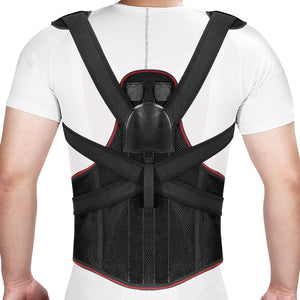
- Customizable Dynamic Support: The dual-strap system allows you to effortlessly adjust the compression level. You can keep it snug for postural reminders while typing or tighten it for extra lumbar support when you feel fatigue setting in. Whether you need a simple posture reminder or a full back brace for posture, adjustability is key.
Beyond the Brace: A Holistic Approach to Back Health
Experts agree that a back brace is a powerful tool, not a permanent fix. The goal is to use it to manage pain and retrain your posture while simultaneously building your own core strength. Over-reliance can lead to muscle weakening.
Here’s how to create a sustainable strategy:
- Integrate, Don't Depend: Wear your brace during the times you need it most—like the afternoon when fatigue causes you to slouch—but take it off periodically. Aim for a few hours at a time, not the entire day.
- Complement with Ergonomics: A brace works best with an ergonomic setup, not in place of one. Ensure your chair, desk, and monitor are positioned correctly to support a healthy posture. Learning how to improve your posture at your desk is a critical first step.
- Embrace Movement: Set a timer to get up and stretch every 30-60 minutes. Simple desk-friendly stretches can counteract the negative effects of prolonged sitting and prevent conditions like a painful lower back arch.
- Build Core Strength: Incorporate simple core-strengthening exercises into your routine outside of work. A strong core is your body’s natural back brace. The right back brace with straps can provide support while you work on this.

Frequently Asked Questions About Back Support for Desk Jobs
How does a back support help with discomfort from prolonged sitting?
A well-chosen back support addresses discomfort by providing targeted lumbar support to maintain the natural curve of your lower back, counteracting slouching. Adjustable compression helps increase intra-abdominal pressure, which can unload the spine and provide pain relief. It also offers proprioceptive feedback, gently reminding your muscles to maintain proper posture throughout the day.
What key features should I look for in a back support for office use?
For office and daily wear, prioritize five key features: discreetness (ultra-thin, low-profile design), breathability (moisture-wicking fabrics, mesh panels), adjustable compression (dual-tension straps for customizable support), effective lumbar support (targeted stays, ergonomic contouring), and durability (high-grade fasteners, reinforced stitching).
Will wearing a back support weaken my core muscles over time?
If a back support is worn continuously without integrating core-strengthening exercises, there is a risk of muscle weakening. The article advocates a holistic approach: use the support to manage pain and improve posture, but complement its use with regular movement and targeted core exercises to build your body's natural strength and avoid dependency.
Can I wear a back support for my entire workday?
While designed for extended wear, it's generally recommended to use your back support strategically. Wear it during periods when you experience discomfort or notice your posture faltering, typically for a few hours at a time rather than the entire day. The aim is to use it as a training tool to develop better postural habits and muscle memory, not as a permanent crutch.
How do I choose the correct size for a back support?
To ensure both comfort and effectiveness, always refer to the manufacturer's specific sizing guide. This typically involves measuring your waist or torso circumference around the navel. A properly fitted back support will provide adequate support without being too restrictive or ineffective.
Can a back support also improve my posture while sitting?
Yes, a well-designed back support actively helps improve posture. By providing firm yet flexible support to the lumbar spine, it encourages your body to maintain its natural alignment and reduces the tendency to slouch. It acts as a continuous, subtle reminder to engage proper posture, helping to retrain your muscles over time.
Choosing the right back brace is a significant step toward reclaiming your comfort and productivity. By prioritizing discreetness, breathability, and adjustable support, you can find a solution that not only relieves pain but also fits seamlessly into your life.