Burning Knee Pain? An Expert's Guide to Causes & Fast Relief

It starts as a faint warmth, maybe after a long walk or a set of squats. Soon, it becomes a persistent, hot sensation that you can’t ignore. A burning feeling in your knee is more than just an annoyance; it’s a signal from your body asking for attention. But what is it trying to say? And more importantly, how do you make it stop?
Many people get stuck here, trying generic solutions for a specific problem. The secret to effective relief isn't just what you do, but why you're doing it. The first step is to play detective and understand the type of message your knee is sending.

Is Your Knee Burning from Inflammation or Nerves?
That burning sensation isn't a one-size-fits-all symptom. It typically points to one of two main culprits: inflammation or nerve irritation. Identifying which one you’re likely dealing with is the key that unlocks the right relief strategy.
Clues for Inflammatory Burning
Think of inflammation as your body’s emergency response team rushing to the site of an injury or irritation. This type of burning often feels hot, throbbing, and constant.
You might have inflammatory burning if you also notice:
- Swelling and Redness: The area around your knee looks puffy or has a reddish tint.
- Localized Heat: Your knee feels warm to the touch compared to your other knee.
- Pain with Movement: The burning gets worse when you bend, walk, or put weight on the knee.
- Achy Discomfort: The burn is accompanied by a dull, aching pain.
This is commonly caused by conditions like bursitis (inflamed fluid-filled sacs), tendinitis (irritated tendons), or a flare-up of arthritis. Understanding the specific knee burning sensation and its underlying causes can provide a clearer path to treatment.
Signs of Neuropathic Burning
Neuropathic (nerve) burning is different. It’s caused by irritation or damage to the nerves in or around your knee. The feeling is often described as more electric and unpredictable.
You might have neuropathic burning if you experience:
- Tingling and Numbness: That "pins and needles" feeling or a loss of sensation.
- Shooting or Stabbing Pains: Sharp, quick pains that seem to come out of nowhere.
- Radiating Sensation: The burning travels up your thigh or down your shin.
- Pain Without Obvious Injury: Your knee might burn even when you’re resting or lying down, sometimes with no visible swelling.
This can happen from a pinched nerve in your back that refers pain down to your knee, direct nerve compression around the joint, or other nerve-related conditions.

Your Action Plan for Immediate Relief (The First 72 Hours)
Once you have a better idea of what you’re dealing with, you can start a targeted plan. In the first few days, the goal is to calm the area down and create an environment for healing.
Step 1: Modify Your Activity (Rest Smarter, Not Harder)
"Rest" doesn't mean sitting on the couch for a week. Complete immobilization can often lead to more stiffness and weakness. Instead, focus on active rest.
- Avoid Aggravators: Pay attention to what makes the burning worse and temporarily stop those activities. This often includes deep squats, kneeling, or high-impact running. If you're experiencing knee pain when squatting, it's a clear sign to modify that movement.
- Embrace Gentle Movement: Activities like gentle walking or swimming keep the joint mobile and blood flowing without adding stress.
Step 2: Use Temperature Therapy Strategically
This is where knowing your pain type makes all the difference.
- For Inflammatory Burning (Hot & Swollen): Use ICE. An ice pack wrapped in a thin towel for 15-20 minutes, several times a day, helps constrict blood vessels to reduce swelling and numb the pain.
- For Neuropathic Burning (Tingling & Stiff): Try HEAT. A warm compress for 15-20 minutes can help relax tight muscles that might be pinching a nerve and increase blood circulation to the area. Never apply heat to a new injury that is already visibly swollen and hot.
Step 3: Calm Inflammation from the Inside
For clearly inflammatory pain, over-the-counter nonsteroidal anti-inflammatory drugs (NSAIDs) like ibuprofen can help reduce the swelling and pain. Always use them as directed and consult a doctor or pharmacist if you have other health conditions or are taking other medications.
Building Strength and Mobility (Days 3-14)
After calming the initial flare-up, the next step is to address the underlying mechanical issues. A weak or inflexible muscle can put extra strain on your knee joint, leading to irritation. The goal here is to build a stronger support system around the knee.
Gentle Mobility and Stretching
Start with gentle stretches to improve flexibility. Focus on the major muscle groups that support the knee:
- Hamstring Stretch: Sit on the floor with one leg straight, the other bent. Gently lean forward until you feel a stretch in the back of your straight leg.
- Quad Stretch: Standing, hold onto something for balance. Grab your ankle and gently pull your heel toward your glute.
- Calf Stretch: Stand facing a wall and step one foot back, keeping the leg straight. Lean forward until you feel a stretch in your calf.
Foundational Strengthening
Once stretching feels comfortable, add simple strengthening exercises. The key is to start with low intensity and perfect form.
- Glute Bridges: Lie on your back with your knees bent. Lift your hips off the floor, squeezing your glutes.
- Straight Leg Raises: Lie on your back with one leg bent and one straight. Slowly lift the straight leg about a foot off the ground, hold, and lower.
Realistic Timelines for Improvement
Patience is crucial. You might feel initial relief from ice and activity modification within a day or two. However, seeing real improvement from stretching and strengthening can take several weeks of consistent effort. Listen to your body and don't push through sharp pain.

Advanced Support: When to Consider Bracing
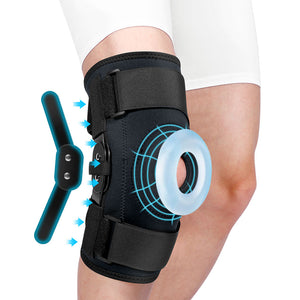
As you transition from immediate relief to building long-term resilience, a knee brace or compression sleeve can be an incredibly helpful tool. It's not a cure on its own, but it’s a powerful component of your overall recovery plan.
A good knee support can:
- Provide Compression: Gentle pressure helps reduce swelling and can improve your sense of joint position (proprioception), making you feel more stable.
- Offer Stability: For issues related to weak ligaments or instability, a brace can provide external support, giving you the confidence to move correctly during exercises.
- Retain Warmth: For chronic stiffness or neuropathic pain, the warmth from a sleeve can be soothing and help keep muscles relaxed.
When the time is right, finding the best compression bandage for knee support can make a significant difference in both comfort and confidence as you return to your activities.
When to See a Doctor
Self-care is powerful, but it’s important to know when you need professional guidance. Schedule an appointment with a doctor or physical therapist if:
- The pain is severe or gets progressively worse.
- You can't put any weight on your knee.
- Your knee looks visibly deformed.
- You develop a fever along with the knee pain.
- There’s no improvement after a week or two of consistent home care.
Frequently Asked Questions About Burning Knee Pain
What is the difference between inflammatory and nerve-related burning in the knee?
Inflammatory burning feels hot, throbbing, and is often accompanied by visible swelling, redness, and pain that worsens with movement. It’s caused by conditions like tendinitis or bursitis. Neuropathic (nerve) burning feels more electric, with tingling, numbness, or shooting pains, and can occur even at rest. It's caused by nerve irritation or compression.
Should I use ice or heat for my burning knee?
It depends on the cause. For inflammatory pain (hot, swollen), use ice for 15-20 minutes to reduce swelling and numb the area. For neuropathic pain (tingling, stiffness) without visible swelling, heat can help relax tight muscles that may be irritating a nerve. Never apply heat to a new, swollen injury.
What are the first steps I should take to relieve a burning knee?
For the first 72 hours, focus on calming the area. First, modify your activities by avoiding movements that worsen the pain (like deep squats). Second, use temperature therapy—ice for inflammation or heat for nerve-related stiffness. Third, if the pain is clearly inflammatory, consider over-the-counter NSAIDs as directed to reduce swelling.
How can exercise help my burning knee pain?
After the initial flare-up subsides, gentle exercise is key to building long-term resilience. Stretching muscles like the hamstrings, quads, and calves improves flexibility and reduces strain on the knee. Strengthening exercises, such as glute bridges and straight leg raises, build a stronger support system around the joint, which helps prevent future irritation.
When should I see a doctor for a burning sensation in my knee?
You should seek professional medical advice if the pain is severe, you cannot put weight on your knee, or the joint looks deformed. Also, consult a doctor if the pain gets progressively worse, is accompanied by a fever, or shows no improvement after 1-2 weeks of consistent home care.