Unlock Peak Performance: The Fivali Guide to Perfect Ankle Brace Sizing & Fit
With the summer active season kicking into high gear and 4th of July weekend sports tournaments just around the corner, ensuring your joints are properly protected is top of mind. You’re actively evaluating your options, comparing features, and reading reviews to find the perfect solution. But here is the critical truth: investing in the best ankle support is only half the battle. The real magic—and the therapeutic benefit—lies entirely in the fit.
If you are wondering how tight should an ankle brace be, or if you're worried about buying the wrong size online, you aren't alone. Proper fit is the primary factor in achieving Fivali’s core promise: SUPPORT THAT MOVES WITH YOU.
This comprehensive guide will walk you through exactly how to measure for your Fivali brace, how to interpret our sizing charts, and how to troubleshoot common fit issues so you can purchase with absolute confidence.
Why Proper Brace Fit is Crucial: Enhancing Injury Prevention and Accelerating Recovery
When evaluating a sports brace, many people focus on the materials or the strap design, overlooking how intimately the product needs to interact with their anatomy. A precision fit isn't just about avoiding a return; it’s a necessity for optimal performance.
If a brace is too loose, it fails to provide the proprioceptive feedback and mechanical stability your ligaments need during dynamic movement. Conversely, if it is too tight, it can restrict circulation, cause nerve compression (leading to numbness or tingling), and create friction blisters. A perfectly sized brace delivers targeted compression that reduces swelling, enhances blood flow, and accelerates recovery, whether you are looking for an everyday compression ankle brace or specific gear like an ankle brace for soccer players.
Phase 1: Your Fivali Fit Checklist
Before you start looking at sizing charts, preparation is key. Proper measurement requires the right tools and timing.
- The Right Tool: Use a flexible, soft measuring tape. If you don't have one, use a piece of string to wrap around your ankle, then measure the string flat against a standard ruler.
- The Right Time: Always measure your ankle at the end of the day. Feet and ankles naturally swell after hours of standing, walking, or summer heat exposure. Measuring when your ankle is at its largest ensures your brace won't become uncomfortably tight during actual use.
- The Right Attire: Measure your foot while wearing the type of athletic sock you intend to wear with the brace.

Phase 2: Step-by-Step: How to Measure Your Ankle for a Fivali Brace
Even with the right tools, human error is common. Here is how to get an accurate reading and avoid common sizing mistakes:
- Position Your Foot: Sit in a chair and place your foot flat on the floor so your ankle is at a strict 90-degree angle. Do not point your toes.
- Find the Measurement Point: Locate the narrowest part of your ankle, which is typically just an inch or two above the protruding ankle bones (the medial and lateral malleoli).
- Wrap the Tape: Wrap the soft measuring tape around this narrow point. It should be flush against your skin (or sock)—not squeezing tight, but not sagging either.
- Record the Number: Note the measurement in both inches and centimeters, as having both will make cross-referencing easier.
Common Mistakes When Measuring (and How to Avoid Them)
- Measuring over jeans or thick sweatpants: Always measure against bare skin or your actual athletic sock.
- Guessing based on shoe size alone: While shoe size is a helpful secondary reference, ankle circumference is the primary indicator of your brace size. An ankle support for overweight individuals, for instance, requires accurate circumference data because shoe size rarely correlates perfectly with ankle width.
Phase 3: Decoding Your Fivali Sizing Chart – Finding Your Perfect Match
Once you have your measurement, navigate to the specific Fivali product page you are evaluating. Our sizing charts are designed to map your ankle circumference directly to our sizes (typically ranging from S to XL).
"I'm right on the borderline between two sizes! What should I do?"
This is the most common evaluation roadblock. Here is the Fivali rule of thumb:
- Size Down: If you are recovering from an acute injury and require strict, aggressive compression for maximum stability.
- Size Up: If you are using the brace for daily preventative support, have wider feet, or prioritize all-day wearability and comfort.
Phase 4: The Fivali Fit Test – Is Your Brace 'Snug Yet Comfortable'?
You've ordered your brace, and it has arrived. Before you cut the tags off and head to your holiday weekend game, you need to perform the Fivali Fit Test.
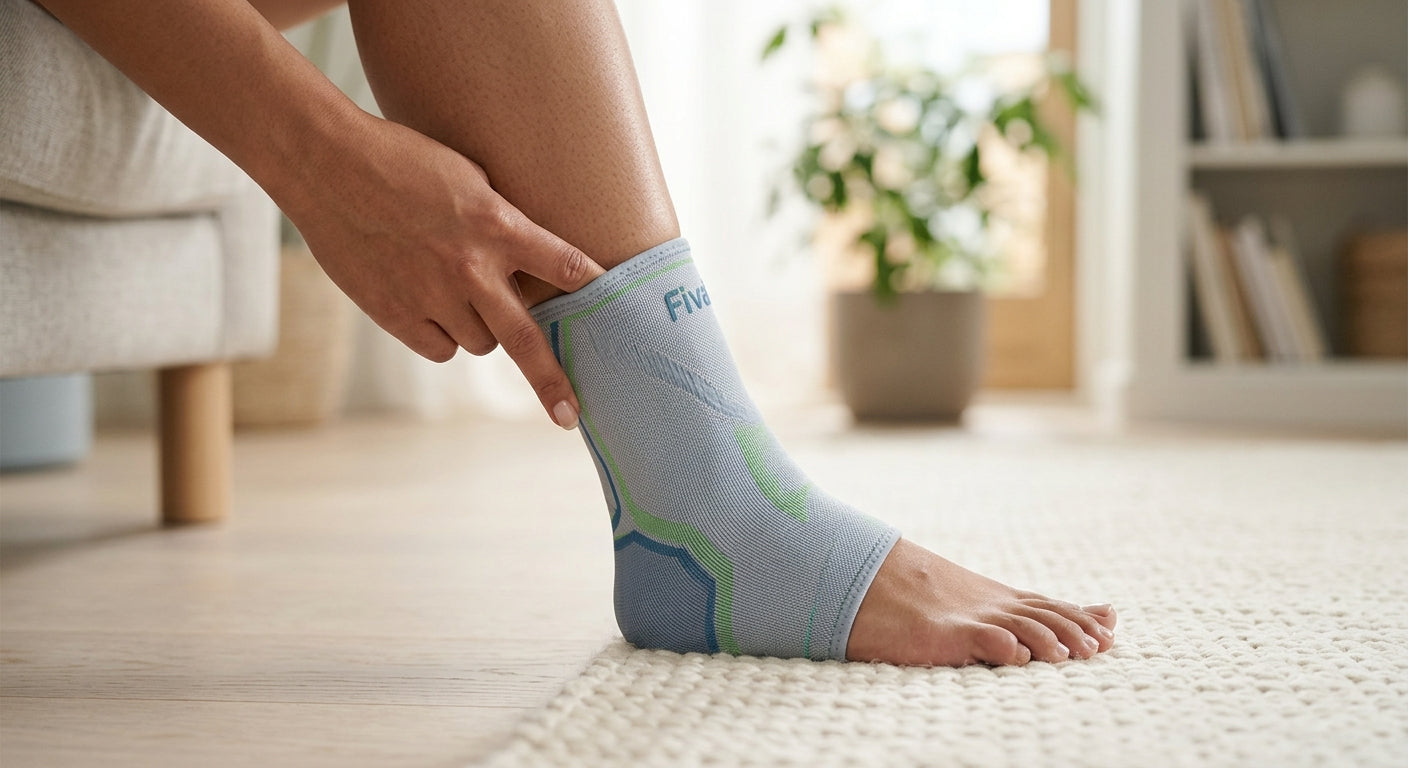
A proper fit should be "snug yet comfortable." It should feel like a firm, reassuring hug around your joint. You shouldn't experience any pinching, throbbing, or coldness in your toes. You don't need to overcomplicate breathability by debating a dehumidifier vs ankle brace fabrics; simply look for our moisture-wicking materials to keep your skin dry while providing that snug compression.
The Relationship Between Ankle Brace Fit and All-Day Wearability
If you are asking should i wear an ankle brace all day, the answer relies heavily on the fit. A perfectly sized brace distributes pressure evenly, preventing localized friction points.
The Two-Finger Test:
Once your brace is laced or strapped up, try to slide your index and middle fingers under the top edge of the brace.
- If you can slide them in easily with room to spare, it’s too loose.
- If you cannot force even one finger under the edge, it’s dangerously tight.
- If you can slide two fingers in tightly, you have achieved the optimal Fivali fit.
Troubleshooting Common Fit Issues with Your Fivali Brace
Even with careful measurement, unique foot anatomies can present challenges. Here is how to adjust your fit for maximum comfort.

"My brace feels secure, but my foot falls asleep."
This indicates the straps over the instep (top of the foot) are pulled too tightly, compressing a nerve. Loosen the lower straps slightly while maintaining tension on the straps wrapping around the upper ankle.
"The brace rubs against the back of my heel."
Ensure you have pulled the brace completely up. Often, users leave the heel hole sitting too low. The heel should be perfectly centered in the cutout to prevent friction during dynamic movements, which is especially vital if you are using the best ankle brace for soccer after sprain.
"My ankle swells throughout the day, making the brace too tight by 5 PM."
This is a natural physiological response. Look for Fivali models with adjustable hook-and-loop straps rather than slide-on sleeves, allowing you to micro-adjust the tension as your ankle volume changes throughout the day.
Comprehensive FAQ: Buying with Confidence
- Q: Why is proper ankle brace fit so important?
- A: A precision fit is crucial for optimal performance and recovery. Too loose, it fails to provide stability or proprioceptive feedback. Too tight, it can restrict circulation, cause nerve compression (leading to numbness or tingling), and create friction blisters. A perfectly sized brace delivers targeted compression that reduces swelling, enhances blood flow, and accelerates recovery.
- Q: What tools do I need to measure my ankle accurately?
- A: You'll need a flexible, soft measuring tape. If you don't have one, use a piece of string to wrap around your ankle, then measure the string flat against a standard ruler.
- Q: When is the best time to measure my ankle for a Fivali brace?
- A: Always measure your ankle at the end of the day. Feet and ankles naturally swell after hours of standing, walking, or heat exposure. Measuring when your ankle is at its largest ensures your brace won't become uncomfortably tight during actual use.
- Q: Does my shoe size matter at all when picking a Fivali brace?
- A: Yes, but it is secondary to circumference. We provide shoe size estimations on our product pages as a helpful cross-reference, but if your circumference dictates a Medium and your shoe size dictates a Large, always trust the circumference measurement.
- Q: What if I'm right on the borderline between two Fivali sizes?
- A: If you are recovering from an acute injury and require strict, aggressive compression for maximum stability, size down. If you are using the brace for daily preventative support, have wider feet, or prioritize all-day wearability and comfort, size up.
- Q: How tight should a Fivali ankle brace feel?
- A: A proper fit should be "snug yet comfortable," feeling like a firm, reassuring hug around your joint. You shouldn't experience any pinching, throbbing, or coldness in your toes. The "Two-Finger Test" (where you can slide two fingers in tightly under the top edge) indicates an optimal Fivali fit.
- Q: Can I wear my Fivali ankle brace inside my regular shoes?
- A: Absolutely. Our low-profile designs are engineered to fit inside standard athletic footwear. You may need to unlace your shoe significantly before inserting your foot, but you rarely need to buy a larger shoe size just to accommodate your Fivali brace.
- Q: Should I wear a sock under my ankle brace?
- A: We highly recommend wearing a thin, moisture-wicking athletic sock underneath your brace. This provides a barrier against friction, absorbs sweat, and helps keep the brace clean, ultimately extending the life of your gear.
- Q: My foot falls asleep when I wear the brace. What should I do?
- A: This indicates the straps over the instep (top of the foot) are pulled too tightly, compressing a nerve. Loosen the lower straps slightly while maintaining tension on the straps wrapping around the upper ankle.
Your Next Step to Optimal Support
Finding the perfect fit doesn't have to be a guessing game. Armed with your accurate measurements and an understanding of how a brace should truly feel, you are ready to make a confident decision that supports your active, pain-free lifestyle.
Don't let the fear of a poor fit hold you back from the activities you love this season. Navigate to the Fivali Ankle Brace collection, select your ideal support level, and check the sizing chart on the product page to find your perfect match today. Support that truly moves with you begins with the perfect fit.