Introducing Fivali Neoprene Hinge Knee Brace: PREVENTS AND PROTECTS
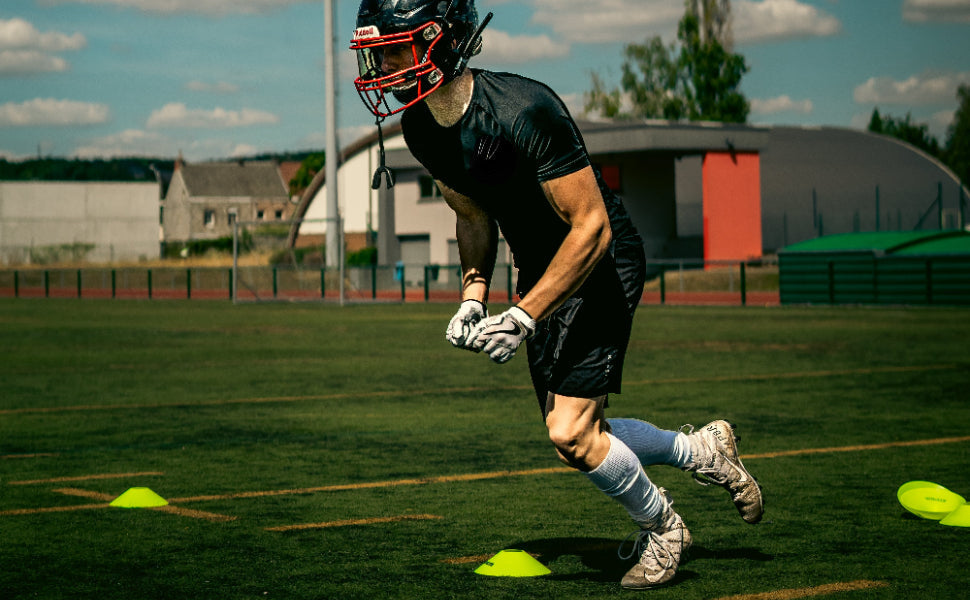
High-impact physical training, aggressive athletic movements, and rigorous daily workouts place continuous demand on joint stability. Maintaining structural integrity around the knee joint while preserving natural movement requires specialized physical engineering. High-performance joint protection must balance targeted stabilization, active thermal regulation, and dynamic motion tracking. Without reliable reinforcement, repetitive strain and sudden torsional forces can compromise joint alignment and slow down physical progress. Engineered to meet these exact physical demands, the Fivali Neoprene Hinge Knee Brace provides dependable support, structural reinforcement, and advanced breathability for athletes and active individuals focused on long-term physical protection.
Advanced Thermal Control and Moisture Management
Prolonged dynamic activity generates substantial body heat, leading to perspiration buildup under dense protective equipment. Trapped humidity not only causes discomfort, but it also leads to friction, skin irritation, and unpleasant odors. Over time, excessive moisture weakens material grip, causing gear to slide out of position during critical moments of movement.
Integrated air-exchange channels actively resolve humidity buildup during high-intensity training sessions:
-
Perforated inner lining facilitates continuous airflow around the entire knee joint.
-
Accelerated moisture-wicking technology promotes rapid sweat evaporation.
-
Odor-resistant fabric construction prevents bacterial accumulation during extended wear.
-
Thermal regulation channels dissipate excess warmth without stripping away beneficial joint heat.
-
Reduced friction lining minimizes rubbing against skin during repetitive flexion and extension.
By prioritizing continuous air turnover, this neoprene knee brace keeps the skin surface dry and comfortable. Maintaining an optimal microclimate around the joint ensures that athletes can complete long training blocks without suffering from irritation or moisture-induced gear failure.
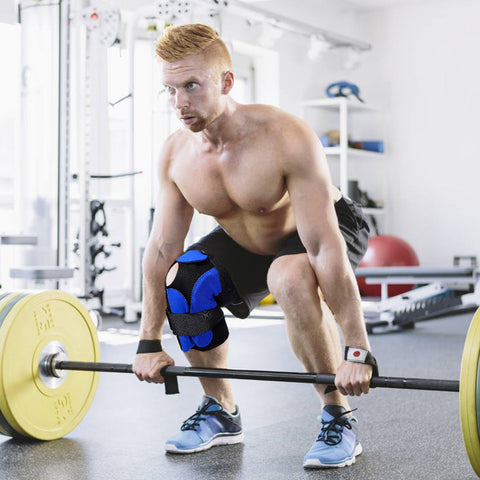
Precision Locking Mechanics for Dynamic Joint Stability
Unintended sliding or vertical movement of knee supports disrupts target stabilization and creates uneven pressure distribution. When protective gear migrates downwards during intense movement, lateral support drops, exposing vulnerable ligaments to unpredictable physical stress. A fixed anchor system is essential to keep structural supports perfectly centered over the joint axis.
A dedicated multi-point locking mechanism maintains rigid positioning across all vectors of movement:
-
Anatomical strap layout anchors the brace firmly above and below the knee joint.
-
High-friction internal contact zones prevent downward migration during running and jumping.
-
Customizable compression zones allow precise fitting to individual leg contours.
-
Balanced tension distribution eliminates localized pinch points while maintaining maximum hold.
-
Structural stability remains unchanged during rapid directional changes and heavy impact landings.
Maintaining exact alignment guarantees consistent protection through every stride, pivot, and squat. With gear locked firmly in place, full focus remains on athletic execution rather than constant equipment adjustments.
Articulated Internal Chains for Natural Kinetic Tracking
Traditional rigid stabilizers often restrict natural leg extension or dig into surrounding muscular tissue. Modern joint architecture relies on articulated internal support chains that mirror natural anatomical tracking, absorbing external impact forces while permitting fluid movement.
Internal chain engineering delivers comprehensive lateral stability without compromising mobility:
-
Multi-segmented internal support chains bend smoothly along the natural axis of the knee.
-
Dual lateral reinforcement bars shield collateral ligaments against harmful side-loading forces.
-
Shock-absorbing chain segments dissipate vertical impact loads from hard surface strikes.
-
Guided articulation mechanics prevent hyperextension during explosive push-offs.
-
Flexible housing materials maintain continuous contact with muscle groups throughout full range of motion.
Integrating dynamic tracking structures into a heavy-duty neoprene knee brace ensures that high-level stability operates in complete harmony with natural athletic motion. Dynamic protection supports natural biomechanics rather than forcing the body into stiff, awkward movements.
Comprehensive Ligament Protection and Kinetic Energy Distribution
Dynamic movements generate high force vectors that transmit directly through the leg architecture. Without external load distribution, single joints absorb immense mechanical stress during deceleration, jumping, and rapid lateral cuts. Distributing these forces across a broader surface area preserves ligament tissue and reduces wear on joint cartilage.
Targeted force mitigation features reinforce vulnerable internal structures during maximum exertion:
-
External reinforcement panels absorb lateral impact forces before they reach internal ligaments.
-
Balanced mechanical stabilization reduces unnatural torsional stress on the meniscus.
-
Compressive side walls enhance proprioceptive awareness for cleaner foot strikes and balance.
-
Energy-dispersing materials attenuate sudden forces experienced during explosive downward contact.
Equipping joints with multi-layered protective frameworks creates a reliable barrier against sudden over-rotation or mechanical displacement, allowing athletes to train with heightened physical assurance.
Ergonomic Design Built for Enduring Athletic Demand
Long-term adoption of joint support gear depends heavily on overall structural comfort, material longevity, and continuous reliability. Gear built from subpar materials degrades under sweat exposure, stretches out after repeated stress, and loses initial compression levels. High-density neoprene and reinforced stitching ensure that protective properties remain consistent over extended use.
Durable construction features support continuous physical demand across various activities:
-
High-grade neoprene core retains structural shape and elastic tension after extended wear.
-
Reinforced edge binding prevents fraying and material breakdown under heavy strain.
-
Low-profile contouring allows seamless pairing under athletic trousers or over base layers.
-
Smooth interior finishing prevents hair pulling and localized skin abrasion.
Consistent mechanical performance ensures that dynamic support remains fully active through months of continuous training sessions, heavy lifting, and competitive play.
Optimizing Athletic Performance and Long-Term Prevention
Protecting joints against repetitive high-impact forces requires equipment engineered for heavy dynamic loads. Integrating active thermal management, non-slip anchoring systems, and internal articulated tracking provides a complete physical defense system for demanding athletic environments. High-quality gear supports aggressive movement, guards joint integrity, and enables active individuals to maintain peak physical performance safely over time.
-
Posted in
Healthy Lifestyle, Joint, Recovery, sports