Pre-activity Hip Mobility and Strength for Injury Prevention
As Memorial Day approaches, bringing the unofficial kickoff to summer along with it, the urge to get outside and move is undeniable. Whether you are prepping for a local holiday 5K, transitioning your heavy lifting cycles to outdoor garage gyms, or gearing up for summer community soccer and basketball leagues, your body is about to face a shift in physical demands.
Yet, for many active individuals, this seasonal shift is often accompanied by an unwelcome guest: a nagging ache in the hips.
If you have ever felt a pinch during a deep squat, sluggishness when rapidly changing direction on the field, or lateral hip pain halfway through a long run, you are experiencing the downstream effects of inadequate joint preparation. Fortunately, bridging the gap between painful stiffness and explosive power doesn't require hours of tedious stretching. By understanding the biomechanics of your body and implementing targeted pre-activity mobility routines, you can dramatically reduce your risk of acute injury while maximizing your performance.

The "Why" Before the "How": Understanding Your Hip Complex
Think of your hips as the body’s ultimate shock absorbers and power generators. As a ball-and-socket joint, the hip is designed for multi-directional mobility. However, modern lifestyles often sabotage this natural engineering.
When we spend hours sitting at a desk or driving, our hip flexors become tight, and our gluteal muscles effectively "turn off" to compensate—a phenomenon often referred to as "Glute Amnesia." When you suddenly demand explosive movement from a dormant system, your body compensates. Your lower back might take over for a lazy glute, or your knees might cave inward because the hip isn't providing a stable anchor.
When we talk about protecting this vital joint, we're really talking about "waking up" your hip stabilizer muscles. Activation is very different from strength training. You aren't trying to build muscle mass during a warm-up; you are simply establishing the mind-muscle connection, ensuring your nervous system knows how to fire these muscles on command before you hit the pavement, court, or weight room.
The Pre-Activity Toolkit: Core Routines for Hip Protection
A truly effective warm-up seamlessly blends targeted activation, resisted extension, and dynamic movement. Here is a short, highly effective sequence you can incorporate before any intense physical activity.
1. Glute Medius Activation: The Foundation of Stability
Your gluteus medius sits on the side of your hip and is primarily responsible for keeping your pelvis level when you are balancing on one leg (which you do constantly while running).
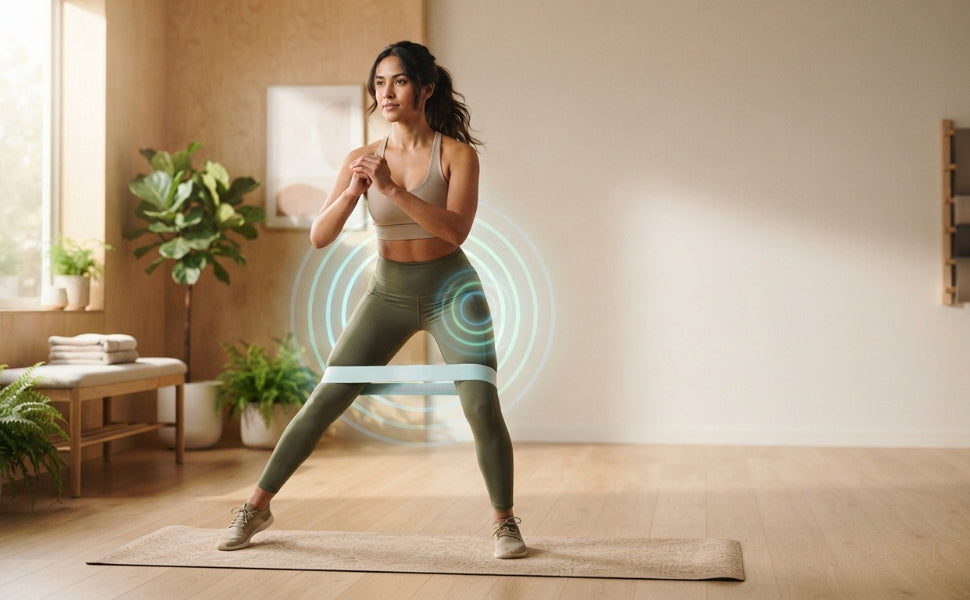
- The Drill (Clamshells & Banded Bridges): Lie on your side with knees bent, keeping your feet together while lifting your top knee like a clamshell opening. Alternatively, place a light resistance band just above your knees, lie on your back, and bridge your hips upward while gently pushing your knees outward against the band.
- The Focus: Close your eyes and focus on feeling the contraction on the side and base of your glutes. If you feel it in your lower back or the front of your thigh, reset your posture.
2. Resisted Hip Extension: Priming for Power
Hip extension is the action of pushing your leg backward—the exact motion that propels you forward during a sprint or drives you upward out of a heavy squat.
- The Drill (Standing Banded Kickbacks): Anchor a resistance band low to the ground and loop it around one ankle. While standing tall and gripping a stable surface for balance, slowly kick that leg straight backward.
- The Focus: Avoid arching your lower back. The movement should be small, controlled, and driven entirely by the gluteus maximus.
3. Dynamic Lateral Drills: Multi-Directional Agility
Once the muscles are awake, you need to integrate them into complex, weight-bearing movements to improve power transfer.
- The Drill (Banded Lateral Shuffles): With a band around your ankles or just above your knees, lower into an athletic half-squat. Take wide, deliberate steps sideways.
- The Focus: Do not let your trailing foot drag, and never let your feet touch. Maintain constant tension on the band to keep the hip abductors fully engaged.

Master Your Movement: Sport-Specific Adaptations
The foundational drills above apply to everyone, but how you emphasize them should change based on the demands of your specific sport.
Running (Unilateral Forward Motion)
Running is essentially a series of single-leg hops. Every time your foot strikes the ground, your hip must absorb up to three times your body weight. If your glute medius isn't firing, your opposite hip drops, sending a wave of misalignment down to your knee and foot. For runners, spend 80% of your warm-up on single-leg stabilization drills. Selecting the proper hip brace for running also heavily relies on your baseline mobility—a topic we'll explore shortly.
Lifting (Bilateral Heavy Load)
Whether you are squatting, deadlifting, or performing Olympic lifts, your hips require immense flexion (bending deeply) and forceful extension. For lifters, focus on opening the hip capsule with deep, unweighted lunges before moving to resisted hip extensions to prime the central nervous system for moving heavy loads.
Team Sports (Multi-Directional Explosiveness)
Soccer, basketball, and tennis are characterized by sudden stops, explosive jumps, and rapid lateral cuts. The hip must instantly transition from a mobile state to a highly stable one. Emphasize dynamic lateral shuffles, carioca drills, and rotational lunges to prepare the joint for unpredictable forces.
The Brace Connection: Evaluating Support Based on Mobility
There is a common misconception that wearing physical support means you don't need to warm up, or conversely, that a great warm-up renders joint support useless. Neither is true.
Instead, understanding your pre-activity routine unlocks what we call the "Brace Paradox": the better your mobility and natural activation, the more precisely you can evaluate what type of external support you actually need.
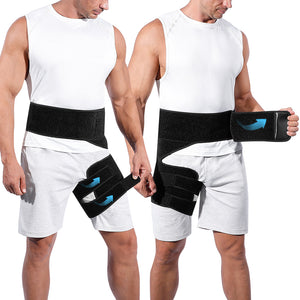
- Mobility-Friendly Support: If you have successfully mastered glute activation and have excellent joint mobility, but still want slight proprioceptive feedback (a physical reminder for your muscles to stay engaged) during long runs or team sports, a lightweight, flexible compression sleeve is ideal. It keeps the joint warm without restricting your carefully cultivated range of motion.
- Stability-Focused Support: If you are recovering from an acute injury, or if your self-assessment during your warm-up reveals significant weakness or a tendency for the hip to "give out" during lateral cuts, you require a highly structured brace.
Understanding this balance allows you to intelligently evaluate a hip brace based on the exact movement demands of your sport and your current physical capabilities, rather than guessing what might work. Conversely, if you're managing chronic joint degradation, your approach will differ. In such cases, evaluating the best hip brace for arthritis alongside your routine is essential, as structural wear-and-tear dictates a need for offloading pressure rather than just muscle activation.

FAQ: Protecting Your Hips for the Long Haul
Why do my glutes "burn" so much during basic warm-up exercises?
If a simple bodyweight clamshell causes an intense burn, it's a strong indicator that your glutes have been dormant. Because they aren't used to firing efficiently, they fatigue rapidly even under low resistance. Consistent pre-activity activation will quickly remedy this.
Can I stretch statically before my workout instead?
Static stretching (holding a stretch for 30+ seconds) temporarily lengthens the muscle, but it can also decrease explosive power output and does not prepare the nervous system for active load-bearing. Save static stretching for your cool-down, and stick to dynamic, active movements beforehand.
How do I know if my hip issue needs a doctor's attention?
Muscle soreness and joint fatigue are normal parts of an active lifestyle. However, severe sharp pains, an inability to bear weight, a noticeable popping sound accompanied by swelling, or persistent night pain are not normal. If you find yourself asking what is a red flag for hip pain?, it is always best to consult with a physical therapist or medical professional for a proper diagnosis.
Next Steps on Your Fitness Journey
As you gear up for a season full of outdoor activities, remember that true athletic longevity isn't just about pushing through limits—it's about preparing your body to handle them safely.
Start by incorporating just five minutes of glute activation and dynamic lateral drills before your next run, lift, or game. Pay attention to how your body feels: the increased stability in your knee, the extra spring in your step, and the absence of that familiar dull ache. By mastering the mind-muscle connection and combining it with the appropriate external support when necessary, you can pursue an active, powerful lifestyle completely free from pain.