Is Your Desk Job Wrecking Your Spine? A 60-Second Posture Check to Stop Pain
Ever hit that 3 PM wall at your desk? It’s not just mental fatigue. It’s that deep, nagging ache in your shoulders, the stiffness in your lower back, and the overwhelming urge to just melt into your chair. We often dismiss it as a normal part of the workday, but what if it's your body sending out an early warning?
That seemingly harmless slump is a powerful force. Over weeks, months, and years, it gradually remolds the very structure of your spine, turning temporary discomfort into chronic issues. But here's the good news: your body leaves clues. You just need to know how to read them. This guide will help you decode those early signs, perform simple self-checks, and understand how you can start reclaiming your spinal health today.
Your Spine's Natural Blueprint vs. The "Desk Slump"
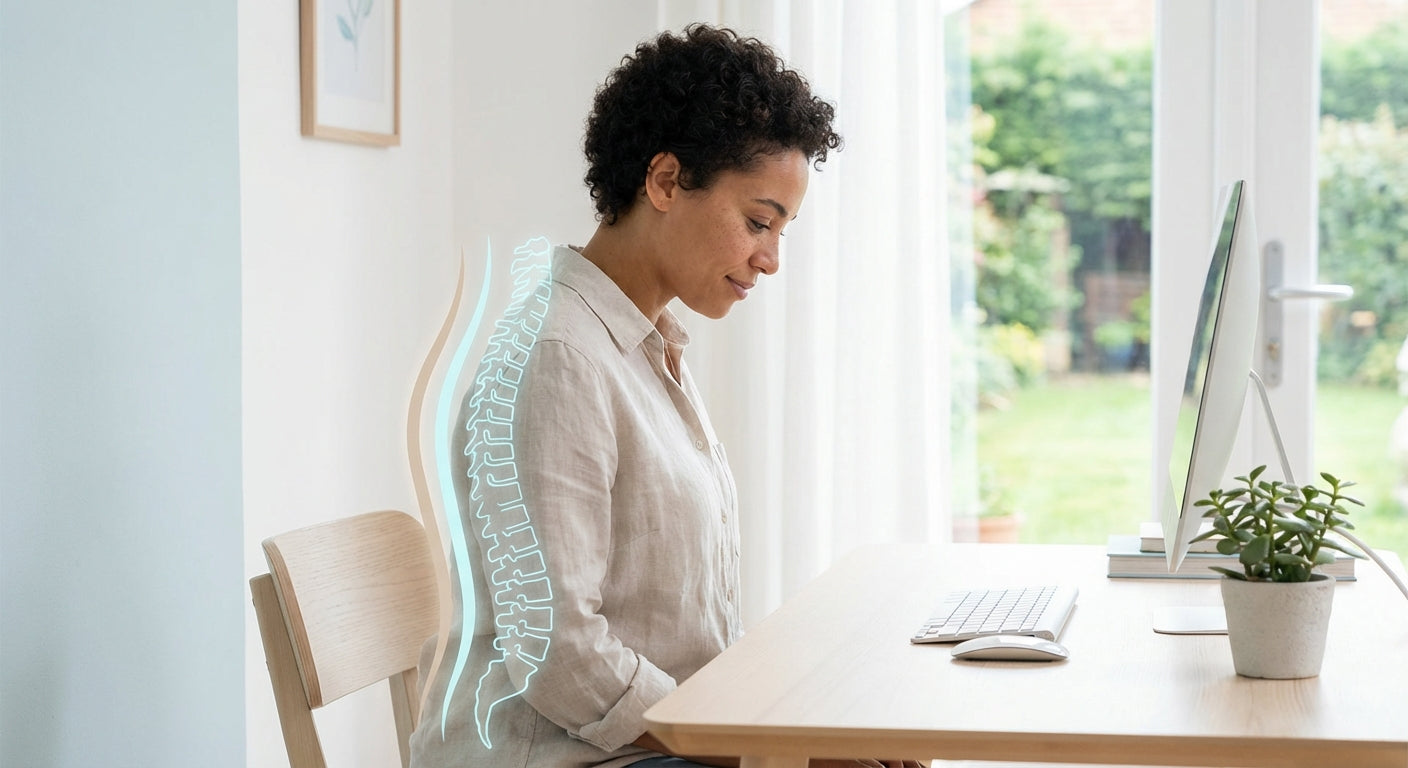
Think of your spine not as a straight rod, but as a graceful, spring-like structure with three natural curves:
- The Cervical Lordosis: A slight inward curve at your neck.
- The Thoracic Kyphosis: A gentle outward curve at your mid-back.
- The Lumbar Lordosis: A distinct inward curve at your lower back.
These curves are architectural marvels, designed to absorb shock, distribute weight, and allow for fluid movement. When you sit with good posture, these curves are balanced, and your muscles can work efficiently.
But when we slouch, we wage a slow war against this design. Prolonged sitting often leads to two major postural distortions: a rounded upper back and a tilted pelvis. This combination forces your spine out of its natural alignment, creating concentrated stress points.

As noted by health experts at Hampton Roads Orthopaedics Spine & Sports Medicine, this constant strain doesn't just tire out your muscles; it increases pressure on your spinal discs, compresses nerves, and can even reduce lung capacity over time.
Are You Ignoring These Early Warning Signs?
Long before serious pain develops, your body sends subtle signals that it's under strain. Recognizing these is the first step toward prevention. Many of these overlap with the initial symptoms of a repetitive strain injury, highlighting how chronic positions can lead to wear and tear.
Do any of these sound familiar?
- The Mid-Day Slump: You start the day sitting tall, but by lunchtime, you’re hunched over without even realizing it. Your postural muscles are fatiguing.
- Persistent Stiffness: You feel the need to stretch your back, neck, or shoulders constantly. This isn't just about being sedentary; it's a sign that muscles are held in unnaturally lengthened or shortened positions.
- "Creaks" and "Pops": When you stand up after sitting for a while, do your joints make noise? This can indicate pressure changes and stiffness in the spinal joints.
- Dull Aches: A nagging, low-grade ache between your shoulder blades or across your lower back is a classic sign of muscle fatigue from poor posture.
- Headaches: A forward head position strains the small muscles at the base of your skull, often leading to tension headaches.
These symptoms are your body's check-engine light. Ignoring them allows the underlying mechanical issues—the slow warping of your spinal curves—to become more ingrained.
Your 60-Second Posture Self-Check
You don't need a specialist to get a baseline reading of your posture. These simple checks can be done right now and reveal a lot about how your sitting habits are affecting your spine.

-
The Wall Test: Stand with your head, shoulder blades, and buttocks touching a wall, with your heels about 2-4 inches away from it. Try to slide your hand behind the curve in your lower back.
- What it reveals: There should be just enough space for your hand. If there's too much space, you may have an excessive arched lower back. If there's almost no space, you might have a flattened lumbar curve, a common result of slouching.
-
The Mirror Test (Side View): Have a friend take a photo of you standing naturally from the side. Imagine a straight line running from your earlobe down.
- What it reveals: Ideally, this line should pass through your shoulder, hip, and ankle. If your ear is significantly in front of your shoulder, you have a "forward head posture." If your upper back is excessively rounded or your hips are pushed forward, you may have a sway back posture.
-
The Chair-Edge Pelvic Tilt Check: Sit on the edge of a firm chair with your feet flat on the floor. Place your hands on your hips. Now, intentionally slouch as much as you can, then arch your back as much as you can. Find the neutral position in the middle.
- What it reveals: This helps you feel the difference between a posteriorly tilted pelvis (slouching), an anteriorly tilted pelvis (over-arched), and a neutral pelvis. Many people discover their default sitting position is a heavy posterior tilt, which flattens the crucial lumbar curve.
From Awareness to Action: The Role of Supportive Interventions
Understanding your posture is step one. Taking action is step two. While exercises and ergonomic adjustments are vital, sometimes your body needs a little help breaking old habits and finding its way back to neutral.
This is where supportive interventions can be incredibly useful. Think of them not as a crutch, but as a training tool. A quality back brace provides physical cues (proprioceptive feedback) that remind your body to engage the correct muscles and maintain proper alignment. It helps offload overworked muscles, allowing them to recover while you retrain your postural habits. A Fivali back brace posture corrector can provide the necessary support.

For example, if your self-check revealed a flattened lower back, a back support with a targeted lumbar pad can help encourage that natural inward curve. If you struggle with rounded shoulders, certain back support braces provide a gentle pull to retract the shoulder blades, opening up the chest. They act as a guide, making it easier for you to find and hold a healthier posture while you work on building the muscle endurance to maintain it on your own.
Frequently Asked Questions About Desk Posture
1. What are the most common signs of poor sitting posture?
The earliest signs include persistent stiffness in your neck, shoulders, and back; a dull ache between your shoulder blades; fatigue that causes you to slump by midday; and tension headaches that originate from the base of your skull.
2. How can I quickly check my posture at home?
You can use the Wall Test: stand with your head, shoulders, and buttocks against a wall. There should be a small gap behind your lower back. Too much space may indicate an arched back, while no space can mean a flattened curve from slouching.
3. Why does my back hurt when I try to sit up straight?
Years of slouching weaken your core and upper back muscles while tightening your chest muscles. When you try to correct your posture, you're engaging these weak muscles, which can cause temporary soreness as they adapt and strengthen.
4. Is it too late to fix my posture after years of slouching?
No, it's never too late. The body is highly adaptable. Through consistent effort, including exercises, regular movement, and postural awareness, you can retrain your muscles and significantly improve your spinal alignment.
5. Is there a single "perfect" way to sit at a desk?
No. The idea of a single perfect posture is a myth. The healthiest approach is to change your position frequently. The best posture is your next posture. Aim for a neutral spine, but prioritize regular breaks to stand, stretch, and walk.
6. How can a back support help improve my posture?
A back support or brace acts as a training tool. It provides physical cues that remind you to engage the correct posture muscles. It can also help support your spine and offload overworked muscles, making it easier to maintain proper alignment as you build strength.
Your Path to a Healthier Spine Starts Now
Your spine tells the story of your daily habits. The stiffness, aches, and fatigue you feel are not just random pains; they are the early chapters of a story that you have the power to rewrite.
By tuning into your body's early warning signs and using simple self-checks, you've already taken the most important step: building awareness. The next step is consistent action. Integrate more movement into your day, be mindful of your posture, and consider supportive tools that can help guide your body back to its natural, resilient alignment. Your future self will thank you.