Will My Knees Stop Cracking if I Lose Weight?
For many fitness lovers, runners, and weekend hikers, hearing an unexpected pop or crack when squatting down or climbing stairs is an all-too-familiar soundtrack. This phenomenon, technically known as crepitus, often raises immediate questions about joint health and body composition. One of the most common assumptions among active individuals is that dropping a few extra pounds will completely silence noisy joints.
Losing excess body weight can significantly reduce the frequency and intensity of knee cracking, especially if the sounds are caused by heavy mechanical load on the joint surfaces. However, weight loss is not a guaranteed off-switch for every type of click or pop. Because joint noises stem from several distinct biomechanical and physiological factors, shedding pounds works best when paired with targeted strength training, mobility work, and proper external joint stabilization.
The Biomechanics Behind Noisy Knees
To figure out whether weight loss will quiet down your joints, it helps to look at what actually creates those popping sounds inside the knee capsule during movement.
Gas Bubbles Releasing in Synovial Fluid
The knee joint is surrounded by a protective capsule filled with synovial fluid, which lubricates the cartilage and absorbs shock during high-impact activities like jumping or running. Rapid changes in joint pressure—such as standing up quickly from a deep lunge—cause dissolved gases like nitrogen and carbon dioxide to form tiny bubbles and burst. This harmless cavitation produces a crisp pop that has nothing to do with body weight or joint damage.
Tendons and Ligaments Snapping Over Bone
Thick bands of connective tissue, including the iliotibial band and hamstring tendons, glide over bony prominences around the knee during flexion and extension. When these tissues are tight from intense workouts or prolonged sitting, they can momentarily catch on a ridge of bone before snapping back into place.
Patellar Tracking and Cartilage Friction
The kneecap, or patella, sits inside a shallow groove at the end of the femur. If muscle imbalances pull the kneecap slightly off-center, the underside of the patella rubs unevenly against the femoral groove. Over time, minor roughening of the articular cartilage creates a grinding or crunching sensation known as mechanical crepitus.
How Weight Loss Impacts Knee Load and Joint Sounds
Carrying extra body mass places exponential stress on the lower extremities. Every single pound of body weight translates to roughly four pounds of compressive force across the knee joint during normal walking, and up to seven or eight pounds when jogging or descending steep trails.
Three key benefits weight loss brings to noisy knees:
- Reduced Compressive Force on the Patellofemoral Joint: Dropping even ten pounds removes roughly forty pounds of peak pressure from the knees with every stride. Lowering this mechanical load decreases friction between the kneecap and the femur, which frequently quiets down grinding noises caused by heavy compressive stress.
- Decreased Systemic Inflammation: Adipose tissue is metabolically active and releases pro-inflammatory cytokines that can irritate joint linings and contribute to mild swelling inside the knee capsule. Losing excess fat helps calm low-grade inflammation, allowing synovial fluid to circulate more smoothly and reducing tissue stiffness.
- Improved Movement Mechanics and Stride Efficiency: Lighter body weight often leads to better posture, cleaner squat depth, and less inward knee collapse during dynamic movements. When the lower body tracks along a healthier alignment, tendons glide smoothly without catching on bony edges.
Why Knee Cracking Might Continue After Losing Weight
Even after reaching an ideal athletic weight, some individuals notice their knees still click during warm-ups or deep knee bends. Several non-weight-related factors explain why joint sounds persist.
Natural Anatomical Variations
Every athlete has a slightly different bone structure. A naturally shallow femoral groove or a high-riding kneecap predisposes a person to harmless clicking sounds regardless of how lean or strong they become.
Previous Sports Injuries or Meniscus Wear
Past sprains, minor meniscus tears, or healed ligament injuries often leave behind small irregularities or scar tissue inside the joint. As the joint moves through its full range of motion, tissues gliding over these uneven surfaces continue to make audible clicks.
Muscle Imbalances Around the Hip and Thigh
Weak glutes, tight hip flexors, or an underactive vastus medialis oblique muscle can pull the kneecap outward even in lightweight runners and cyclists. Without correcting how the surrounding muscles pull on the patella, tracking-related noises will remain.
Actionable Strategies to Quiet Noisy Knees Safely
Combining smart weight management with proactive joint care delivers the best results for keeping knees quiet, stable, and ready for demanding workouts.
Strengthening the Kinetic Chain
Building resilient muscles around the knee absorbs shock before it reaches the cartilage.
-
Terminal Knee Extensions: Use a resistance band behind the knee to strengthen the inner quadriceps muscle responsible for keeping the kneecap centered.
-
Glute Bridges and Clamshells: Target the hip abductors and external rotators to prevent the thigh bone from rotating inward during squats and lunges.
-
Eccentric Step-Downs: Slowly lower one heel off a low step to build tendon resilience and control patellar tracking under load.
Utilizing External Joint Support During Workouts
During high-impact training, trail running, or heavy lifting sessions, knee braces for support provide valuable proprioceptive feedback and mechanical stability. Athletes experiencing minor kneecap drift often benefit from wearing a patella stabilizing brace equipped with a contoured gel ring that guides the kneecap smoothly along its natural track. Adding knee braces for support to a demanding leg-day routine helps minimize unwanted lateral shifting, while a well-fitted patella stabilizing brace offers targeted compression that keeps tissues warm and responsive. Gear brands such as Fivali design breathable, flexible sleeves that stay securely in place during dynamic movements without restricting full range of motion.
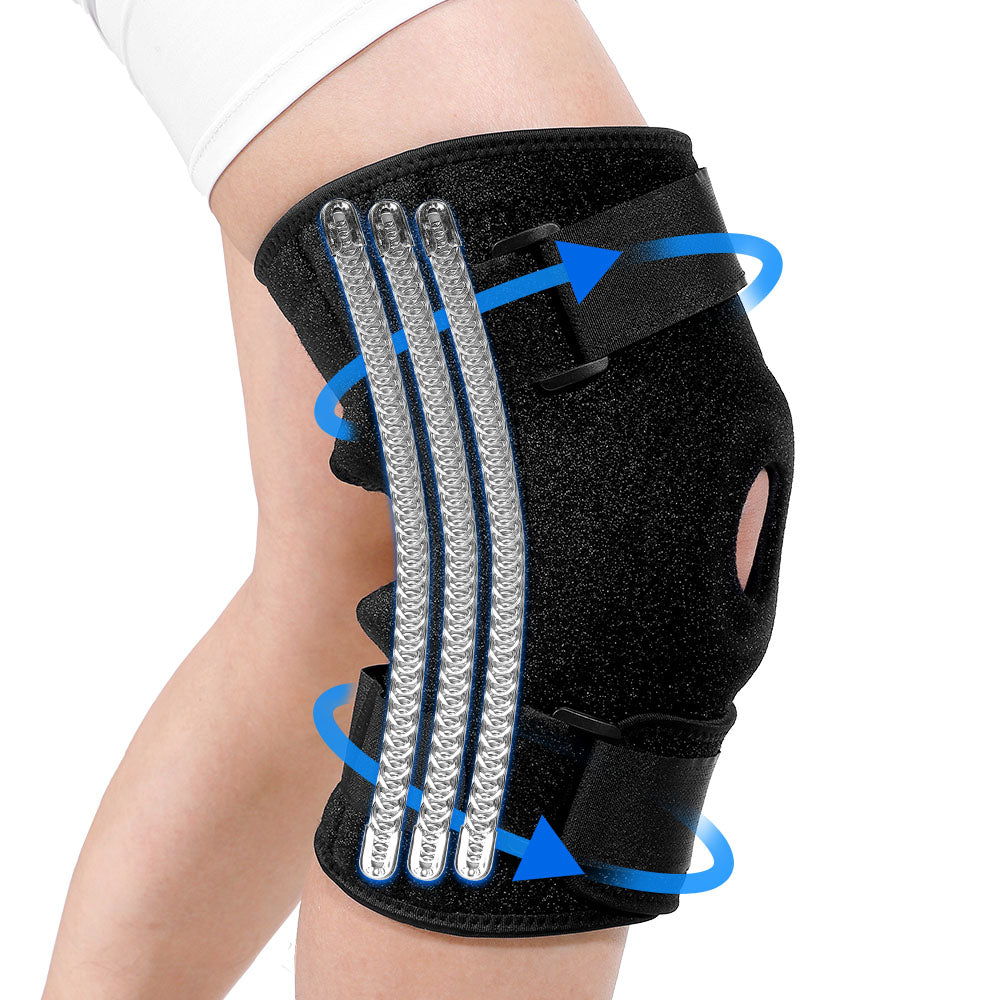
✧ Plus Size Knee Brace for Sports with Rubber Pad FKH04 – 1 Pack
- Triple Metal Springs Stabilizers for Reinforcement
- Plus Size Fit for Obese People, Large Legs
- 3D Breathable Circular Wrapping
- Flexible Velcro Design for Strong Adhesion
- Zero Slip During Lifts, Bends, Walks
Prioritizing Dynamic Warm-Ups and Mobility
Jumping straight into heavy squats or sprints with cold joints increases tendon snapping and stiffness.
-
Spend five to ten minutes performing dynamic leg swings, bodyweight half-squats, and stationary cycling before intense exertion.
-
Foam roll tight quadriceps, calves, and outer thighs to release tension pulling on the knee capsule.
-
Incorporate daily ankle mobility drills so stiff ankles do not force the knees to twist awkwardly during deep bends.
When Joint Noises Signal a Need for Caution
While painless popping is a normal part of an active lifestyle, certain accompanying signs indicate that the joint needs rest or closer attention rather than pushing through discomfort.
-
Sharp, stabbing, or localized pain occurring at the exact moment the knee clicks or pops.
-
Visible swelling, warmth, or fluid accumulation around the kneecap following physical activity.
-
A sensation that the knee is catching, locking, or momentarily giving way under body weight.
Long-Term Habits for Quiet, Resilient Knees
Shedding excess pounds is one of the most effective ways to take heavy mechanical pressure off the lower body and tone down friction-based joint noises, yet true joint longevity relies on a well-rounded approach. Pairing sustainable weight management with targeted lower-body strength training, thorough warm-ups, and reliable Fivali knee braces for support creates an environment where cartilage stays protected and tendons glide effortlessly. By focusing on proper movement mechanics and consistent muscle conditioning, active individuals can keep their knees feeling strong, stable, and ready for every mile, climb, and workout ahead.
-
Posted in
knee