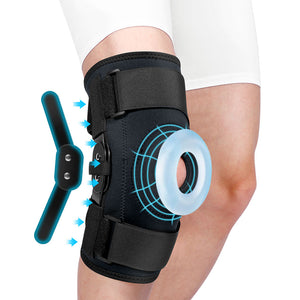
Best Patella Stabilizing Brace
- Black
- Green
- Orange
- Pink
- Black
- Blue
- Green
- Red
- Orange
- Blue
- Dark Blue
- Black
- White
- Red
- Blue
- Black
- Blue
- Red
- Orange
- Yellow
- Black
- Blue
- Green
- Red
- Blue
- Black
- White
- Red
- Dark Blue
- Grey
- Black
- Blue
- Pink
- Grey
- Black
- White
- Light Black
- Black
- Light Grey
- Grey
- Magenta
- Black
- Green
- Black
- Grey
- Red
- Blue
How to Pick the Right Patella Stabilizer?
Choosing the right knee support can dramatically alter your recovery trajectory and overall athletic performance. For active individuals—whether you are hitting the local hiking trails, playing pickup basketball, or training for a marathon—dealing with knee pain can be incredibly frustrating. Specifically, issues like patellar tendinitis, runner's knee (patellofemoral pain syndrome), and kneecap instability require targeted care. Adding a high-quality patella-stabilizing brace to your routine is an essential step in managing joint discomfort, improving patellar tracking, and preventing future injuries. Here is a comprehensive guide to help you find the exact fit for your lifestyle.
Understand Your Specific Knee Support Needs
Before evaluating different models, you must assess the root cause of your knee pain. Are you recovering from a recent patellar subluxation (where the kneecap temporarily slips out of place)? Are you battling chronic anterior knee pain due to osteoarthritis or chondromalacia? Or do you want preventive joint support for high-impact activities like running, weightlifting, or tennis? By identifying whether you need post-injury stabilization, targeted tendon pressure, or general preventive compression, you can narrow your choices and avoid buying the wrong gear.
Types of Patella Stabilizers
The market offers a wide variety of knee supports, each engineered to address distinct anatomical needs and physical activities. Understanding these categories is critical to finding the right match for your joint health.
Compression Sleeve Braces
Knee sleeves provide consistent, 360-degree compression around the joint. They retain body heat, which increases blood circulation and helps reduce daily stiffness and minor swelling. While sleeves are great for mild knee aches and general joint warmth, they generally don't provide the rigid structural support needed to lock a highly unstable kneecap into place.
Open-Patella Braces
An open-patella design features a distinct circular cut-out directly over the kneecap. This opening relieves direct pressure on the joint while a reinforced padded ring gently guides the kneecap, ensuring proper patellar tracking during flexion and extension. These are exceptionally well-suited for individuals managing patellar tendinitis, bursitis, or generalized runner's knee.
Knee Braces with Adjustable Straps
For maximum customization, wrap-around braces with adjustable straps are the optimal choice. These let you manually set the compression level and keep the joint stable against unwanted lateral or medial movement. Because you can tighten or loosen the straps to accommodate localized swelling or activity intensity, this style is widely favored for injury recovery and rigorous rehabilitation phases.
Key Features to Consider
When searching for the best patella stabilizing brace to match your daily demands, you must look beyond basic aesthetics. Pay close attention to the following crucial design elements:
Breathable and Moisture-Wicking Material
You will likely wear your support during strenuous workouts or long daily tasks. Seek out fabrics that are lightweight, highly breathable, and feature advanced moisture-wicking technology. This prevents sweat accumulation, minimizes chafing and skin irritation, and keeps the joint comfortable and dry, even during hot summer activities.
Accurate Sizing and Ergonomic Fit
A stabilizer is only as effective as its fit. If it is too loose, it will slide down your leg; if it is too tight, it can restrict blood flow and cause severe discomfort. Always utilize the specific sizing guide provided for the product. Use a flexible measuring tape to measure your leg circumference slightly above and below the center of your kneecap to ensure a snug, ergonomic fit. Look for designs featuring anti-slip silicone grippers to prevent annoying bunching behind the knee.
Targeted Support Level
Assess the severity of your knee condition. Mild discomfort or minor strains may only require a basic Level 1 compression sleeve. However, if you experience severe instability, ligament strains, or frequent dislocations, consider upgrading to a Level 2 or Level 3 heavy-duty brace with reinforced side stabilizers or bilateral hinges for maximum joint security.
Consult a Healthcare Professional
While over-the-counter knee support is readily available, it is always smart to consult a physical therapist, sports medicine physician, or orthopedic specialist. A clinician can accurately diagnose the underlying causes of your knee pain—often using physical assessments, X-rays, or MRIs—and recommend the type of support your body needs to heal efficiently.
Testing for Mobility and Comfort
Once your new knee support arrives, it is time for a test drive. Put it on and perform some basic movements around your house. Try walking up and down a flight of stairs, performing a few gentle squats, or doing light lunges. Pay close attention to the joint's feedback. The stabilizer should provide a reassuring sense of security and pain relief without pinching the skin or restricting your natural range of motion. Adjust the tension straps as needed until you find the right balance of locked-in stability and comfort.