Hamstring Tears
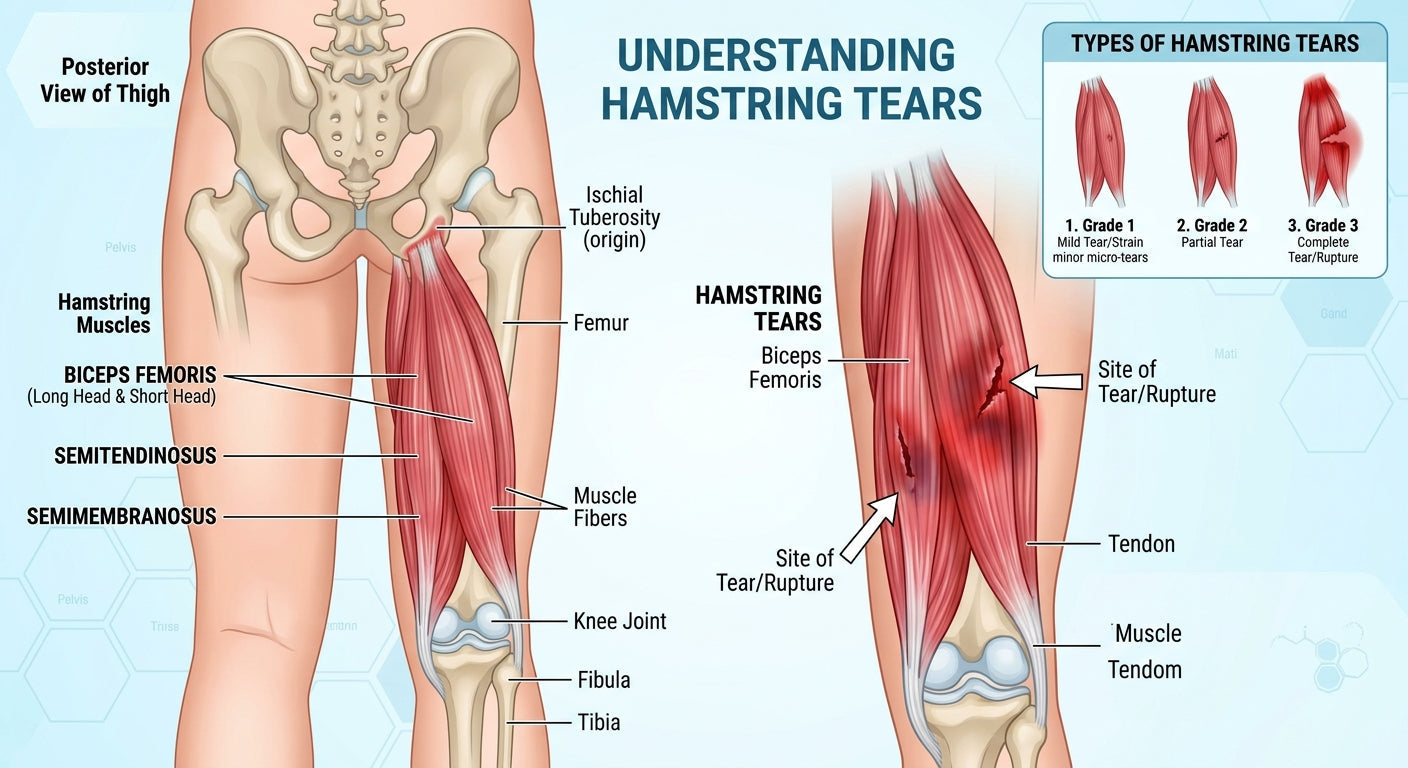
Hamstring tears, also known as hamstring strains, are common injuries, especially among athletes and people who do activities involving sudden bursts of speed, jumping, or rapid changes in direction. The hamstrings are a group of three muscles located at the back of your thigh, extending from your hip to just below your knee. These muscles—the semitendinosus, semimembranosus, and biceps femoris—work together to bend your knee and extend your hip. A hamstring tear occurs when one or more of these muscles or their tendons are stretched beyond their capacity, leading to a partial or complete rupture.

Understanding the Grades of Hamstring Tears
- Grade 1 (Mild Strain): A mild tear involves minimal damage to the muscle fibers. You might feel a sudden, sharp pain, but you can usually continue the activity. Symptoms include mild discomfort or tightness in the back of the thigh. Recovery is typically fast, often within a few days to two weeks.
- Grade 2 (Partial Tear): This involves more significant damage to the muscle fibers, but the muscle is not completely ruptured. You'll likely experience immediate, sharp pain and difficulty continuing the activity. Symptoms include noticeable pain, swelling, and sometimes bruising. Walking might be painful, and you may notice some weakness. Recovery can take three to six weeks or longer.
- Grade 3 (Complete Tear or Rupture): This is the most severe type, involving a complete rupture of the muscle or its tendon from the bone. There will be intense, sudden pain, often described as a "pop" or "snap." You will be unable to put weight on the injured leg and may require crutches. Significant swelling, bruising, and weakness are common. You may also see a visible gap or deformity in the muscle. Recovery can take several months and often requires surgical intervention.
Common Symptoms
The symptoms of a hamstring tear can vary based on the grade of the injury, but generally include:
- Sudden, sharp pain in the back of the thigh during activity.
- A "popping" or "snapping" sensation at the moment of injury.
- Tenderness and localized pain when touching the affected area.
- Swelling and bruising, which may appear a few days after the injury.
- Weakness in the leg, especially when trying to bend the knee or extend the hip.
- Difficulty walking or putting weight on the injured leg.
- Stiffness or restricted movement in the hamstrings.
- In severe cases, a palpable gap or lump in the muscle. Sometimes, individuals may experience persistent pain behind the knee or even develop growing pains in adults if the injury affects nerve pathways or leads to compensatory stress.
Diagnosis
In some cases, imaging tests may be recommended:
- MRI (Magnetic Resonance Imaging): This is the most effective imaging technique for diagnosing hamstring tears, as it can clearly show the extent of muscle damage, fluid accumulation, and whether tendons are involved.
- Ultrasound: Can be used to visualize muscle tears and fluid collection in real-time.
- X-ray: While X-rays don't show soft tissues like muscles, they can help rule out other issues, such as a bone fracture.
Treatment Approaches
Conservative Treatment
For mild to moderate tears, the RICE protocol is often recommended immediately after the injury:
- Rest: Avoid activities that cause pain. Giving the muscles time to heal is paramount.
- Ice: Apply ice packs to the injured area for 15-20 minutes at a time, several times a day, to reduce swelling and pain.
- Compression: Using a thigh compression sleeve can help reduce swelling and provide support.
- Elevation: Keep the injured leg elevated above your heart to minimize swelling.
Other conservative treatments include:
- Pain Management: Over-the-counter pain relievers can help manage discomfort.
- Activity Modification: Avoid activities that aggravate the injury. As healing progresses, gradually reintroduce light activities.
- Physical Therapy: A structured physical therapy program is crucial for regaining strength, flexibility, and full function. This includes gentle stretching to increase leg flexibility and progressive hamstring- and surrounding muscle-strengthening exercises.
- Supportive Devices: In some cases, a thigh brace or crutches may be recommended to reduce stress on the injured hamstring during the initial healing phase. Maintaining overall body alignment with proper posture, and sometimes hip support, can also aid recovery.
When is Surgery Needed?
Surgery is typically reserved for severe Grade 3 hamstring tears, especially those involving the avulsion (complete detachment) of the hamstring tendon from the bone (ischial tuberosity). Surgical repair involves reattaching the torn tendon to the bone. This procedure is often recommended for active individuals to ensure optimal recovery of strength and function and to prevent chronic weakness or instability. Post-surgery, a long period of rehabilitation, including physical therapy, is necessary to restore full function.
Prevention Strategies
- Warm-up: Always do a dynamic warm-up before any physical activity, especially sprinting or intense leg movements.
- Stretching: Stretch your hamstrings and other leg muscles regularly to maintain flexibility. However, avoid aggressive stretching immediately after an injury.
- Strength Training: Incorporate exercises to strengthen your hamstrings, glutes, and core. Maintain balanced strength between your hamstrings and quadriceps to reduce injury risk.
- Proper Technique: Use correct form during sports and exercises to avoid putting undue stress on your hamstrings.
- Gradual Progression: Increase the intensity and duration of your workouts gradually, allowing your muscles to adapt.
- Listen to Your Body: If you feel pain or excessive fatigue, stop and rest. Pushing through pain can lead to injury.
- Wearing appropriate protective gear or using a knee support during high-impact activities, alongside frequent issues like groin pull, may help prevent secondary injuries or provide stability. Additionally, improving hip and leg mobility can support overall lower-body health.
Recovery and Outlook
- Grade 1 tears: Often heal within a few days to two weeks.
- Grade 2 tears: May take three to six weeks, sometimes longer.
- Grade 3 tears (non-surgical): Can take several months to heal.
- Grade 3 tears (surgical): Typically require 6 months to a year to fully return to activity, with extensive physical therapy.
Premature return to activity is a common cause of re-tears, which can be more severe and take longer to recover from. If you want to relieve leg pain quickly, proper rehabilitation and professional guidance are key.
-
Posted in
Hip Injury