Knee Pain Solved: Your Expert Guide to Choosing the Best Sports Knee Brace
You feel it before it even happens. That slight hesitation before a sharp cut on the basketball court. The dull ache that creeps in around mile three of your run. The feeling of instability when you land a jump. For any active person, knee pain isn't just a physical issue—it's a mental roadblock that can steal your confidence and compromise your performance.
But what if you could better understand what your knee is trying to tell you?
Navigating the world of knee braces can feel overwhelming. With so many types, styles, and levels of support, it’s easy to get lost. This guide is your friendly chat over coffee, designed to demystify knee braces for sports. We’ll explore why your knee feels the way it does during specific movements and map those feelings directly to the right type of support, empowering you to move from uncertainty to confident action.
The Biomechanics of the Athlete's Knee: Why It Hurts in Motion
Your knee is a masterpiece of engineering, but the dynamic forces in sports—running, jumping, and cutting—can push it to its limits. Understanding these forces is the first step to finding the right solution.
- Running: This is an act of repetitive impact. With every stride, your kneecap (patella) glides in a groove at the end of your thigh bone. If your muscles are fatigued or your alignment is off, the kneecap can track incorrectly, causing friction and inflammation—often felt as a dull ache around or behind the kneecap, or even a burning sensation. This is commonly known as "Runner's Knee."
- Jumping: The explosive takeoff and high-impact landing put immense strain on your patellar tendon, the tough cord connecting your kneecap to your shinbone. This can lead to the sharp pain right below the kneecap, a classic sign of "Jumper's Knee" or patellar tendonitis.
- Cutting & Pivoting: These rapid, side-to-side movements create rotational forces and sideways stress on the knee. This is where your ligaments—like the ACL and MCL—act as crucial stabilizers. If these forces are too great, they can lead to sprains or a terrifying feeling of the knee "giving way."
Recognizing which of these movements causes your discomfort is the key to unlocking the right type of support.
Decoding Knee Braces: From Gentle Hugs to Fortified Support
Not all knee braces are created equal. They exist on a spectrum of support, and choosing the right one means matching the level of support to your specific need. Think of it in terms of levels.
Level 1: Compression & Proprioception (Knee Sleeves)
The simplest form of support is a compression sleeve. Imagine it as a snug, supportive hug for your joint. These braces work primarily by providing compression, which can help increase blood flow, reduce minor swelling, and keep the joint warm. More importantly, the gentle pressure enhances proprioception—your brain's awareness of where your knee is in space. This heightened feedback can help you move with more control and confidence.
- Best For: General soreness, mild arthritic pain, maintaining joint warmth, and improving stability through body awareness. A good compression knee brace for preventing knee injuries can be a foundational tool for any athlete.
Level 2: Targeted Pressure & Tracking (Patellar Straps & Open-Patella Designs)
This level offers more specific support.
- Patellar Straps (Jumper's Knee Straps): These are small straps that fit just below your kneecap. They apply direct pressure to the patellar tendon, which helps change the angle of force and alleviate the strain from jumping and running. Many athletes find the best patellar tendon strap provides significant relief for that focused pain point.
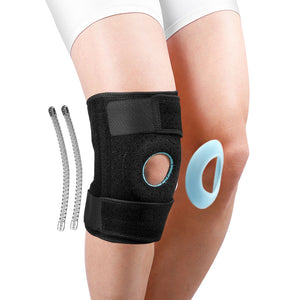
- Open-Patella Braces: These are often sleeves or wraps with a cutout for the kneecap. This design, especially when paired with a U-shaped gel pad or "buttress," helps stabilize the patella and ensure it tracks properly in its groove, making it ideal for Runner's Knee.

Level 3: Structural Reinforcement (Hinged Braces)
When you need serious stability against side-to-side forces, you need a hinged brace. These feature rigid supports (hinges) on one or both sides of the knee that prevent it from moving into unsafe positions, especially during cutting and pivoting motions. They provide a significant mechanical block against the forces that can sprain ligaments like the ACL or MCL.
- Best For: Significant instability, recovery from ligament injuries, or maximum protection in high-risk sports. The best hinged knee brace is designed for athletes who need to trust their knee during multi-directional movements.
Matching the Brace to Your Game: An Activity-Specific Guide
Now, let's connect these brace types to the activities you love.
For the Runner: Combating Repetitive Stress
The constant pounding of running requires support that manages inflammation and tracking without restricting your forward motion.
- Your Problem: A dull ache around the kneecap (Patellofemoral Pain) or sharp pain below it (Patellar Tendonitis).
- Your Solution: A compression sleeve can provide warmth and proprioceptive feedback. If the pain is localized below the kneecap, a patellar strap is an excellent choice. An open-patella design is perfect for addressing kneecap tracking issues. The right knee brace for running will feel supportive, not restrictive.
For the Jumper (Basketball, Volleyball): Supporting Takeoffs & Landings
Your sport involves explosive power and absorbing high-impact forces, all centered on the patellar tendon.
- Your Problem: Pain directly on the patellar tendon or a feeling of your kneecap shifting upon landing.
- Your Solution: A patellar strap is the go-to for targeted tendon support. For more general stability and kneecap control, an open-patella brace with a supportive buttress provides confidence on every landing.
For the Pivot Pro (Soccer, Tennis, Football): Guarding Against Twists & Turns
Your game is all about agility, which places immense stress on the ligaments that hold your knee together.
- Your Problem: A feeling of the knee "giving out," instability during side-to-side movements, or recovering from a ligament sprain (ACL, MCL, LCL).
- Your Solution: This is where a hinged brace is non-negotiable. It provides the external stability your ligaments need to stay safe during rapid changes in direction. For those with a history of ligament injury, the best athletic knee brace with rigid side supports is essential for a safe return to play. Finding the best knee support for acl tear is crucial for protecting the joint during rehabilitation and beyond.
Beyond the Type: What Truly Makes a Great Sports Knee Brace?
Choosing the right type is half the battle. To ensure your brace actually helps, you need to consider these crucial factors.
Materials & Breathability
A brace you won't wear is useless. Materials like neoprene are great for providing warmth but can get hot and sweaty. Modern knit fabrics offer excellent compression while being highly breathable, making them perfect for long workouts or games.
The Perfect Fit
This is the most critical factor. A brace that’s too loose won't provide any support, and one that’s too tight can cut off circulation. A poor fit leads to constant slipping and readjusting—a major distraction. Always follow the manufacturer's guidelines for measuring for knee sleeves. A properly sized brace should feel snug and secure, like a firm handshake.
Durability Signals
Athletes are tough on their gear. Look for signs of quality construction: reinforced stitching, especially around seams and straps; high-grade hinges that move smoothly without catching; and robust materials that won't stretch out after a few uses. This is especially important in a knee brace for working out.
Your Body's First Line of Defense: Self-Checks & When to See a Pro
A brace is a tool, not a cure. It's crucial to listen to your body and know when professional help is needed.
Simple Self-Checks:
- Single-Leg Squat: Stand on one leg and slowly lower yourself into a squat. Watch your knee. Does it stay aligned over your foot, or does it wobble and dive inward? Inward movement (valgus collapse) can signal hip and glute weakness, a common contributor to knee pain.
- Pain-Free Range of Motion: Can you fully bend and straighten your knee without sharp pain or a feeling of it getting "stuck"?
Red Flags (See a Doctor or Physical Therapist):
- A distinct "pop" sound during an injury.
- Immediate and significant swelling.
- Inability to put any weight on your leg.
- A feeling that the knee is locked or will buckle unexpectedly.
Frequently Asked Questions About Sports Knee Braces
-
How do I choose the right type of knee brace for my specific sport or activity?
The best approach is to match the brace to the movements causing discomfort. For dull aches from repetitive impact like running, a compression sleeve or open-patella brace helps. For sharp pain below the kneecap from jumping, a patellar strap is ideal. For instability during cutting and pivoting movements, a hinged brace provides crucial support for ligaments. -
What's the difference between a compression sleeve and a hinged knee brace?
A compression sleeve offers Level 1 support, providing gentle pressure to increase blood flow, reduce minor swelling, and enhance your knee's awareness in space (proprioception). A hinged brace, on the other hand, provides Level 3 structural reinforcement with rigid supports on the sides, specifically designed to prevent unsafe side-to-side or rotational movements, crucial for significant instability or ligament recovery. -
Can using a knee brace weaken my leg muscles?
This is a common concern. While heavy-duty braces might lead to some dependency if overused for everyday activities, using an appropriate brace during high-risk sports is primarily a protective measure. It's important to combine brace use with a consistent strengthening program for your hips, glutes, and quadriceps. -
How can I ensure my knee brace fits correctly?
Proper fit is critical. A brace should feel snug and secure, like a firm handshake, without slipping or being too tight to cut off circulation. You should be able to slide two fingers comfortably under the strap or material. Always follow the manufacturer's measurement guidelines to ensure optimal support and comfort. -
When should I seek professional medical advice for my knee pain instead of just using a brace?
While braces offer support, it's crucial to see a doctor or physical therapist if you experience red flags such as a distinct "pop" sound during an injury, immediate and significant swelling, inability to put weight on your leg, or a feeling that your knee is locked or will buckle unexpectedly. A brace is a tool, not a cure for serious issues.
Your Next Move: From Learning to Action
The "best" knee brace isn't a specific model—it's the one that correctly matches your activity, your symptoms, and your body. By understanding the forces at play in your sport and the specific job each type of brace is designed to do, you're no longer just guessing. You're making an informed decision about your health and performance.
Your knee has been talking to you. Now, you have the knowledge to understand what it's saying and give it the support it needs. Whether you need a simple sleeve or a robust knee stabilizer, choosing the right gear is the first step toward getting back in the game with confidence.