Which Elbow Movements Increase Stress on the Bursa

Our elbows are often overworked when we're preparing for weekend garden work, home renovation projects, or simply working overtime to finish the quarter's work. Have you ever leaned on your elbow for a bit too long, only to notice a tender, squishy swelling at the tip of the joint a few days later? It might feel like a water balloon has mysteriously appeared under your skin.
If this sounds familiar, your elbow might be trying to tell you something. You’re likely experiencing olecranon bursitis—a common, yet frequently misunderstood, condition that can quickly derail an active lifestyle.
But what exactly causes this frustrating swelling, and more importantly, how do you fix it? The secret doesn't lie in just wrapping the joint up tightly; it lies in understanding exactly which daily movements are making it angry, and how to match your protective gear to your specific lifestyle.

What is the Olecranon Bursa? (And Why is it So Angry?)
To understand the problem, we have to understand the anatomy. At the very point of your elbow (the olecranon), there is a tiny, fluid-filled sac called a bursa. Think of the bursa as your body’s built-in bubble wrap. Its primary job is to act as a cushion, reducing friction between the pointy bone of your elbow and the skin stretching over it when you bend and move your arm.
When this sac is subjected to too much friction, direct trauma, or prolonged pressure, it becomes inflamed. It fills with extra fluid, causing that trademark swelling and tenderness known as olecranon bursitis.
Many people confuse this with tendon issues. However, an elbow brace for tendonitis is typically designed to absorb shock from the forearm muscles, because tendonitis is an overload of the tendon. Bursitis, on the other hand, is a surface friction and pressure problem. Understanding this difference is your first major "aha!" moment on the road to recovery.
The Culprits: Everyday Movements That Stress Your Bursa
Bursitis rarely happens out of nowhere. It is usually the result of specific mechanical stresses. Let's break down the most common everyday movements that aggravate the bursa:
1. Prolonged Pressure (The Desk Worker's Dilemma)
If you spend eight hours a day typing while resting your elbows on hard chair armrests or a wooden desk, you are continuously compressing the bursa. Over time, this constant static pressure restricts blood flow and irritates the lining of the sac. Students, office workers, and truck drivers who lean on the center console are prime candidates for pressure-induced bursitis.
2. Repetitive Flexion and Extension
Think about the motion of painting a fence, scrubbing a bathtub, swinging a tennis racket, or even an assembly line job. Repeatedly bending (flexion) and straightening (extension) the elbow causes the skin and triceps tendon to continuously slide back and forth over the bursa. This creates sheer friction. If you lack proper elbow support during intense, repetitive weekend chores, the bursa can easily become inflamed.
3. Lifting, Pushing, and Pulling
While weightlifting or carrying heavy bags of mulch doesn't press directly on the elbow tip, poor lifting form can still trigger an issue. When your joint mechanics are off during a heavy push or pull, neighboring muscles have to compensate. This poor biomechanical chain can lead to severe forearm joint pain and place abnormal pulling forces on the triceps tendon where it attaches to the elbow, indirectly squeezing and irritating an already sensitive bursa.

Navigating Support: Matching the Right Brace to Your Activity Profile
One of the biggest mistakes people make when dealing with elbow pain is grabbing the first generic sleeve they see. But because different activities stress the elbow differently, your support must be matched to your specific lifestyle.
For the Desk Worker & Mechanic: Padded Guards
If your primary aggravating factor is pressure (leaning on a desk or crawling under a car), you need cushioning. A padded guard provides a physical barrier of soft protection between your bone and the hard surface. This prevents the compression that triggers swelling.
For the Athlete & Active Individual: Compression Sleeves
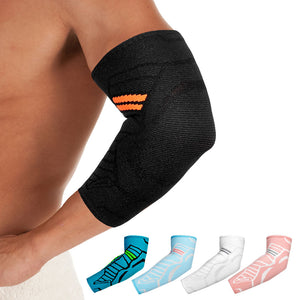
If repetitive motion (like throwing or swinging) is your trigger, a mild compression sleeve is often best. Compression helps increase blood flow to aid in the body's natural healing process, keeps the joint warm, and provides a gentle reminder to your brain (proprioception) about where your joint is in space, helping to improve form.
For Moderate to Heavy Lifters: Adjustable Braces
If you are returning to weightlifting or physical labor, you might need a brace that allows you to control the level of tightness. An adjustable brace lets you customize the fit as your activity changes—looser for resting periods, and slightly tighter for stability during a heavy lift. Finding the best support for elbow strains or bursitis means prioritizing breathable materials and straps that won't dig into your skin when your arm expands during a workout.
When Protection Goes Wrong: Why Your Brace Might Be Making it Worse
Have you ever worn a brace and felt like your pain actually increased? You're not alone. The wrong support, or using support incorrectly, can do more harm than good.

Here are a few reasons why your elbow gear might be failing you:
- You're wearing the wrong type of brace: Wearing a highly restrictive, inelastic counterforce brace designed for tennis elbow will do absolutely nothing to protect your bursa from the pressure of a hard desk. In fact, it might restrict fluid drainage, making swelling worse.
- The fit is too tight: A brace should feel like a supportive hug, not a tourniquet. If an elbow brace for bursitis is cutting off circulation, it traps the inflammatory fluid in the bursa sac and can even compress the ulnar nerve (the "funny bone" nerve), leading to numbness in your fingers.
- Over-reliance: A brace is a tool, not a cure. If you wear a heavy brace 24/7 without ever letting your arm move naturally, the muscles surrounding your elbow will weaken and atrophy.
Preventative Strategies & Safe Return to Activity
Healing bursitis isn't just about what you put on your arm; it's about how you adapt your environment and habits.
- Audit your ergonomics: Lower your chair or raise your keyboard so your elbows rest lightly by your sides, rather than bearing the weight of your upper body on the armrests.
- Take micro-breaks: If your weekend involves repetitive tasks like gardening or painting, set a timer. Every 30 minutes, stop, gently stretch your arms, and change your body mechanics.
- Choose high-quality gear: As you ease back into your active routine, seek out protective gear that champions both comfort and adjustability. The goal is to support the joint without locking it down, allowing for natural, pain-free movement whether you are at home, at the gym, or on the go.
Frequently Asked Questions (FAQ)
Can I continue weightlifting with elbow bursitis?
Usually, yes, but modifications are vital. You should avoid exercises that put direct pressure on the elbow tip (like skull crushers on a hard bench). Opt for exercises that keep the elbow free from contact, and focus strictly on slow, controlled movements without locking out the joint aggressively.
Should I use ice or heat for a swollen bursa?
In the acute phase (the first few days when it is warm, swollen, and newly painful), ice is generally recommended to help constrict blood vessels and reduce swelling. Heat can draw more fluid to an already inflamed sac and should be avoided initially.
When should I see a doctor for a swollen elbow?
If your elbow is warm to the touch, rapidly becoming red, intensely painful, or if you develop a fever, you must seek medical attention immediately. These are signs of septic (infected) bursitis, which requires professional medical treatment, often including antibiotics.
Next Steps in Your Journey
Understanding the biomechanics behind your elbow pain is a powerful first step toward getting back to the activities you love. Now that you know exactly how different movements impact the bursa, and why specific support types matter, you are equipped to make smarter choices about protecting your joints.
The key to staying active and injury-free lies in finding gear that perfectly balances comfort, quality, and personalized adjustability. In our upcoming guides, we’ll dive deeper into exactly how to measure, fit, and select the ideal adjustable support system so you can conquer your day with confidence and leave elbow pain in the past.