Fivali Elbow Brace: Stabilize, Support, and Perform

Repetitive upper-body mechanical stress, high-frequency arm rotations, and heavy lifting patterns expose the elbow joint to continuous mechanical load. Athletes, fitness enthusiasts, and active individuals frequently experience strain across the forearm extensor and flexor muscle origins. Continuous tension at the lateral and medial epicondyles can compromise mechanical output, lower grip power, and limit daily movement performance.
Safeguarding joint alignment while encouraging optimal force transfer requires deliberate structural support. Modern joint stabilization tools blend graduated compression with anatomical contouring to maintain mechanical stability across dynamic movement patterns. Integrating specialized elbow support into daily workouts or athletic training optimizes neuromuscular feedback, protects delicate soft tissues, and ensures consistent physical output over time.

Stabilize the Joint: Reduce the Risk of Strain or Injury
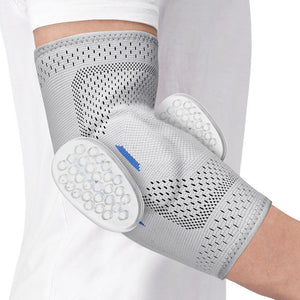
Physical exertion involving high-velocity arm extensions or heavy loaded holds creates substantial rotational torque across the elbow capsule. The Fivali elbow brace helps stabilize the joint and surrounding muscles, reducing the risk of strain or injury during physical activities. The tennis elbow compression brace is designed to fit snugly around the elbow joint, helping to keep it in place and prevent excessive movement that can lead to further damage. Stability is crucial in maintaining long-term joint health and preventing further damage from occurring.
Uncontrolled joint shifting during explosive lifting or rapid racquet strokes accelerates micro-trauma across periarticular ligaments. Applying consistent radial compression around the joint socket restricts excessive lateral displacement without restricting natural flex and extension paths.
-
Dampens micro-vibrations generated during high-impact ball contact or heavy barbell lockouts.
-
Reinforces lateral and medial collateral ligaments under sudden rotational load shifts.
-
Maintains proper kinetic alignment between the humerus, radius, and ulna under heavy tension.
-
Boosts proprioceptive awareness, helping the nervous system adjust joint position rapidly during movement.
Anatomical stabilization ensures that force generated by larger muscle groups, such as the latissimus dorsi and pectorals, transfers smoothly through the arm without overloading the smaller elbow stabilizing structures.
Support for Enhanced Performance
Achieving peak physical performance depends on efficient load distribution across working muscle groups. The Fivali elbow brace lends additional support to the elbow joint and the muscles that surround it, which in turn improves performance during physical activities such as sports and exercises. By distributing the load equally throughout the joint, the tennis elbow compression brace allows for a reduction in the amount of tension and fatigue that is placed on particular muscles. Because of this support, individuals are able to develop their strength, endurance, and general performance, which enables them to push themselves to their limits without jeopardising the health conditions of joints.
High-repetition training blocks—such as high-volume pull-ups, kettlebell swings, or continuous tennis rallies—fatigue forearm extensor bellies rapidly. As muscle fatigue sets in, execution mechanics degrade, shifting harmful stress onto tendon attachment points. Targeted compression acts as a mechanical anchor, absorbing peak shock forces and delaying the onset of local muscular failure.
Performance Benefits Across Training Modalities
-
Resistance Training: Offloads strain from forearm flexors during heavy deadlifts, bent-over rows, and barbell bicep curls.
-
Racquet and Paddle Sports: Stabilizes the wrist extensor origins during high-speed backhands and topspin serves.
-
Bodyweight Calisthenics: Protects the elbow hinge during deep dips, ring muscle-ups, and push-up variations.
-
Functional Fitness Conditioning: Maintains joint integrity during rapid wall-ball throws and high-rep dumbbell snatching.
Sustained muscular stamina allows athletes to maintain high training volume and intensity without sacrificing form precision, driving steady adaptations in endurance and strength.
Aid in the Recovery Process
In the event that an individual already has an elbow issue, the Fivali elbow brace can be of assistance in the process of recuperation. The brace provides support and protection to the wounded area, which speeds up the healing process and lessens the discomfort. It is possible to heal from the injury more quickly thanks to the compression that the brace provides, which helps to reduce swelling and inflammation. In addition, the tennis elbow compression brace can be utilised during rehabilitation activities in order to rebuild strength and mobility in the region that is damaged.
Post-workout recovery requires controlled thermal retention and steady blood flow to facilitate cellular repair in dense tendon structures. Graduated compression promotes localized micro-circulation, accelerating metabolic waste removal and fluid drainage from overstressed muscle tissues.
Integrating Support into Rehabilitation Workflows
When reintroducing movement following periods of joint strain, structured compression provides an essential layer of structural security. Early-stage mobility drills—such as light wrist flexor stretches, eccentric forearm rotations, and isometric grip holds—benefit significantly from active brace wear.
-
Maintains optimal tissue warmth to reduce joint stiffness during warm-up routines.
-
Protects healing tendon fibers against sudden unexpected jerks or load spikes during daily tasks.
-
Provides gentle feedback that discourages over-extension during active range-of-motion exercises.
-
Encourages gradual strength rebuilding by supporting early progressive overload phases safely.
Controlled mechanical assistance allows individuals to stay active throughout their recovery timeline, rebuilding muscular capacity safely while minimizing downtime between active sessions.
Maximizing Movement Efficiency and Athletic Continuity
Sustaining long-term athletic vitality demands a comprehensive strategy combining progressive training, deliberate movement control, and strategic joint protection. Utilizing specialized compression support stabilizes soft tissue architecture, optimizes kinetic force transmission, and manages muscular fatigue across diverse training environments. Athletes and active individuals can approach high-intensity challenges with elevated movement confidence.
Prioritizing joint stability protects against cumulative strain, allowing for consistent training schedules and long-term skill progression. Investing in engineered joint support safeguards physical durability, ensuring that individuals can continue pushing personal records, mastering complex movement patterns, and staying active for years to come.