Rigid vs. Flexible Back Braces: A Practical Guide to Finding Your Best Support

Choosing a back brace can feel overwhelming. You’re navigating terms like "lumbar support," "thoracic," and "sacroiliac," all while trying to answer one fundamental question: will this actually help me feel better? The core of that decision often comes down to choosing between a rigid brace and a flexible one.
It’s a critical choice. One offers maximum immobilization, like scaffolding for your spine. The other provides dynamic support, moving with you as you go about your day. With Memorial Day weekend and summer activities on the horizon, picking the right support means the difference between joining in and sitting on the sidelines.
This guide is designed to cut through the confusion. We'll break down the science, explore real-world scenarios, and give you a clear framework to confidently choose the back brace that fits your pain, your goals, and your life.
Understanding the Two Pillars of Back Support
At their core, all back braces work to provide stability, reduce painful micro-movements, and improve your posture. But how they achieve this differs dramatically.
- Rigid Braces are the heavy-duty option. Made from hard materials like molded plastic, they are designed to severely restrict movement—often blocking motion by as much as 50-65%. Think of them as an external cast for your spine, typically prescribed by a doctor for serious conditions.
- Flexible Braces are crafted from soft, elastic materials. They provide support through compression and gentle stabilization, reducing motion by a more moderate 10-30%. Their goal is to support your muscles and remind you of proper posture without locking you in place, making them ideal for managing general pain and staying active.
When is a Rigid Brace the Right Call?
A rigid brace is a specific tool for a specific job: significant stabilization.
You might need a rigid brace if you're dealing with:
- Post-operative healing (e.g., after spinal fusion)
- Significant spinal instability
- Vertebral fractures
- Severe scoliosis
| Pros of Rigid Braces | Cons of Rigid Braces |
|---|---|
| ✅ Maximum spinal stabilization | ❌ Highly restrictive of daily movement |
| ✅ Effective for acute injury healing | ❌ Often bulky and uncomfortable |
| ✅ Prescribed for serious structural issues | ❌ Typically requires a professional fitting |
The Case for Flexible Braces: Support for Your Daily Life
For the vast majority of people dealing with back pain, a flexible brace offers the perfect balance of support and freedom. It’s designed to integrate into your life, not interrupt it.
A flexible brace is likely your best choice for:
- General lower back pain and muscle strains
- Chronic pain from sitting or standing for long periods
- Improving posture and correcting issues like an arched lower back
- Providing extra support during physical activity or household chores
| Pros of Flexible Braces | Cons of Flexible Braces |
|---|---|
| ✅ Comfortable for all-day wear | ❌ Not suitable for severe, acute injuries |
| ✅ Allows for a wide range of motion | ❌ Provides less immobilization |
| ✅ Discreet and can be worn under clothing | |
| ✅ Promotes active recovery and good habits |
A Simple Framework for Choosing Your Brace
Still unsure? Let’s map your needs to the right solution. Answer these three simple questions to find your path.

1. What is your pain profile?
- Acute & Severe: Is your pain sharp, sudden, and the result of a specific injury or surgery? You should consult a doctor, who will likely recommend a rigid brace.
- Chronic & Manageable: Is your pain a dull ache that comes and goes, often related to your posture or daily activities? A flexible brace is designed for this kind of ongoing support.
2. What is your activity level?
- Recovery & Low Activity: Is your primary goal to immobilize your spine while it heals? A rigid brace is the clear choice.
- Active & On-the-Go: Do you want support while working, lifting, gardening, or exercising? A flexible brace provides stability without hindering your movement.
3. What is your ultimate goal?
- Short-Term Healing: Are you focused on protecting your spine for a set period (e.g., the 12 weeks following an injury)? A rigid brace serves this purpose.
- Long-Term Relief & Prevention: Are you looking for a tool to manage daily discomfort, improve your posture, and prevent future flare-ups? A flexible brace is your long-term partner.
For most people seeking relief from everyday back pain and a way to stay active, the path clearly leads to a high-quality flexible brace.
The "Muscle Weakness" Myth: What the Science Really Says
A common concern we hear is, "Won't wearing a back brace make my muscles weaker?" It's a valid question, but modern research has largely put this fear to rest.
Multiple systematic reviews and studies (published in leading journals like Spine in 2017, Clinical Biomechanics in 2019, and Brain Sciences in 2024) found no conclusive evidence that using a back brace causes trunk muscle weakness.
In fact, the opposite can be true. By providing support and reducing pain, a back brace can actually enable you to be more active, which is the key to building and maintaining core strength. It enhances your body's awareness of its position (proprioception), helping you maintain better form and avoid re-injury. The brace is a tool, not a crutch.
Fivali: The Flexible Solution for Your Active Life
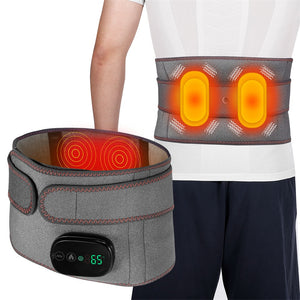
When you need versatile support that adapts to your day, the Fivali Unisex Back Brace for Posture & Pain Relief is engineered to deliver. It embodies the best of flexible brace technology, providing robust support without sacrificing comfort or mobility.
It’s an ideal choice for the user whose evaluation led them here—someone who needs reliable, everyday support. Here’s why it stands out:
- Customizable Compression: The dual adjustable straps let you dial in the exact level of support you need. Loosen it for gentle postural reminders at your desk, or tighten it for firm stability when you're lifting something heavy.
- Breathable, All-Day Comfort: Made from lightweight, non-irritating fabric, this brace is designed to be worn discreetly under your clothes without causing overheating or discomfort.
- Targeted Pain Relief: The ergonomic design provides focused support to the lumbar region, easing muscle strain and promoting proper alignment to relieve pressure on your spine.
- Freedom to Move: Whether you're getting ready for a summer road trip or just tackling weekend chores, this back brace for posture & pain relief moves with you, ensuring you can live your life actively and with less pain.
Frequently Asked Questions
1. How long should I wear a flexible back brace each day?
For posture correction and general support, many people find success wearing it for a few hours at a time, especially during activities that tend to trigger their pain (like sitting at a computer or driving). The goal is to use it as a tool to train your muscles, not as a permanent fixture. It's always best to listen to your body.
2. Can I wear a flexible brace directly against my skin?
While many modern braces are made with skin-friendly materials, it's generally recommended to wear a thin shirt underneath. This prevents any potential skin irritation from prolonged wear and helps keep the brace cleaner.
3. Is a flexible brace a replacement for exercise?
Absolutely not. A flexible brace is a complementary tool. The best long-term solution for back pain involves strengthening your core muscles. The brace helps manage pain and improve posture, making it easier and safer for you to perform the exercises that build lasting strength.
Take the Next Step Toward a More Active Life
Choosing the right back support is a proactive step toward managing your pain and reclaiming your lifestyle. For severe, acute conditions, a rigid brace under a doctor's care is essential. But for the everyday battles with posture, chronic aches, and the desire to stay active, a versatile and comfortable flexible brace is the clear winner.
Don’t let back pain define your summer. Empower yourself with the right support and get back to doing what you love.