How Back Movements Affect Spine Strain and Support Choices
As we gear up for Memorial Day weekend, many of us are transitioning our fitness routines. Whether you are taking on the grueling Murph challenge, preparing for summer strength competitions, or simply moving heavy patio furniture out of storage, your body is about to face new physical demands.
Your back is an incredibly strong, resilient structure. Yet, a surprisingly high number of fitness enthusiasts find themselves sidelined just as the summer season begins, sidelined not by weakness, but by a lack of mechanical awareness. Understanding how specific movements affect your spine is the first, most vital step toward pain-free performance.
Let’s lift the hood on spinal biomechanics to see exactly how high-impact movements create strain, and explore the precise moments when a rigid belt is a lifesaver versus when a flexible support is the superior choice.

The Core Mechanics of Spine Strain: Shear, Compression, and Torsion
Before you can protect your spine, you need to understand the invisible forces acting upon it. The lumbar spine (your lower back) is designed to handle immense loads, but it absorbs those loads differently depending on the angle and nature of your movement.
When you lift, jump, or twist, your spinal discs and ligaments experience three primary types of force:
- Compression: Imagine pressing down on a marshmallow with the palm of your hand. That squishing force is compression. In your spine, it happens when gravity and added weight push straight down on your vertebrae. Some compression is perfectly healthy and normal, but extreme compression can overstress the discs.
- Shear: Picture two stacked blocks, and you push the top block horizontally while holding the bottom block still. That sliding, perpendicular motion is shear force. The lumbar spine is highly vulnerable to shear, which often leads to disc herniations and ligament sprains if not properly managed by the core muscles.
- Torsion: Think of wringing out a wet towel. Torsion is a twisting force. When you combine heavy loads with sudden rotational forces, torsion places massive stress on the fibrous outer rings of your spinal discs.

High-Impact Movements and Their Spinal Strain Map
How do these forces play out in the gym or during your weekend activities? Let’s map common high-impact movements to the specific strains they generate.
The Deadlift: The Ultimate Test of Shear and Compression
When executed with a neutral spine, a deadlift safely distributes compression across the vertebrae. However, if your form breaks down and your lower back rounds (spinal flexion) during the pull, you introduce severe shear forces alongside high compression. This pushes the internal disc material backward, significantly increasing the risk of injury.
The Squat: A Balancing Act
A proper squat mostly challenges the spine with compression. But a common error—the "good morning squat," where the hips rise faster than the chest and the torso leans aggressively forward—shifts the load. Suddenly, the spine has to fight to keep the torso from collapsing, creating dangerous levels of shear force on the lower lumbar joints.
The Overhead Press: The Hyperextension Trap
Pressing heavy weights overhead requires core stability. If a lifter lacks shoulder mobility or core strength, they often compensate by leaning back aggressively (hyperextension). This severely pinches the posterior (back) elements of the spine, concentrating intense compression on the facet joints while stretching the anterior ligaments.
Bent-Over Rows and Dynamic Sports: The Torsion Threat
Exercises that combine bending forward (flexion) with any form of twisting create a perfect storm of shear and torsion. This is why rotational movements under load require the most cautious progression and technique mastery.
Protecting the Spine: The Role of External Support
Your body has a built-in mechanism to fight these forces: Intra-Abdominal Pressure (IAP). By taking a deep breath and bracing your core (like you're about to take a punch to the stomach), you create a pressurized cylinder that stabilizes the spine from the inside out.
However, as loads get heavier or fatigue sets in, maintaining that internal pressure becomes difficult. This is where external support comes into play. wearing a back brace or a lifting belt isn't about replacing your core; it’s about giving your core a physical boundary to push against, magnifying your body's natural IAP.
But not all supports are created equal. The biomechanical demands of your movement dictate the type of support you need.

Rigid vs. Flexible Lumbar Support: A Biomechanical Decision Guide
A common mistake among beginners is assuming that stiffer always means better, or conversely, that any belt will fix poor form. The choice between rigid and flexible support comes down to a trade-off between absolute stability and necessary mobility.
When Rigid Support Dominates
A rigid back brace or thick leather lifting belt is designed to heavily limit motion.
- The Biomechanics: By restricting how much your spine can bend or extend, rigid support acts as a heavy-duty wall for IAP, effectively neutralizing extreme shear and compression forces.
- Best For: Maximal, low-mobility lifts. If you are going for a one-rep max on a heavy barbell squat or deadlift, rigid support is your best ally. It forces the spine to stay in a neutral, safe alignment under crushing loads.
When Flexibility and Proprioception Win
Flexible supports (often made of neoprene, nylon, or elastic blends) do not physically stop you from bending. Instead, they rely on proprioception—the tactile feedback against your skin that reminds your brain to engage your core muscles.
- The Biomechanics: Flexible belts provide a moderate increase in IAP but prioritize your ability to move through a full, dynamic range of motion. They encourage active muscle engagement rather than passive reliance on the belt.
- Best For: Olympic weightlifting (like cleans and snatches), high-repetition functional fitness workouts, and active recovery. If a movement requires sudden, explosive extension or rapid changes in body position, a rigid belt will inhibit your mechanics. A flexible support keeps you warm, gives you physical cues to brace, and lets your body move the way it was designed to.
FAQ: Understanding Spine Support in the Gym
As you dive deeper into spinal mechanics, you likely have a few common questions. (And if you’ve been scouring forums for the latest news entual.io last 3 hours on fitness biomechanics, you'll know there is a lot of conflicting information out there!)
do weight lifting belts help lower back pain?
Yes and no. A belt can help alleviate pain during a lift by stabilizing the spine and reducing shear forces on sensitive tissues. However, a belt is a performance and safety tool, not a cure. It should never be used to mask acute pain or replace proper medical evaluation and rehabilitation of underlying core weaknesses.
Do lifting belts weaken my core?
This is one of the most persistent myths in the fitness world. Studies consistently show that wearing a belt correctly actually increases the activation of your abdominal muscles. Because you have something to push against, your core muscles contract harder than they would without the belt.
How do I know which one to buy?
Knowing how do i pick the right size back support belt? comes down to measuring around your naval (not your pant size) and matching the material to your primary activity. If you're a powerlifter, look for rigidity. If you are doing varied, dynamic workouts, lean toward flexibility.
Is my back pain actually coming from elsewhere?
The body operates as a kinetic chain. Sometimes, poor mechanics in one joint force the spine to compensate. For instance, a lifter compensating for upper body weaknesses might strain their back, leading them to search for a lifters elbow brace and a back belt simultaneously. Always evaluate your entire movement pattern, not just the area that hurts.
Your Next Steps for a Safer Lift
Understanding whether your routine involves massive shear forces or high-speed torsion is the key to longevity in fitness. Before your next heavy workout, take a moment to evaluate your training program. Are you constantly fighting compression under heavy barbells, or are you performing dynamic, flexible movements?
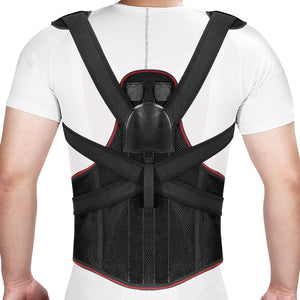
If you are exploring the idea of a metal back brace for posture during daily activities versus a flexible sleeve for the gym, remember that your choice must align with your body's mechanical needs.
By mapping your movements to the right type of stability, you can build immense strength without sacrificing the health of your spine. Ready to see how these principles apply to the real-world gear available to you? Explore the comprehensive world of back brace support and find the exact biomechanical match for your lifestyle.