What Is the Best Knee Brace for Patellofemoral Syndrome?

Patellofemoral Pain Syndrome (PFPS), often referred to as "runner's knee," is a common condition characterized by pain at the front of the knee and around the kneecap (patella). This discomfort typically arises when the patella does not track smoothly within the femoral groove, leading to irritation of the cartilage and surrounding soft tissues. For many athletes and active individuals, finding the right knee brace patellofemoral solution is a critical step in managing symptoms and maintaining a high level of physical activity.
Selecting a brace for this specific condition requires an understanding of biomechanics. The goal of a high-quality brace is not just to provide warmth, but to assist in the proper alignment of the patella during flexion and extension. By applying targeted pressure and providing structural support, the right gear can significantly reduce the mechanical stress that triggers flare-ups.
Biomechanics of Patellar Tracking
The patellofemoral joint operates as a pulley system. Ideally, the kneecap should slide up and down a central groove in the femur (thigh bone) as the leg moves. In cases of PFPS, the patella often drifts laterally—sliding too far toward the outside of the knee. This "maltracking" increases friction and pressure on the underside of the bone.
A knee brace designed for this syndrome focuses on lateral stabilization. By using specific materials and structural reinforcements, these braces act as a physical barrier to prevent the kneecap from shifting out of its intended path. This mechanical correction helps redistribute forces across the joint more evenly.
Essential Features of Effective Bracing
When evaluating options for a knee brace with patellofemoral support, several design elements distinguish a high-performance model from a generic sleeve. The effectiveness of the gear depends heavily on how it interacts with the unique anatomy of the user's knee.
-
Functional Buttresses and Inserts
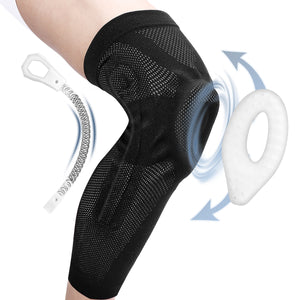
The most vital component of a PFPS brace is the patellar buttress. This is typically a C-shaped or O-shaped foam or gel insert that surrounds the kneecap. A C-shaped buttress is particularly effective for those with lateral tracking issues, as the open side allows the kneecap to stay centered while the padded side pushes against the outer edge to keep it in the groove.

-
Compression Materials
Compression is more than just a tight fit; it serves to increase proprioception. This is the body’s ability to sense its position and movement in space. Neoprene and advanced knit fabrics are the primary choices here. Neoprene provides excellent heat retention, which keeps the tendons supple, while breathable knits offer better moisture-wicking properties for long-term wear during intense sports.
-
Integrated Strapping
Systems Static sleeves can sometimes slip or fail to provide enough directional force. Advanced braces feature independent strapping systems that allow the user to pull the patella medially (toward the inside). These straps provide a customizable level of tension that can be adjusted based on the intensity of the activity.
Categorizing Different Brace Designs
Not every knee requires the same level of intervention. The "best" brace is often determined by the severity of the maltracking and the specific activities the user performs.
- Patellar Stabilizers
These are the gold standard for daily management of PFPS. They usually feature a hole in the center (an open patella design) to reduce direct pressure on the kneecap while the surrounding buttress handles the alignment. These are versatile enough for weightlifting, hiking, and everyday walking.
- Patellar Straps or Bands
Often called infrapatellar straps, these are small bands that sit just below the kneecap on the patellar tendon. While they are more commonly associated with Jumper’s Knee (patellar tendonitis), they can help PFPS by slightly altering the angle at which the tendon pulls on the kneecap, effectively "seating" it better in the femoral groove. They are favored by runners who want minimal bulk.
- Medial-Lateral Hinged Braces
If patellofemoral pain is accompanied by ligament instability (such as a weak MCL or LCL), a hinged brace might be necessary. These include metal or plastic stays on the sides to prevent the knee from wobbling or "giving out" sideways, which indirectly helps the patella stay on track by stabilizing the entire joint complex.
Material Selection and Durability
The longevity of a brace is dictated by its construction. Since PFPS is often a chronic or recurring issue, the gear must withstand repeated cycles of sweat, movement, and washing.
- Breathable Synthetics: Modern braces often use perforated neoprene or spacer fabrics. These allow air to circulate, preventing the skin irritation that can occur when moisture is trapped against the leg for hours.
- Medical-Grade Silicone: Lower-end braces use foam that compresses and loses its shape over time. Higher-end models utilize silicone grippers and buttresses that maintain their structural integrity and "stick" to the skin better, preventing the brace from migrating down the calf during a run.
- Reinforced Stitching: Look for flat-lock stitching or heat-bonded seams. These methods reduce friction against the skin, preventing chafing, and ensure that the elastic components don't fray under high tension.
Fivali Recommendation
✧ Plus Size Knee Brace for Sports with Rubber Pad FKH04
- Triple Metal Springs Stabilizers for Reinforcement
- Plus Size Fit for Obese People, Large Legs
- 3D Breathable Circular Wrapping
- Flexible Velcro Design for Strong Adhesion
- Zero Slip During Lifts, Bends, Walks

Impact on Athletic Performance
A common concern among athletes is whether a brace will limit their range of motion or speed. In reality, the right support can actually enhance performance by removing the "fear of pain" that causes compensatory movements.
- Influence on Running Mechanics
For runners, PFPS often leads to a shortened stride or an altered foot strike as the body tries to protect the knee. A brace provides the confidence to maintain a natural gait. Keeping the patella centered, it prevents the sharp, stabbing pain often felt during the "loading response" phase of running (when the foot hits the ground).
- Stability in Lateral Movements
In sports like tennis or basketball, the knee is subjected to sudden pivots and lateral shifts. A brace with integrated side stays or high-tension strapping ensures that the kneecap doesn't "jump" the track during these high-force maneuvers. This stability is crucial for preventing secondary injuries that occur when the joint is misaligned.
Proper Fit and Sizing Requirements
Even the most technologically advanced brace will fail if the fit is incorrect. A brace that is too loose will not provide the necessary medial force to track the patella, while one that is too tight can restrict blood flow and actually increase pressure on the joint.
To find the correct size, measurements should be taken at three points: the mid-patella, six inches above the kneecap (thigh), and six inches below the kneecap (calf). Most technical braces are designed with a degree of adjustability, but the base sleeve must be snug enough to prevent migration without causing "muffin-topping" of the skin at the edges.
Comparison of Open vs. Closed Patella Designs
The choice between an open or closed patella design is a major decision point for those seeking a knee brace patellofemoral solution.
|
Feature |
Open Patella |
Closed Patella |
|
Pressure |
Relieves direct pressure on the kneecap. |
Provides uniform compression over the whole joint. |
|
Tracking |
Best for alignment issues (PFPS). |
Best for general swelling or bursitis. |
|
Breathability |
Higher allows heat to escape through the opening. |
Lower; retains more heat. |
|
Stability |
Targeted support via the buttress. |
General stability via the fabric tension. |
For patellofemoral syndrome specifically, the open patella design is almost always preferred because it allows the kneecap to move freely within the confines of the stabilizing buttress.
Maintenance and Care for Longevity
To ensure the brace continues to provide the necessary tension and support, regular maintenance is required. Dirt and salt from sweat can degrade elastic fibers and harden silicone inserts.
- Hand Washing: Machine washing can stretch out the technical knits. Using lukewarm water and a mild detergent preserves the elasticity.
- Air Drying: High heat from a dryer can melt the adhesives in the straps and ruin the neoprene. Braces should always be laid flat to air dry.
- Velcro Care: Keeping the hook-and-loop fasteners clean of lint and hair ensures that the strapping system maintains a secure hold during high-impact activities.
Integration with Strength Training
While a brace provides immediate mechanical relief, it is most effective when viewed as part of a broader strategy. The brace manages the symptoms and alignment in real-time, allowing the user to engage in exercises that address the root cause of PFPS, such as weakness in the Vastus Medialis Oblique (VMO) muscle or tightness in the Iliotibial (IT) band.
By wearing the Fivali brace during squats, lunges, or step-ups, an individual can perform these movements with proper form and without pain. This creates a positive feedback loop: the brace enables the strengthening, and the strengthening eventually reduces the dependency on the brace.
Summary of Selection Criteria
The search for the best knee support for PFPS concludes with a focus on customization and biomechanical correction. A simple elastic sleeve is rarely enough for patellar maltracking. The ideal gear must provide lateral-to-medial force, utilize a high-quality buttress to guide the kneecap, and offer enough comfort to be worn consistently.
When the mechanics of the knee are corrected through proper bracing, the inflammation associated with Patellofemoral Pain Syndrome can finally subside. Whether the goal is returning to the marathon track or simply navigating stairs without discomfort, the right brace acts as a reliable partner in joint health.