Cavus Foot
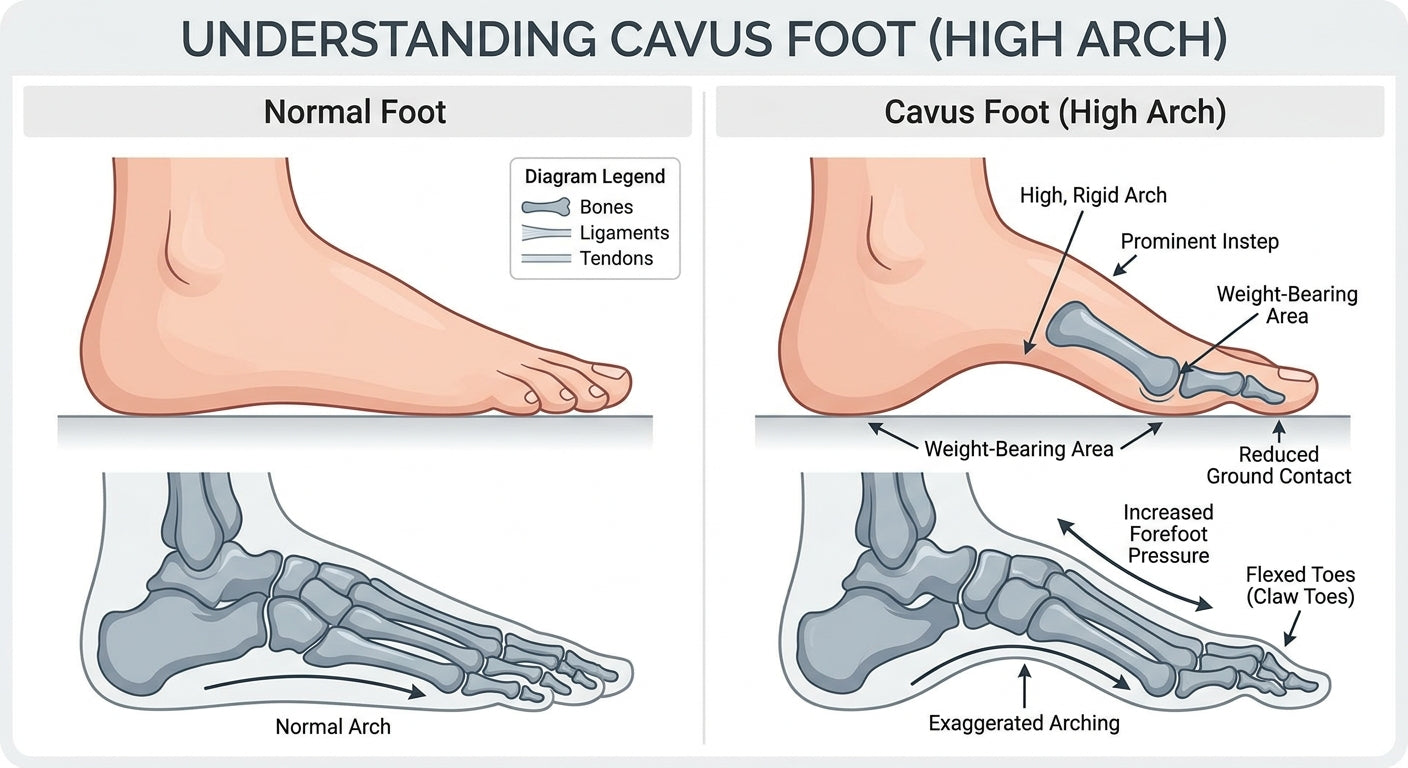
While many people know about "flat feet," its opposite condition, cavus foot, is less common but can be just as problematic. Cavus foot is characterized by an abnormally high arch that doesn't flatten when bearing weight. This rigid, high arch can lead to a host of issues, from foot pain to instability, significantly impacting a person's mobility and quality of life.
Unlike a flexible foot that effectively absorbs shock, a cavus foot concentrates pressure on the heel and the ball of the foot. This can cause pain, disrupt balance, and increase the risk of other foot and ankle problems.
What Causes Cavus Foot?
Cavus foot is linked to an underlying neurological condition that affects muscle balance in the foot and leg. Some of the most common associated conditions include:
- Charcot-Marie-Tooth (CMT) disease
- Cerebral palsy
- Spina bifida
- Muscular dystrophy
- Stroke
The condition can also be hereditary and passed down through families or, in some instances, develop without a clear cause (idiopathic). The imbalance in muscle strength pulls the foot into its characteristic high-arched shape.
Recognizing the Symptoms
Cavus foot symptoms can range from mild to severe. Because the foot is not an effective shock absorber, pain is a primary complaint. Common symptoms include:
- Pain: Discomfort in the arch, heel, ball of the foot, or ankle, especially during walking or standing.
- Instability: A feeling of unsteadiness and a tendency to roll the ankle outward, leading to frequent ankle sprains.
- Calluses: Thick, painful skin developing on the heel, ball, or outer edge of the foot due to excessive pressure.
- Claw Toes or Hammertoes: Toes that bend into a curled position.
- Difficulty with Footwear: Shoes may not fit properly, causing rubbing and discomfort.
Foot and ankle pain is a common complaint. This discomfort can be complex, and people often wonder whether plantar fasciitis can also cause ankle pain, highlighting the need for an accurate diagnosis.
How Does Cavus Foot Affect Your Gait?
The structure of a cavus foot often causes a person to walk on the outside of their feet. This outward roll, known as supination, means the foot doesn't absorb shock effectively. This gait pattern significantly increases the risk of ankle sprains and stress fractures on the outer bones of the foot. Ankle support for supination can provide stability and help correct this alignment.
While a cavus foot involves supination (rolling out), it's the opposite of overpronation (rolling in). Understanding your specific gait is key, as the approach to a cavus foot is very different from that for pronated feet.
Diagnosis and When to See a Doctor
If you suspect you have a cavus foot, consult a healthcare professional or podiatrist. A diagnosis typically involves:
- A physical examination: The doctor will assess your foot's structure, look for calluses, test muscle strength, and check for associated symptoms, such as hammertoes.
- Gait analysis: You may be asked to walk so the doctor can observe your foot and ankle mechanics.
- Imaging tests: X-rays can confirm the diagnosis by revealing the bone structure and arch height.
Management and Treatment Options
Treatment for cavus foot focuses on relieving pain and improving stability. Non-surgical options are the first line of defense and are effective for many people.
Orthotic Devices and Supportive Footwear
For many individuals, managing cavus foot centers on specialized shoe inserts and supportive footwear. These devices help redistribute pressure away from the ball and heel of the foot, provide cushioning, and improve stability. Finding the right ankle and arch support is crucial for daily comfort and preventing further injury. Shoes with a wider heel, good cushioning, and a higher top can also offer valuable support.
Bracing
In cases with significant ankle instability or foot drop, a brace may be recommended. An ankle brace for pain can provide the stabilization needed to prevent rolling and build confidence while walking. The type of support needed can vary, from simple sleeves for mild discomfort to more rigid braces for significant instability. Even athletes seeking a specific ankle brace for volleyball players need to consider their underlying foot mechanics to prevent injuries. For active people, especially those in sports that involve a lot of jumping and lateral movement, supportive gear such as basketball ankle braces can provide the extra stability a cavus foot requires.
Physical Therapy
Stretching and strengthening exercises can improve the flexibility of tight muscles and ligaments while strengthening weaker ones, improving overall foot balance and function.
Surgical Options
If conservative treatments fail to provide relief and the condition severely impacts daily life, surgery may be considered. Surgical procedures aim to correct the deformity, relieve pain, and improve foot function.
Living with Cavus Foot
While a cavus foot can be challenging, proactive management can make a significant difference. With the right combination of supportive footwear, orthotics, and a dedicated stretching routine, most people can effectively manage their symptoms and maintain an active lifestyle. If you experience persistent foot pain or instability, seek professional medical advice as a first step toward relief and better foot health.
Frequently Asked Questions About Cavus Foot
- What is a cavus foot?
- Cavus foot is a condition characterized by an abnormally high arch that does not flatten when bearing weight. This rigid arch concentrates pressure on the heel and the ball of the foot, often leading to pain, instability, and other foot and ankle issues.
- What causes cavus foot?
- Cavus foot is frequently linked to underlying neurological conditions such as Charcot-Marie-Tooth disease, cerebral palsy, spina bifida, muscular dystrophy, or stroke. It can also be hereditary or, in some cases, develop without a clear cause.
- What are the common symptoms of cavus foot?
- Symptoms can range from mild to severe and commonly include pain in the arch, heel, ball of the foot, or ankle; a feeling of unsteadiness and frequent ankle sprains; the development of painful calluses due to excessive pressure; curled toes (claw toes or hammertoes); and difficulties with shoe fit and comfort.
- How does a cavus foot affect a person's walking gait?
- The structure of a cavus foot often causes individuals to walk on the outside of their feet (supination). This gait pattern means the foot does not absorb shock effectively, significantly increasing the risk of ankle sprains and stress fractures.
- What are the main treatment options for cavus foot?
- Treatment for cavus foot aims to relieve pain and improve stability. Non-surgical options include using specialized orthotic devices, supportive footwear, bracing (such as an ankle brace for pain), and physical therapy to improve muscle balance and flexibility. If these conservative methods are not effective, you may consider surgical options.
-
Posted in
Ankle Injuries