Choosing Your Counterforce Brace: Precision Support for Tennis Elbow vs. Golfer's Elbow
You feel that nagging ache on the outside of your elbow after a weekend tennis match, or a sharp pain on the inside after a day of gardening. You’ve done your initial research and know a counterforce brace is a common solution. But now you’re facing the critical question: are all these braces the same? Can you just buy any strap and hope for the best, or does your specific pain—tennis elbow versus golfer's elbow—require a more targeted approach?
This is a common sticking point for many people seeking relief. While both conditions affect the elbow, they originate from different muscle groups and biomechanical stresses. Choosing a brace without understanding these nuances is like using a flathead screwdriver on a Phillips screw—it might work, but it’s not the right tool for the job.
This guide will walk you through the precise differences between these two conditions and explain how the specific design features of a counterforce brace can provide targeted, effective support, helping you make a confident decision to get back to the activities you love, pain-free.
Understanding the Anatomy of Your Pain: Beyond the Labels
While the names "tennis elbow" and "golfer's elbow" are catchy, the real difference lies in which side of your forearm is taking the strain. The technical terms are lateral epicondylitis (tennis elbow) and medial epicondylitis (golfer's elbow).
Tennis Elbow (Lateral Epicondylitis): The Extensor Muscles Under Strain
Tennis elbow affects the tendons on the outside of your elbow, specifically at the bony bump known as the lateral epicondyle. These are the extensor muscles, responsible for bending your wrist backward and extending your fingers.
- Affected Muscles: Forearm extensors (e.g., extensor carpi radialis brevis).
- Common Triggers: Repetitive gripping and wrist extension activities like hitting a backhand in tennis, using a screwdriver, or prolonged typing.
- Pain Location: You'll typically feel tenderness and pain on the outer part of your elbow, which can radiate down your forearm.
Golfer's Elbow (Medial Epicondylitis): The Flexor Muscles in Distress
Golfer's elbow, conversely, affects the tendons on the inside of your elbow at the medial epicondyle. These are the flexor muscles, which allow you to bend your wrist forward and grip objects tightly.
- Affected Muscles: Forearm flexors.
- Common Triggers: Repetitive wrist flexion and gripping, such as the downswing in golf, pitching a baseball, carrying a heavy suitcase, or even repetitive handshakes.
- Pain Location: The pain is concentrated on the inner side of the elbow and can also travel down the forearm towards the wrist.
The Science of Counterforce: How Targeted Pressure Creates Relief
Many people wonder if a simple strap can really make a difference. The science is surprisingly straightforward. A counterforce brace works by applying gentle, targeted compression to the upper forearm muscles, just below the painful area.
This pressure serves two primary functions:
- It absorbs force: The brace acts as a secondary anchor point, absorbing some of the tension and vibration that would otherwise travel up to the inflamed tendon. Cadaver studies have shown this can reduce the force on the tendon origin by as much as 13-15%.
- It changes the angle of pull: By slightly altering the direction of muscle pull, the brace reduces the direct strain on the sensitive epicondyle.
The result? Research indicates that counterforce braces provide significant short-term pain relief and can enable up to 16% more pain-free grip strength. This relief is crucial for allowing you to continue daily activities while the underlying tendon heals.
A Fivali Brace for Every Swing: Matching Design to Your Discomfort
While many generic braces claim to work for both conditions by simply moving the pressure pad, a purpose-built design offers superior, targeted support. The subtle details—like the shape of the pressure pad and the dual-strap adjustability—are engineered to align with the specific muscle groups involved in each condition.
For Tennis Elbow: Why Pad Contour and Adjustability Matter
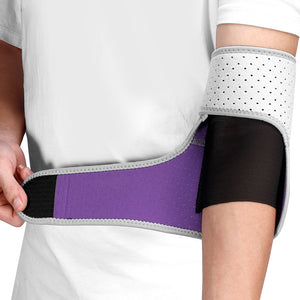
To effectively treat tennis elbow, a brace must apply firm, consistent pressure directly over the extensor muscle belly. The Fivali tennis elbow brace is designed with a contoured compression pad that fits precisely over this muscle group. This shape prevents pressure from dissipating and ensures the force is directed where it's needed most. Dual-strap adjustability allows you to fine-tune the compression above and below the muscle, creating a secure fit that won't slip during a powerful backhand or while lifting.

For Golfer's Elbow: Securing the Flexor Tendons
For medial epicondylitis, the target shifts to the inside of the forearm. The versatile design of Fivali’s brace allows the compression pad to be positioned perfectly over the flexor muscles. Because this area can be more sensitive, the ability to apply even pressure without constricting blood flow is critical. Our breathable, moisture-wicking materials ensure comfort during prolonged wear, whether you're on the ninth hole or working on a home improvement project. For more details, you can review our full guide on how to wear a golfers elbow brace.
Proper Fit & Usage: Unlocking Maximum Benefit (and Avoiding Mistakes)
An excellent brace is only effective if worn correctly. Improper placement can fail to provide relief or, in some cases, worsen symptoms by compressing a nerve.
Placement Rule of Thumb:
- Locate the Pain: Find the most tender spot on your elbow's outer side (tennis) or inner side (golfer's).
- Position the Brace: Slide the brace up your forearm. Position the center of the pressure pad about one to two finger-widths down from that tender spot, directly on the muscle belly.
- Secure the Strap: Fasten the strap until you feel firm, noticeable pressure, but not so tight that it causes numbness, tingling, or discoloration. You should be able to fit one finger snugly between the strap and your arm.
Warning Signs of an Improper Fit:
- Numbness, tingling, or a "pins and needles" sensation in your forearm or hand.
- Increased pain or throbbing.
- Swelling or bluish discoloration of the skin below the brace.
If you experience any of these, remove the brace immediately and readjust for a looser fit.
A Holistic Approach: Bracing Is Just the Beginning
While a counterforce brace offers excellent short-term relief to help you stay active, it's one part of a comprehensive recovery plan. A 2020 systematic review found that while braces provide immediate benefits, long-term recovery is best supported by physiotherapy.
Combine bracing with gentle stretching and strengthening exercises to address the root cause of the strain. Once the acute pain subsides, you can explore upper body exercises you can do with tennis elbow to rebuild strength and prevent re-injury. The best elbow counterforce brace is one that supports an active recovery.
Your Questions Answered: Choosing and Using Your Counterforce Brace
Q: Can I use the same Fivali brace for both tennis and golfer's elbow?
Yes, the intelligent design of our counterforce brace is versatile. The key is precise placement. For tennis elbow, the pressure pad goes on the outside of the forearm (extensor muscles). For golfer's elbow, you simply rotate it to the inside of the forearm (flexor muscles). Our contoured pad is shaped to provide effective support in either position.
Q: How long should I wear my elbow brace each day?
A counterforce brace is most effective when worn during activities that trigger your pain. This could be during your sport, work tasks, or hobbies. It is not generally recommended for continuous wear or while sleeping, as this can restrict circulation. Listen to your body and remove it if you feel any discomfort.
Q: What if the brace makes my pain worse?
If the pain increases, it's almost always a sign of improper fit. The brace is likely too tight or positioned directly over the tendon instead of the muscle belly. Remove it, wait for the irritation to subside, and then reapply it more loosely and further down the forearm. If pain persists, it's important to stop and check for any early signs of tennis or golfer's elbow that may require medical consultation.
Q: Is a brace enough, or do I need other treatments?
A brace is a fantastic tool for managing symptoms and enabling activity. However, for long-term healing, it should be part of a broader strategy that includes rest from aggravating activities, ice application after activity, and a targeted stretching and strengthening program. If your pain is severe or doesn't improve, consulting a physical therapist or doctor is always the best course of action. A counterforce brace for golfer's elbow should complement, not replace, a full recovery plan.
Ready to find the targeted support you need? Explore the Fivali collection and feel the difference that an engineered design makes. For a more detailed look at medial epicondylitis support, check out our counterforce brace golfers elbow guide.