Achieving Your Perfect Fit Customizing Fivali Tennis Elbow Braces
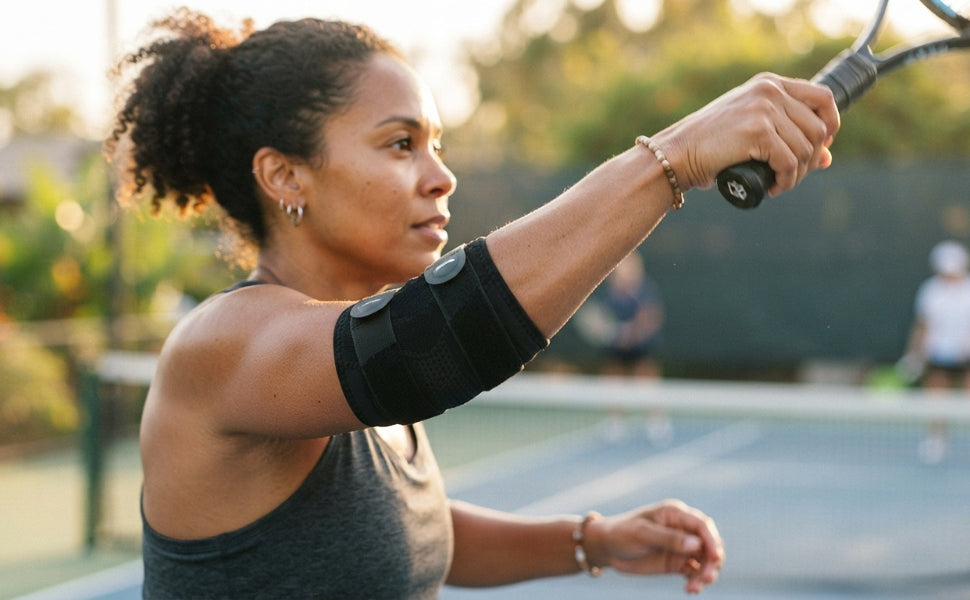
As the weekend approaches and we officially kick off the summer sports season, courts and golf courses across the country are filling up. But for many active individuals, the excitement of dusting off the racket or tackling weekend yard work is clouded by the nagging, sharp ache of forearm pain.
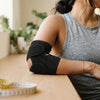
If you are actively comparing support options, you have likely encountered a common frustration: generic sizing charts. A brace that claims to fit a 10-inch to 14-inch forearm often feels too loose on a slender arm or creates a painful tourniquet effect on a muscular one. You don't just need a support; you need a tennis elbow brace that adapts precisely to your unique anatomy and the dynamic movements of your summer activities.
Proper fit is paramount. Suboptimal fitting leads to reduced compliance, uncomfortable slipping, and in worst-case scenarios, secondary issues like nerve compression or restricted circulation. Fivali's design philosophy tackles this challenge head-on by providing you with a customization toolkit rather than a rigid mold.
The Fivali Customization Toolkit: Moving Beyond Generic Sizes
When evaluating how to protect your arm, it is crucial to understand that "universal sizing" should never mean "one-size-fits-all." Instead, think of universal sizing as a broad canvas that you fine-tune using specific design features.
Fivali integrates three core elements to help you achieve a personalized fit:
- Adjustable Tension Straps: The primary mechanism for targeted relief. These straps allow you to micro-adjust the pressure over the Extensor Carpi Radialis Brevis (ECRB) tendon, acting as a true counterforce brace that offloads stress before it reaches the elbow joint.
- High-Memory Elastic Materials: Rigid braces gap during movement. Fivali uses flexible, breathable elastic fabrics that stretch and rebound, contouring exactly to the topography of your forearm muscles as they contract and relax.
- Strategic Anti-Slip Elements: A brace is useless if it migrates toward your wrist mid-swing. Integrated anti-slip textures ensure the brace remains anchored, providing consistent compression without requiring you to overtighten the straps.
Phase 1: Adapting to Your Unique Arm Anatomy
Forearms are incredibly diverse in shape. Here is how you can manipulate Fivali’s features to accommodate your specific build.
The Slender Arm Challenge
Individuals with slender arms often struggle with straps that overlap too far or materials that bunch up, causing pinch points.
- The Customization Fix: Leverage the elasticity of the brace. Before locking down the adjustable straps, ensure the elastic base layer is pulled smooth against the skin. Position the compression pad accurately, and then apply just enough strap tension to engage the pad. The elastic material will handle the ambient compression, preventing the need to crank the strap to its absolute limit, which causes gapping.
The Muscular or Larger Arm Solution
For well-developed forearms, the risk is the "tourniquet effect"—cutting off circulation during intense muscle expansion.
- The Customization Fix: Take advantage of Fivali's extended strap lengths. Secure the brace while your forearm muscle is actively flexed (make a tight fist). This ensures the strap accommodates the muscle at its largest circumference. The elastic material will naturally retract when your arm is relaxed, maintaining support without biting into the skin.
The Conical or Irregular Shape
Many forearms taper sharply from the elbow down to the wrist, causing traditional bands to slide down immediately.
- The Customization Fix: This is where anti-slip technology shines. Wipe your forearm clean of lotions or sweat before application. Position the brace slightly higher on the taper than you think you need, allowing the anti-slip elements to grip the wider portion of the muscle belly. Secure the strap at a slight upward angle if possible to counteract the downward gravitational pull.
Phase 2: Dynamic Adjustments for Your Summer Activities
Your brace tension shouldn't be static. What works for typing on a Tuesday won't support a heavy tennis serve on a Saturday. Understanding how does a tennis elbow strap work allows you to adapt the tension based on activity intensity.
High-Impact Sports (Tennis, Golf, Pickleball)
During a Memorial Day tennis tournament or a long drive on the golf course, the shock transmitted up your forearm is immense.
- Adjustment Strategy: You need maximum counterforce. Tighten the adjustable straps so the compression pad applies firm, noticeable pressure to the muscle belly just below the elbow. It should function as a robust elbow guard, stopping the vibration dead in its tracks. Check the fit after your warm-up, as muscles will swell slightly with increased blood flow.
Repetitive, Low-Impact Tasks (Typing, Painting, Gardening)
Extended periods of gripping or keyboard use require sustained, lower-intensity support to prevent fatigue without restricting blood flow.
- Adjustment Strategy: Back off the strap tension. You want a snug, comforting pressure that reminds your muscles to engage properly, but it shouldn't feel restrictive. For these tasks, an elbow compression sleeve is often ideal because it provides diffuse warmth and proprioceptive feedback across the entire joint, rather than heavy localized pressure.
Comprehensive Recovery Management
For individuals managing severe flare-ups, combining targeted strap pressure with broader joint warmth is key. Those evaluating the best elbow compression sleeve for tendonitis understand that integrating a compression layer beneath a counterforce strap provides the ultimate customizable environment for healing tissues.
Frequently Asked Questions About Fivali Brace Customization
How do I know if the brace is too tight?
Use the "one-finger rule." Once your brace is secured, you should be able to slide your index finger under the edge of the strap with some resistance. If you cannot fit your finger, or if you feel a throbbing sensation in your wrist, it is too tight.
Why does my forearm tingle when I wear my brace?
Tingling or numbness in the forearm or fingers is a major warning sign. It often means the brace is compressing the radial nerve rather than targeting the muscle belly. Loosen the brace immediately and reposition the compression pad slightly to ensure it is resting on the meaty part of the muscle, not grinding against the bone or nerve pathways.
Exactly how long to wear tennis elbow brace during the day?
While customization makes Fivali braces comfortable enough for extended wear, they are tools, not crutches. Wear the brace during activities that trigger your pain (sports, heavy lifting, repetitive tasks). Remove it during periods of rest to allow your skin to breathe and to encourage natural muscle stabilization without reliance on external support.
Can I wear it alongside other supports?
Yes. If your pain stems from severe wrist extension movements, utilizing a tennis elbow wrist brace simultaneously can help limit the harmful motion at the wrist while the elbow brace absorbs the shock higher up the arm.
The Memorial Day Weekend Fit Checklist: Finding the Sweet Spot
Before you head out to your holiday barbecue or step onto the court, run through this quick Fivali Fit Checklist to guarantee optimal performance:
- Locate the Target: Find the bony bump on the outside of your elbow (lateral epicondyle). Move roughly two finger-widths down your forearm. This meaty muscle area is exactly where your compression pad should rest.
- Perform the Movement Test: Secure the brace and mimic your primary activity. Swing an imaginary golf club, mimic a tennis backhand, or grip a heavy tool. The brace should stay securely in place without biting into your skin.
- Assess Circulation: Check your hand temperature and color. They should match your other arm perfectly.
Empowering Your Active Lifestyle
Finding the right middle ground between immovable rigidity and ineffective looseness is the key to managing forearm pain. You shouldn't have to adapt your life to a poorly designed brace. By utilizing the adjustable straps, high-memory elastic materials, and intelligent anti-slip features engineered into Fivali products, you can construct a fit that responds dynamically to your body and your intensity level.
Take control of your recovery and get back to the activities you love this summer. By understanding how to customize your fit, you transform a simple piece of fabric into a precision tool for pain relief and active protection.