Early Signs of Work-Related Elbow Pain Explained

As we gear up for the busy summer season—whether you are diving into heavy yard work, tackling ambitious Father's Day DIY home renovations, or simply putting in long desk hours to close out mid-year office reports—your hands and arms are doing the heavy lifting.
At the end of a long day, you might notice a subtle, lingering ache in your elbow. It is easy to brush it off as simple fatigue or getting older. You might even think, "I haven't played sports recently, so it can't be anything serious."
But what if that mild ache is actually your body's early warning system?
Micro-movements can cause macro-problems. In the modern workplace, Repetitive Strain Injury (RSI) is incredibly common, yet widely misunderstood. Today, we are going to break down exactly how to decode that elbow pain, figure out if your daily work tasks are the culprit, and explore practical ways to stop the discomfort before it slows you down.
Understanding the Elbow: The "Inside vs. Outside" Test
When it comes to work-related elbow pain, the confusion almost always starts with the names. You don't have to be a Wimbledon champion to get Tennis Elbow, and you don't need a club membership to develop Golfer's Elbow. In fact, the vast majority of these cases originate in the workplace, not on the field.
The easiest way to tell the difference is a simple location test. Hold your arm out in front of you with your palm facing up:
- Tennis Elbow (Lateral Epicondylitis): If you feel pain, tenderness, or a burning sensation on the outside bony bump of your elbow, you are likely dealing with Tennis Elbow.
- Golfer’s Elbow (Medial Epicondylitis): If the ache and stiffness are concentrated on the inside bony bump of your elbow (closest to your body), this points toward Golfer's Elbow.
Why does the location matter? Because the outside and inside of your elbow anchor entirely different sets of muscles and tendons, which means they are triggered by completely different work tasks.
Connecting the Dots: Which Work Tasks Are Triggering Your Pain?
One of the biggest missing pieces in identifying RSI is failing to connect the specific things we do at work with the pain we feel at night. It is rarely a single, heavy lift that causes the issue; it is the sustained tension of doing the same movement thousands of times.
Common Triggers for Tennis Elbow (Outside Pain)
Tennis elbow flares up when the tendons that bend your wrist backward (extension) and straighten your fingers are overworked.
Watch out for these real-world work tasks:
- The Data Entry Clerk: Holding a computer mouse for 8 hours a day with your wrist slightly extended upward.
- The Tradesperson: A plumber repeatedly twisting a wrench, or a carpenter swinging a hammer.
- The Painter: Using a roller or brush with repetitive up-and-down wrist flicks.
- The Warehouse Worker: Lifting boxes with your palms facing downward.
Common Triggers for Golfer’s Elbow (Inside Pain)
Golfer's elbow is triggered by the repetitive use of the muscles that flex your wrist downward and allow you to grip objects tightly.
Watch out for these real-world work tasks:
- The Assembly Line Worker: Repeatedly pulling levers or gripping and pulling materials.
- The Electrician or Mechanic: Using screwdrivers with a tight, forceful grip to turn screws.
- The Heavy Lifter: Lifting heavy crates, toolboxes, or materials from below the waist with palms facing upward.
The Progression of Pain: Recognizing the Early Signs
RSI does not happen overnight. If you are wondering what are 6 symptoms of a repetitive strain injury, you should actively monitor for tenderness, stiffness, a dull throbbing sensation, localized tingling, sudden grip weakness, and muscle cramping.
However, catching it in the earliest stages is your best defense. Here is how the symptoms typically progress:
Stage 1: The "After-Work" Ache
You feel fine while doing your job, but a few hours after you stop (or the next morning), your elbow feels stiff and achy. The pain usually goes away once you warm up and start moving again. This is your golden window to take action.
Stage 2: The "During-Work" Discomfort
The ache doesn't fade. You now feel pain while you are typing, lifting, or gripping. It isn't debilitating yet, but it forces you to alter how you hold things. You might start dropping lightweight objects like your coffee mug or a pen.
Stage 3: Constant, Disruptive Pain
At this stage, the pain is a constant companion. It hurts when you are resting, it disrupts your sleep, and normal daily activities become incredibly difficult.
Actionable Steps to Protect Your Elbows at Work
If you are currently in Stage 1 or 2, you have a massive opportunity to reverse the trend without letting it derail your active lifestyle.
1. Master Your Micro-Ergonomics
It isn't just about sitting up straight; it is about how your hands interact with your tools. If you use a mouse, try a vertical mouse that keeps your hand in a neutral "handshake" position, taking the strain off your lateral epicondyle. If you use hand tools, look for ones with thicker, cushioned grips so you don't have to squeeze as hard.
2. The Power of the "Rigid Wrist"
Your elbow tendons absorb the shock of your wrist movements. When lifting a box or pulling a heavy object, focus on keeping your wrist completely straight and rigid. Let your larger bicep and shoulder muscles do the work, rather than putting the leverage burden on your elbow tendons.
3. Embrace Targeted Support
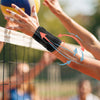
When activity modification is tough—because you can't exactly stop doing your job—external support is a game-changer. Wearing a targeted elbow support gently compresses the forearm muscles just below the elbow. This essentially creates a "new" anchor point for the muscle, absorbing the shock and repetitive forces before they can travel up to the inflamed tendon. If you specifically have lateral pain, applying a dedicated tennis elbow brace can dramatically reduce daily strain while you heal.
Frequently Asked Questions (FAQ)
I don't play sports. How can I have Tennis or Golfer's elbow?
These conditions were named decades ago because athletes frequently suffered from them, but the medical terms (Lateral and Medial Epicondylitis) simply refer to tendon inflammation. Today, office workers, mechanics, and manual laborers are actually much more likely to develop these conditions than professional athletes due to sustained, repetitive daily tasks.
Should I use heat or ice for early elbow pain?
For early, work-related elbow aches at the end of the day, ice is your best friend. Applying an ice pack for 15 minutes after your shift helps calm the micro-inflammation in the tendons. Heat is better utilized in the morning to loosen up stiff muscles before you start your work activities.
When should I start wearing a brace, and how do i choose the right size arm brace?
You should consider wearing a brace as soon as you notice Stage 1 symptoms (aching after work or weakness in your grip). It provides immediate offloading of the tendon. To find the right size, measure the circumference of your forearm about two inches below your elbow joint. A good brace should feel snug and supportive, but never so tight that it cuts off your circulation or causes your hand to tingle.
Will this go away on its own if I ignore it?
Unfortunately, no. Because RSI is caused by cumulative stress, continuing the exact same movements without changing your ergonomics, adding support, or incorporating stretches will generally cause the tendon micro-tears to worsen over time.
Moving Forward Pain-Free
Your elbows act as the vital hinges for almost everything you do—from swinging a hammer to typing an email, to lifting your kids. By understanding the critical difference between the inside and outside pain triggers, and recognizing how your specific daily work tasks contribute to that strain, you are taking the most important step toward recovery.
Listen to your body's early whispers. Adjust your workspace, practice mindful movement, and don't hesitate to utilize supportive gear to keep yourself active, productive, and pain-free.