Elbow Pain? Keep Playing: The Best Active Support Braces That Won't Restrict Your Movement

With the peak summer sports season and Fourth of July weekend tournaments fast approaching, the last thing you want is to be sidelined by persistent joint discomfort. Whether you are prepping for a highly competitive tennis match, gearing up for a holiday weekend golf outing, or just trying to maintain your daily weightlifting routine, elbow pain is a frustrating barrier.
Research shows that lateral epicondylitis (commonly known as tennis elbow) affects up to 15% of workers who perform repetitive tasks and carries a staggering 35% overuse injury rate in racquet sports. In fact, epicondylitis complaints make up nearly 70% of all elbow issues seen in specialized clinics. The instinct for many active individuals is to simply wrap the joint as tightly as possible, but this creates a massive evaluation challenge: finding a solution that provides rigorous support without hindering your natural range of motion.
If a brace restricts your movement, it alters your biomechanics, diminishes your performance, and can even trigger compensatory injuries elsewhere in your arm. You need optimal support that allows your joint to move exactly how your sport demands. Let's explore how modern brace designs bridge the gap between stabilization and total freedom of movement, ensuring you never have to choose between protecting your body and playing your game.

Decoding Brace Designs for Active Lifestyles
When evaluating a tennis elbow brace, active users often feel overwhelmed by the sheer variety of options. Understanding the core mechanics behind each design is the key to selecting a product that fits seamlessly into your active lifestyle.
The Counterforce Mechanism
For grip-intensive sports like golf, tennis, and heavy weightlifting, preserving full elbow articulation is non-negotiable. This is where a targeted forearm strap for tennis elbow excels. By applying precise pressure just below the elbow crease, a counterforce brace intercepts the tension traveling up your forearm muscles before it reaches the inflamed tendon.
Fivali’s Elbow Strap for Sports Lightweight and Supportive is a prime example of this dynamic design. It focuses entirely on redistributing strain rather than locking the joint. Because the strap is minimal, your elbow hinge remains entirely unobstructed, allowing you to execute a flawless tennis serve or a heavy deadlift without that bulky, restricted feeling.
Advanced Compression Sleeves
If you require more generalized warmth, reduced muscle vibration, and heightened proprioception (your body's awareness of its position in space), a full sleeve might be your ideal choice. A well-engineered tennis and golf elbow brace utilizes uniform compression to stabilize the entire joint structure.
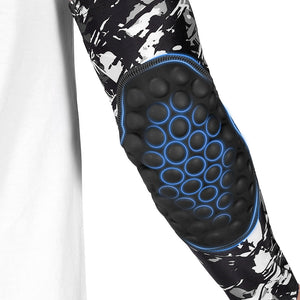
The Fivali Tennis Elbow Brace provides this comprehensive coverage through incredibly comfortable fabric that breathes and flexes. Unlike rigid splints or heavy elbow guards that lock you into a single position, high-quality sleeves provide mild to moderate support while actively warming the muscles, making them perfect for endurance activities where maintaining fluid, natural movement is crucial.
The Science of Support & Flexibility: What Makes a Brace "Active-Friendly"?
Creating a brace that offers unyielding support without turning your arm into a stiff board requires sophisticated engineering. The secret lies in material science and intelligent compression mapping.

Material Innovation and Lightweight Composites
Old-school neoprene supports were notorious for causing overheating and bunching up during dynamic movement, which actually works against you by draining your energy and restricting blood flow. Modern solutions rely on lightweight composites and breathable 3D knits. Fivali integrates comfortable, moisture-wicking fabrics that conform seamlessly to your anatomy. This ensures the material stretches dynamically with your arm—expanding when your bicep and forearm contract, and recovering its shape instantly to maintain consistent pressure.
Targeted vs. Global Compression
Understanding Joint Mechanics: How Braces Support Natural Body Movement is essential to injury prevention. Your elbow is a hinge joint, but the tendons responsible for gripping and wrist movement are complex and multi-directional.
Adaptive compression—achieved through adjustable straps on Fivali products—allows you to dial in the exact amount of tension needed for your specific activity. This "sweet spot" of compression stabilizes the joint architecture without squeezing so tightly that it limits your muscle expansion or impedes circulation. You gain multi-directional support that blocks excessive, damaging strain (like hyperextension) while preserving your functional range of motion.
Choosing Your Fivali Brace: Match Support to Sport & Activity
Your ideal brace depends heavily on the specific biomechanical demands of your sport.
- For the Powerlifter/Cross-Trainer: Heavy pulling movements require maximum grip strength. A lightweight counterforce strap prevents tendon strain during deadlifts and pull-ups without getting in the way of your elbow's natural bending radius.
- For the Racquet Sports Athlete: Tennis and squash require rapid, snapping motions. A breathable compression sleeve or a dual-action strap offers the proprioceptive feedback needed to maintain proper form while keeping the joint warm during high-velocity swings.
- For the Manual Laborer: "Framing" in carpentry or prolonged gripping requires all-day comfort. An anatomically contoured sleeve that won't slip down your arm during hours of continuous work provides the reliable, unobtrusive support you need.

Fit is Paramount: The Golden Rule
Even the most advanced brace will fail if it doesn't fit correctly. Learning how to wear tennis elbow brace devices is just as important as the purchase itself. For straps, apply the "finger test"—you should be able to slide one finger snugly underneath the strap once fastened. It must be tight enough to alter the force traveling up your forearm, but not so tight that you feel throbbing or tingling in your fingers. Fivali’s diverse sizing and highly adjustable closures guarantee you can find this perfect balance.
Frequently Asked Questions (FAQ)
Q: What is the primary difference between a counterforce strap and a compression sleeve?
A: A counterforce strap, like Fivali’s Elbow Strap for Sports Lightweight, applies targeted pressure just below the elbow to redistribute strain away from inflamed tendons, ideal for grip-intensive activities while preserving full elbow articulation. A compression sleeve, such as the Fivali Tennis Elbow Brace, offers more generalized warmth, reduces muscle vibration, and enhances proprioception by stabilizing the entire joint with uniform compression, perfect for endurance activities requiring fluid movement.
Q: How does a counterforce brace help with elbow pain without restricting movement?
A: A counterforce brace works by applying precise pressure to the forearm muscles just below the elbow. This intercepts the tension that normally travels up to the inflamed tendon, effectively reducing strain. Because the pressure is targeted and the brace is minimal, your elbow's natural bending and extension remain unobstructed, allowing full range of motion while providing crucial support.
Q: Will wearing an elbow brace constantly weaken my arm muscles?
A: Braces are designed as supportive tools for active recovery, not as a permanent crutch. It's recommended to wear them during specific activities that trigger your pain or during periods of higher strain. This approach helps you maintain your fitness and prevents further injury without leading to muscle dependency or weakening.
Q: What materials are used in Fivali's active-friendly elbow supports?
A: Fivali utilizes lightweight composites and breathable 3D knits, along with comfortable, moisture-wicking fabrics. These materials conform seamlessly to your anatomy, stretching dynamically with your arm to maintain consistent, comfortable pressure without causing overheating or bunching, even during intense activity.
Q: How do I choose the right Fivali brace for my specific sport or activity?
A: Your choice depends on the biomechanical demands of your sport. For powerlifting or cross-training, a lightweight counterforce strap is ideal for grip strength. Racquet sports athletes might prefer a breathable compression sleeve or a dual-action strap for proprioceptive feedback and joint warmth. Manual laborers benefit from an anatomically contoured sleeve for all-day, non-slip comfort and reliable support.
Q: Why is proper fit so crucial for an effective elbow brace?
A: An ill-fitting brace, even if advanced, will be ineffective and can cause discomfort. For straps, use the "finger test"—you should be able to slide one finger snugly underneath the strap. It needs to be tight enough to redistribute force but not so tight that it causes throbbing or tingling. Fivali’s diverse sizing and adjustable closures help ensure you achieve this perfect balance for optimal support and comfort.
Q: How long does it typically take to see results or recover from elbow pain with bracing?
A: While many experience immediate pain reduction during activity with a brace, overall recovery time for conditions like tennis elbow varies based on severity and consistent care. For acute injuries, recovery can range from a few weeks to several months. Bracing supports this process by preventing aggravation, but it works best when combined with proper rest, rehabilitation exercises, and a holistic approach to elbow health.
Q: What if my brace keeps slipping during sweaty workouts?
A: Slippage often indicates either an improper fit or that the brace is made from outdated materials. Fivali products are designed with anti-slip features and use moisture-wicking fabrics specifically to maintain their position on your skin, ensuring consistent support even during strenuous, sweaty activities.
Beyond the Brace: Holistic Elbow Health
While Fivali provides the protective foundation you need to stay active, long-term joint health requires a multimodal approach. Effective recovery is rarely achieved through bracing alone.
To fully bulletproof your elbows, incorporate Dynamic Stretching for Elbow Health: Maintaining Flexibility & Preventing Stiffness into your pre-workout routine to ensure your tendons are primed for the load. Furthermore, engaging in Sport-Specific Drills for Elbow Injury Rehabilitation will help strengthen the surrounding musculature, eventually reducing your reliance on external support.
When you refuse to let pain dictate your lifestyle, having the right gear is everything. Fivali is dedicated to providing high-quality, comfortable, and affordable sports braces that empower your active life. By choosing a support system designed specifically to protect your joints without stealing your mobility, you can step back onto the court, into the gym, or out into the summer sun with total confidence.