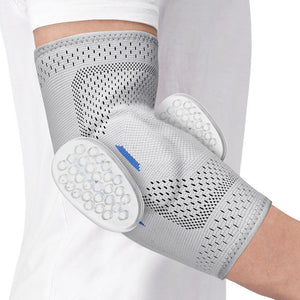
Elbow Brace or Sleeve for Pain? A Guide to Choosing the Right Support

You lift a gallon of milk, grip a tennis racket, or simply type at your desk, and there it is—that nagging, sharp, or aching pain in your elbow. The immediate impulse for many is to grab some sort of support, but the sea of options is confusing. Do you need a gentle sleeve or a more structured brace?
The answer, surprisingly, has less to do with the activity you were doing and more to do with why your elbow actually hurts. Most elbow pain falls into one of two major categories: acute inflammation or chronic degeneration. Understanding which one you’re dealing with is the single most important step in choosing the right kind of compression to find relief.

The Two Faces of Elbow Pain: A Crash Course
Think of your body’s response to injury in two ways: the fast-acting "fire department" and the slow "wear-and-tear" crew.
The "Fire Alarm": Understanding Inflammation
Inflammation is your body’s emergency response system. When you bang your elbow or suddenly overuse a muscle, the body floods the area with protective cells. This is an acute process.
- What it is: The classic signs are swelling, heat, redness, and pain. It's your body's active, short-term attempt to heal.
-
Common Examples:
- Olecranon Bursitis: A direct blow or prolonged pressure on the tip of the elbow can inflame the bursa (a small, fluid-filled sac), causing a distinct, swollen lump that feels warm to the touch.
- Acute Tendinitis: This is true tendinitis—actual inflammation of the tendon from a sudden, intense strain. It's much less common than people think.
The "Wear and Tear": Understanding Degeneration
Degeneration is a chronic, slow-burn process. It’s not about an active inflammatory response but rather a structural breakdown of tissue over time due to repetitive stress and overuse.
- What it is: The tissue, most often a tendon, develops tiny micro-tears faster than the body can repair them. The collagen fibers become disorganized and weak, like a rope fraying. There is often minimal to no actual swelling or heat.
-
Common Examples:
- Tendinosis (e.g., "Tennis Elbow"): This is the condition most people have when they talk about chronic tennis elbow or golfer's elbow. It’s a degenerative disease of the tendon, not an inflammatory one. The pain comes from the weakened, disorganized tissue being stressed. To learn more, you can explore the common causes and early signs of this persistent ache.
- Osteoarthritis: This involves the gradual wearing down of the smooth cartilage that cushions the bones in the elbow joint, leading to stiffness, grating sensations, and pain with motion.
Can You Tell the Difference? Key Symptoms to Watch For
So, how do you know if your pain is from the "fire alarm" or "wear and tear"? While a doctor's diagnosis is always best, you can look for clues in your symptoms.

Matching the Support to the Source of Pain
Now for the "aha moment": because these two types of pain have different biological causes, they respond to different types of compression.
Taming the Flame: How Compression Helps with Inflammation
If your elbow is visibly swollen and warm, your primary goal is to manage that inflammatory response. This is where broad, gentle compression shines.
- The Tool: An elbow compression sleeve that provides uniform pressure around the entire joint.
- The Mechanism: The gentle squeezing action helps your lymphatic system drain excess fluid (the swelling) away from the area. It also provides a comforting sense of support and can help keep the joint warm, which feels good. This is a key part of the RICE (Rest, Ice, Compression, Elevation) protocol. An elbow bursitis compression sleeve is a perfect example of applying this principle to manage swelling and provide comfort.
Supporting the Structure: How Compression Helps with Degeneration
If your pain is a sharp, localized ache during certain movements with little to no swelling, your goal isn't to squeeze out fluid. It's to change the forces acting on the damaged tendon.
- The Tool: A targeted brace or strap, often called a counterforce brace.
- The Mechanism: This type of brace applies firm, direct pressure to the muscle and tendon before the painful insertion point on the bone. This effectively creates a new anchor point, which changes the angle of pull and absorbs some of the force that would normally strain the weakened, degenerative tissue. It’s a biomechanical fix, not a swelling-reduction tool. For those seeking targeted relief, finding the best elbow brace for tendonitis is about finding this kind of mechanical support.

Sleeve or Brace? Making the Right Choice for Your Elbow
Let’s simplify it.
- Choose a Sleeve if: Your primary symptom is widespread swelling. The pain is a dull, constant ache, and the area feels warm or looks puffy. You're dealing with inflammation.
- Choose a Brace/Strap if: Your pain is sharp and targeted, occurring when you grip, lift, or twist. There is little to no swelling. You're dealing with degeneration (tendinosis).
Knowing the difference is key, but so is application. If you've determined a brace is right for you, understanding how to wear a tendonitis brace correctly is crucial for it to be effective.
Frequently Asked Questions About Elbow Support
What's the difference between an elbow brace and an elbow sleeve?
An elbow sleeve provides broad, uniform compression around the entire joint. It's designed to manage widespread swelling and provide general support, making it ideal for inflammatory conditions like bursitis. An elbow brace, or counterforce strap, provides targeted pressure on a specific muscle or tendon to change how force is applied, which is ideal for degenerative conditions like tennis elbow (tendinosis).
When should I use a compression sleeve for my elbow?
You should use a compression sleeve when your primary symptom is noticeable swelling. If your elbow feels warm, looks puffy, and has a dull, constant ache, a sleeve can help reduce the inflammation-related fluid buildup and provide comforting support.
Is a brace or a sleeve better for tennis elbow?
For true tennis elbow (tendinosis), a targeted brace or counterforce strap is generally more effective than a sleeve during activity. Tennis elbow is a degenerative issue caused by overuse, not significant inflammation. A brace works by absorbing force and reducing strain on the damaged tendon, directly addressing the mechanical problem. A sleeve may provide comfort but won't fix the underlying issue.
Why does my elbow hurt when I grip things, but it's not swollen?
Pain with gripping, lifting, or twisting without any visible swelling is a classic sign of a degenerative condition like tendinosis (tennis elbow or golfer's elbow). The pain comes from stress on a weakened, frayed tendon, not from an active inflammatory response. This type of pain typically responds best to a counterforce brace that offloads the pressure from the damaged area.
When should I see a doctor for my elbow pain?
While self-care can be effective, you should always consult a doctor if the pain is severe, you are unable to move your arm, you notice signs of infection (like fever or red streaks), or the pain does not improve with rest and appropriate support. This guide is for informational purposes only and is not a substitute for a professional medical diagnosis.
The First Step to Relief
Understanding your body is the first step toward feeling better. By moving past the generic label of "elbow pain" and identifying whether you’re likely dealing with an inflammatory fire or degenerative fraying, you empower yourself to choose the right support. You're no longer guessing; you're making an informed choice to give your elbow exactly what it needs to start the journey back to pain-free movement.