Tennis Elbow Pain? Why It's Not Tendonitis & How to Actually Fix It

Ever felt that sharp, nagging pain on the outside of your elbow when you lift a coffee cup, turn a doorknob, or grip a steering wheel? It’s a frustratingly common experience that can turn simple daily tasks into painful chores. For years, the go-to explanation has been "tendonitis"—a word that brings to mind inflammation and the need for ice packs and anti-inflammatory pills.
But what if that’s not the whole story? What if the very nature of that persistent ache is widely misunderstood?
Decades of research have revealed a crucial insight: most cases of chronic elbow pain, like Tennis Elbow or Golfer's Elbow, aren't primarily about inflammation. This changes everything about how we should approach managing it. Let's unpack the real cause of that pain and discover a more effective path to relief.
The Big Misconception: Tendinitis vs. Tendinosis
When we feel pain, we instinctively think "inflammation." The term "tendinitis" literally means inflammation (-itis) of a tendon. This is accurate for a fresh, acute injury where the body sends inflammatory cells to the site as a first response.
However, when elbow pain lingers for weeks or months, the problem usually evolves. The real culprit in most chronic cases is tendinosis, a condition of collagen degeneration. Think of a rope that’s become frayed and disorganized from repeated strain, not one that’s actively on fire.
This isn't just a matter of semantics; it's a fundamental shift in understanding that directly impacts recovery. Treating a degenerative issue as if it were purely an inflammatory one can lead to frustration and a cycle of recurring pain because you're not addressing the root cause: a breakdown of the tendon tissue itself.
So, How Does This Breakdown Happen? The Biology of Overload
Your forearm muscles connect to the bony bumps on your elbow (the epicondyles) via tendons. Tennis Elbow (lateral epicondylitis) affects the tendons on the outside, while Golfer's Elbow (medial epicondylitis) affects those on the inside.
This tendon breakdown doesn't happen from a single event. It’s the result of cumulative stress, a process called eccentric overload.
Imagine lowering a heavy box slowly. Your bicep is lengthening, but it’s still under tension to control the weight. That’s an eccentric contraction. Now, imagine doing that repeatedly with your wrist and forearm muscles. Activities that involve forceful gripping, twisting, or extending the wrist put these tendons through constant eccentric strain.
Over time, this strain causes microscopic tears in the tendon fibers. The body tries to heal, but if the strain happens faster than the repair process, the new collagen fibers are laid down in a haphazard, disorganized way. This leads to a weakened, degenerative tendon—tendinosis that is prone to pain with everyday use.
Your Daily Habits Might Be the Hidden Culprit
You don’t have to be a tennis player or golfer to develop these conditions. In fact, most people who get them don’t play those sports at all. The culprit is repetitive movement patterns that we often overlook in our daily lives.
Common triggers include:
- Occupational Tasks: Carpenters using a hammer, plumbers twisting pipes, painters making repetitive strokes, and even chefs constantly gripping knives and pans.
- Office Work: Prolonged typing and mouse use, especially with poor wrist posture, can create constant, low-level tension.
- Hobbies and Chores: Gardening, knitting, playing a musical instrument, or even carrying heavy groceries can contribute to the overload.
The problem isn't just the action itself, but the repetition and force involved. A tight grip on a tool or a constantly extended wrist at a keyboard places immense stress on the small tendons of the elbow, leading to the micro-damage that causes pain.
A Smarter Way to Manage the Pain: The Science of External Pressure
If the problem is a frayed, overloaded tendon, how can we give it a break without completely stopping our lives? This is where the concept of targeted external pressure comes in, often applied with a counterforce strap.
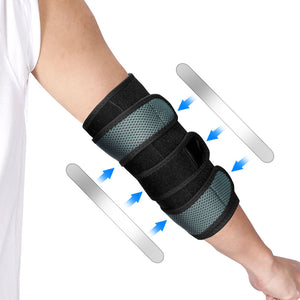
It might seem counterintuitive to put a tight band around an already sore arm, but there’s a simple biomechanical reason it works. A counterforce strap is worn snugly on the forearm, just below the elbow. This pressure effectively creates a new, artificial origin point for the muscles.

Instead of the full force of a muscle contraction pulling directly on the painful, damaged tendon at the elbow, much of that force is now absorbed and redirected at the point of the strap. This reduces the tension on the epicondyle, allowing you to perform tasks with significantly less pain and giving the damaged tendon tissue a chance to heal without being constantly re-injured. This simple principle is key to finding the best elbow brace for tendonitis because it directly addresses the mechanical stress at the heart of the problem.
Understanding this mechanism is the first step. To learn more about how these supports function, you can explore this detailed guide on what is a counterforce brace.
The Path to Recovery: Beyond Just Rest
While reducing strain is critical, complete rest can sometimes be counterproductive for tendinosis. The goal is to encourage the body to remodel that disorganized collagen into strong, healthy tendon tissue. This is achieved through a gradual, controlled rehabilitation process.
A typical recovery path involves:
- Relative Rest & Pain Management: Modify activities to avoid pain triggers. Use a strap or brace during tasks that normally cause discomfort.
- Gentle Stretching & Mobility: Improve the flexibility of the forearm muscles to reduce passive tension on the tendons.
- Progressive Strengthening: This is the most crucial phase. Specific exercises, particularly eccentric strengthening, help stimulate collagen repair and rebuild the tendon’s capacity to handle load. It's often helpful to find out what upper body exercises can i do with tennis elbow to maintain overall strength without aggravating the injury.
- Prevention & Ergonomics: Once the pain subsides, focus on correcting the movement patterns or ergonomic issues that caused the problem in the first place to prevent it from returning.
Frequently Asked Questions About Elbow Pain
Why isn't my elbow pain getting better?
If your elbow pain has lasted for weeks or months, it's likely not caused by inflammation (tendinitis) but by tendinosis—a breakdown of the tendon's collagen fibers. Treating this degenerative condition with anti-inflammatories alone won't address the root cause, which is why the pain persists.
What causes Tennis or Golfer's Elbow if I don't play sports?
These conditions are caused by repetitive strain, often from everyday activities. Common triggers include prolonged typing, using tools like hammers or screwdrivers, gardening, or any task that involves frequent, forceful gripping and twisting of the wrist. The cumulative stress leads to microscopic tears and degeneration in the tendon.
How does a counterforce strap work for elbow pain?
A counterforce strap applies targeted pressure on the forearm muscle just below the elbow. This creates an artificial anchor point for the muscle, redirecting the pulling force away from the painful, damaged tendon attachment at the elbow. This reduces strain, alleviates pain during activities, and allows the tendon to heal.
Is resting my arm the best way to heal?
While modifying activities to avoid pain is crucial, complete rest can weaken the tendon. The best approach combines "relative rest" with a structured rehabilitation plan. This includes gentle stretching and, most importantly, progressive strengthening exercises to rebuild the tendon's strength and resilience.
What is the difference between Tennis Elbow and Golfer's Elbow?
Both are forms of tendinosis, but they affect different sides of the elbow. Tennis Elbow (lateral epicondylitis) causes pain on the bony bump on the outside of your elbow. Golfer's Elbow (medial epicondylitis) causes pain on the inner side of your elbow.
Final Thoughts: From Understanding to Action
That persistent elbow pain is more than just a nuisance; it's a signal from your body that a key structure is overloaded and breaking down. By moving past the outdated idea of simple "tendinitis" and embracing the more accurate concept of tendinosis, you can stop fighting phantom inflammation and start supporting true tissue healing.
Understanding that the goal is to reduce mechanical strain and rebuild tendon strength empowers you to make smarter choices. This includes modifying your daily movements and considering supportive gear. Exploring the different types of elbow support available, such as a targeted adjustable elbow brace or a compression sleeve, is a logical next step. Comparing a counterforce brace vs elbow sleeve support can help you find what’s right for your activities.
By taking an informed, proactive approach, you can finally quiet that nagging pain and get back to living your life without hesitation. Your journey can start by exploring the full range of tendonitis elbow support braces designed to help you along the way.