Beyond Size How Brace Length Unlocks Your Elbow's Full Potential
As the warm weather rolls in and we gear up for an active summer season—kicking off with Memorial Day weekend barbecues, long tennis matches, and intense backyard landscaping—the last thing you want is for elbow pain to sideline you. You know you need support, but staring at a wall of options can cause serious decision paralysis. Most people fixate entirely on circumference sizing, mistakenly believing that finding the right tennis elbow brace is just about measuring the width of their arm. But if you are actively evaluating solutions to keep you in the game, there is a far more critical dimension you are likely overlooking: the length of the brace.
Whether you need an elbow brace for tendonitis or general joint fatigue, deciding between an extra-short, medium, or long design fundamentally changes how the product interacts with your biomechanics. The right length optimizes mobility, targets compression zones precisely where you need them, and directly impacts your overall performance. Let's break down how to choose the perfect functional length for your specific activities so you can buy with total confidence.
The Biomechanics of Brace Length: Coverage, Compression & Mobility

To make an informed decision, we have to look past basic fabric types and understand the mechanics at play. The length of your brace directly dictates three critical performance factors: joint mobility, targeted compression, and proprioceptive feedback.
While a standard compression sleeve offers generalized warmth across the arm, targeted support requires a more strategic approach.
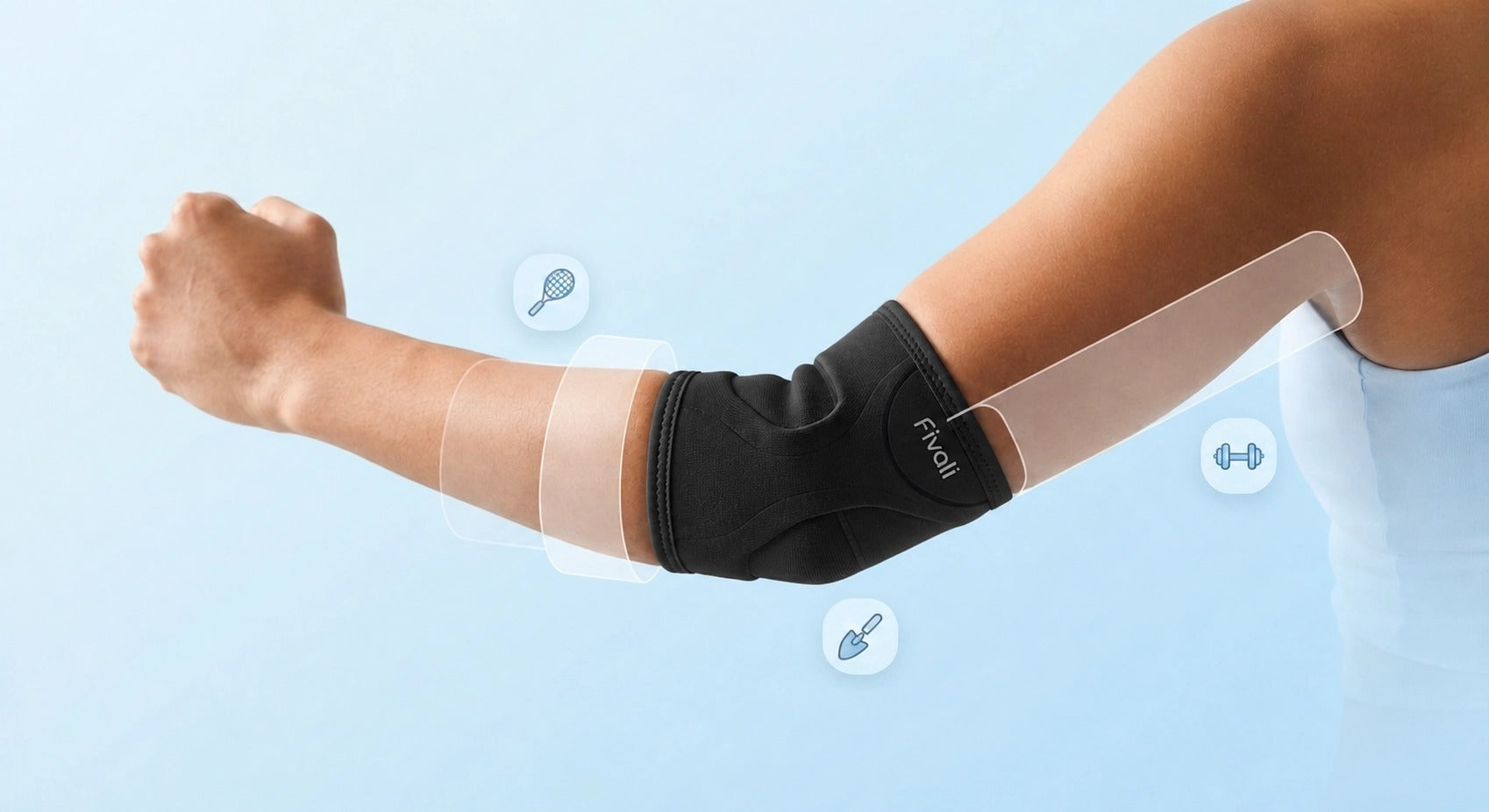
Joint Mobility: The length of your support system dictates your available range of motion. Shorter designs sit purely on the forearm, allowing the elbow hinge to flex and extend with zero resistance. Longer designs span across the joint, intentionally trading some extreme flexibility for enhanced structural stability.
Targeted Compression Zones: Pain relief relies heavily on where the pressure lands. Extra-short lengths function by applying concentrated off-loading pressure to a single tendon, redirecting stress away from the inflamed area. Medium and long designs distribute compression across the muscles, increasing blood flow over a wider surface area to help flush out localized inflammation.
Proprioceptive Feedback: This is your brain's awareness of where your joint is in space. Longer coverage increases the sensory feedback on your skin, which can unconsciously help you correct your form during heavy lifting or repetitive swings.
Fivali's Optimal Lengths: A Guide to Your Activity-Specific Needs
We engineered our product ecosystem to offer extra-short, medium, and long lengths because a one-size-fits-all approach inherently limits performance. Here is how to evaluate which length fits your active lifestyle.
The Extra-Short Length: Unrestricted Mobility
If your priority is maintaining a flawless swing without feeling restricted, an extra-short design is your ideal match. This length sits just below the elbow crease. It excels at delivering high-intensity, localized compression to offload stress from the epicondyle tendons while leaving the joint entirely free. If you are searching for the best brace for golfers elbow, this minimal-coverage approach allows for the natural wrist and forearm rotation required to drive the ball perfectly down the fairway.
The Medium Length: Balanced Support
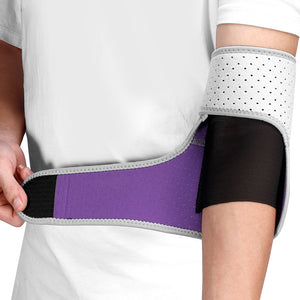
The medium length is the ultimate hybrid. It extends slightly further up and down the arm to provide a broader compression zone than a strap, without the full encapsulation of a long sleeve. It offers excellent support for elbow strains caused by repetitive motions—whether you are pulling weeds in the garden or working on a home improvement project over a long holiday weekend. You retain enough flexibility to handle daily tasks comfortably while benefiting from enhanced muscle warmth and structural stability.
The Long Length: Maximum Stability and Coverage
When you are pushing your physical limits, you need maximum sensory feedback and extensive coverage. A long-length elbow brace for working out encompasses the lower bicep, the entire elbow joint, and the upper forearm. This extensive compression zone locks the joint into a safer alignment during heavy compound movements, reducing the risk of hyperextension. It prioritizes stability over extreme flexibility, making it the superior choice for powerlifters and athletes managing chronic instability.
Comparison Matrix: Matching Lengths to Your Summer Activities
To simplify your evaluation process, use this quick framework to assess your needs:
- Extra-Short: High Mobility | High Targeted Compression | Minimal Coverage. Ideal for racket sports, golf, fine motor tasks, and returning to the tennis court.
- Medium: Moderate Mobility | Medium Broad Compression | Moderate Coverage. The go-to for weekend warriors tackling backyard landscaping or brisk walking.
- Long: Low/Controlled Mobility | Broad Compression | Extensive Coverage. Perfect for hitting personal records in the weight room and contact sports.
Frequently Asked Questions (FAQs)
How do I measure for the correct length?
Instead of just measuring your circumference, consider your primary activity. Measure the distance from your mid-bicep to mid-forearm to visualize where a long design will sit versus an extra-short one that only wraps tightly around the upper forearm.
Are certain lengths better for specific types of tendonitis?
Many customers actively comparing options ask us to recommend the best elbow brace for tendonitis. Generally, extra-short lengths are fantastic for acute lateral epicondylitis (tennis elbow) where a specific pinpoint needs relief, while longer options are better for general tendinopathy that radiates down the arm.
Can I wear my support brace overnight?
A common question we hear is, should i wear tennis elbow brace at night? Generally, it is best to remove restrictive, shorter lengths during sleep to allow normal blood circulation. Focus on wearing your chosen length during the specific daytime activities that trigger your discomfort.

Making the Right Choice: Key Decision Factors
Choosing the optimal length comes down to a few critical evaluation points. Assess the intensity of your movement—do you need full extension, or is controlled stability safer for your joints? Pinpoint your pain location. If the discomfort is highly localized, a shorter length with a targeted pressure pad might be exactly what you need. If the ache radiates, you will benefit immensely from the broader compression of a longer, supportive design.
By understanding that length is a functional feature rather than just a styling choice, you are now fully equipped to make a highly informed decision. Don't let discomfort dictate your summer schedule. Explore our comprehensive collection of tennis elbow supports today, select the precise length that matches your unique activity profile, and get back to doing what you love with absolute confidence.