Why Does Soccer Go over 90 Minutes?
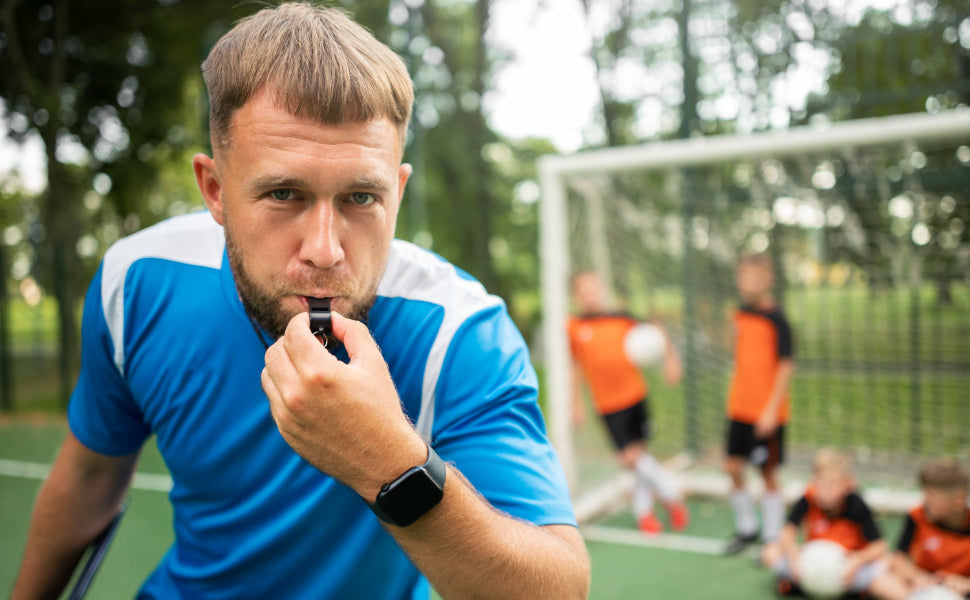
The beautiful game of soccer is globally defined by its standard 90-minute regulation time. However, anyone who has watched a single professional match knows that the referee never blows the final whistle right when the stadium clock hits 90:00. Instead, a fourth official raises an electronic board displaying a few extra minutes, and play continues. This brings up an important question for casual fans and sports enthusiasts alike: why does soccer go over 90 minutes?
To understand this phenomenon, it is necessary to look at how time is kept on the pitch, how it differs from other sports, and the physical demands these extended periods place on professional athletes.
The Rule of Stoppage Time
Unlike American sports where the clock stops every time the ball goes out of play, soccer utilizes a continuous running clock. The 90 minutes of regulation are split into two 45-minute halves. During these halves, the clock never stops ticking, even when there are injuries, substitutions, or goal celebrations.
To ensure that teams are not unfairly deprived of active playing time due to these pauses, the head referee keeps track of all dead-ball situations. At the end of each 45-minute half, this accumulated lost time is added back as "stoppage time" or "injury time".
Common Causes of Stoppage Time
-
Player Injuries and Medical Attention: When a player is down on the pitch, the referee stops play to allow medical staff to assess them. These pauses can easily eat up one to three minutes per incident.
-
Tactical Substitutions: Each team is allowed a set number of substitutions. To prevent teams from using substitutions solely to waste time in the dying minutes, referees strictly account for the seconds lost during player transitions.
-
Goal Celebrations: After a ball hits the back of the net, players often spend a significant amount of time celebrating with teammates and fans. This emotional release is a major contributor to added time.
-
VAR Reviews: The introduction of the Video Assistant Referee (VAR) has brought high accuracy to the game, but it has also increased the duration of stoppages. Checking for offsides, red cards, or penalty decisions can add several minutes to a half.
-
Time-Wasting Tactics: Players frequently delay throw-ins, goal kicks, and free kicks to preserve a lead. Referees penalize this behavior by tacking those wasted seconds onto the end of the match.
Soccer Timekeeping vs. Other Gridiron Sports
To gain a clearer perspective on how soccer manages its game clock, it is helpful to compare it to other popular sports. Many general sports fans often ask: how long does a football game last?
In American professional football (NFL), the regulation playing time is 60 minutes, divided into four 15-minute quarters. However, because the clock stops frequently for incomplete passes, out-of-bounds plays, and administrative timeouts, a standard professional football game actually takes about three hours to conclude on television.
Similarly, if one wonders how long is a college football game, the structure is almost identical. While college football also features four 15-minute quarters, additional factors like clock-rule differences and halftime performances often extend the total event duration to well over three hours and fifteen minutes.
Soccer takes a completely different approach. By maintaining a running clock and adding stoppage time, a soccer match is highly predictable, almost always wrapping up within an hour and fifty minutes, including the 15-minute halftime interval. This streamlined format keeps the action flowing and keeps fans highly engaged.

The Physical Toll of Extra Minutes
Playing soccer for 90 minutes is already one of the most cardiovascularly demanding tasks in all of professional sports. When matches stretch into 95, 98, or even over 100 minutes due to heavy stoppage times, the physical strain on a player's body increases exponentially.
During these grueling final minutes, muscle fatigue sets in, making joints and ligaments highly vulnerable to injury. This is why modern players place such a high premium on recovery and protective gear.
| Metric | Average Soccer Player (90-Min Match) |
| Average Distance Covered | 10 to 13 kilometers (6 to 8 miles) |
| High-Intensity Sprints | 80 to 150 per match |
| Heart Rate Range | 150 to 190 beats per minute |
| Calories Burned | 1,500 to 2,000 kcal |
To withstand this level of physical exertion, athletes rely heavily on specialized support systems. A high-quality football leg support is essential for maintaining calf and hamstring stability during rapid changes of direction. Additionally, wearing a medical-grade knee compression sleeve helps stabilize the patella, reduces joint vibration, and promotes optimal blood flow to tired leg muscles. Brands like Fivali have focused heavily on designing specialized gear that meets these specific athletic demands, providing the targeted compression and joint relief required to survive the grueling extra minutes of a physical match.
Tournament Knockout Rounds and Extra Time
While standard league matches can end in a draw after 90 minutes plus stoppage time, tournament knockout games require a definitive winner. If the score remains tied after the standard stoppage time in these high-stakes matches, the game enters a completely new phase known as "extra time."
The Structure of Extra Time
Extra time consists of two mandatory 15-minute halves, totaling an additional 30 minutes of play. Stoppage time is also added to the end of each of these 15-minute extra periods. Consequently, a knockout match can easily push past 120 minutes of active playing time before potentially heading to a penalty shootout to decide the ultimate victor.
The Mental and Physical Battle of 120 Minutes
When a match goes to 120 minutes, tactical game plans often break down, and the contest becomes a pure battle of endurance and mental fortitude. Players begin to experience severe cramping, extreme dehydration, and mental exhaustion.
At this stage, the risk of acute knee injuries, such as meniscus tears or ligament sprains, rises dramatically. This makes joint warmth and stability incredibly vital. Utilizing a reliable knee compression sleeve can be a game-changer during these extra-time periods, as it keeps the knee joint warm, maintains proprioception (the body's awareness of joint positioning), and helps prevent the structural failures that occur when muscles are completely spent.

- Elasticity & Breathable 3D Woven Technology
- Anti-Collision EVA Bumper Knee Pad
- Non-Slip Silicone Strips for Secure Fit
- Comfortable But Durable to Wear
The Shift Toward Longer Stoppage Times
In recent years, governing bodies like FIFA have instructed referees to be far more precise when calculating stoppage time. This directive was highly visible during recent major international tournaments, where matches regularly extended to 100 minutes or more.
The goal of this shift is to increase the amount of "effective playing time". When fans purchase tickets or tune in to watch a match, they want to see active play rather than players slowly walking off the pitch during substitutions or delaying throw-ins. While this change has been praised for discouraging unsportsmanlike time-wasting tactics, it has also sparked intense debates regarding player welfare and the increased risk of fatigue-related injuries.
Conclusion
Soccer goes over 90 minutes to preserve the integrity, fairness, and entertainment value of the sport. By utilizing a running clock and compensating for unavoidable delays through stoppage time, the game ensures that teams have a fair and equal opportunity to compete until the final whistle.
For the athletes on the pitch, these additional minutes represent a severe physical challenge that demands peak conditioning and proper body maintenance. By utilizing top-tier protective equipment, such as a football leg support or a knee compression sleeve, players can safeguard their joints, fight off premature fatigue, and perform at their absolute best during the most critical moments of the match.