Ankle Stress Fractures
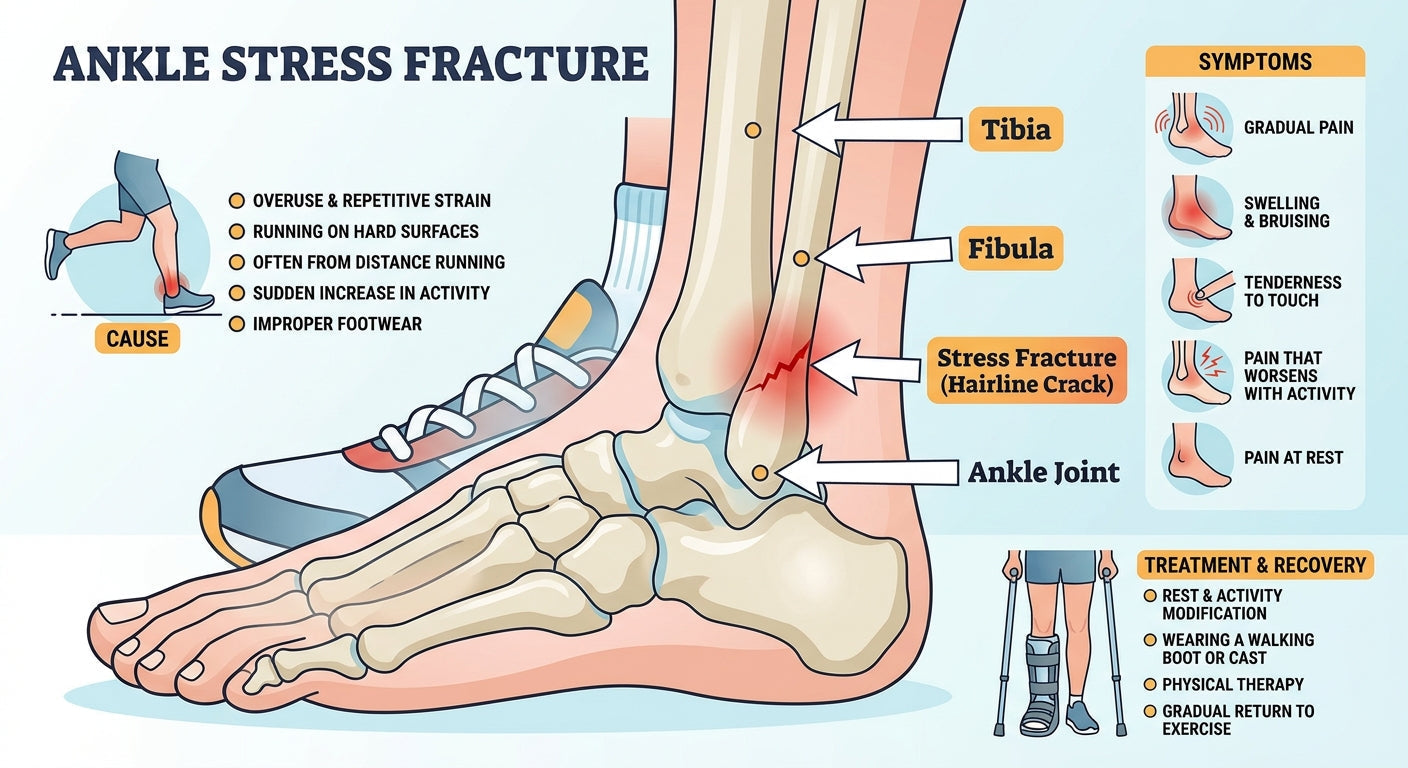
An ankle stress fracture is not the result of a single, traumatic event like a fall or a twist. Instead, it’s an overuse injury—a small crack or severe bruising within one of the bones that make up the ankle joint. This injury develops over time when repetitive force and muscle fatigue prevent the bone from properly absorbing the shock of physical activity. It's a common issue for athletes, runners, and anyone who suddenly increases the intensity or duration of their workouts without allowing their body adequate time to adjust.

What Causes an Ankle Stress Fracture?
The primary cause of an ankle stress fracture is overloading the bone. This typically happens from a sudden change in physical activity, but several factors can increase your risk.
- Sudden Increase in Activity: Jumping into a new, high-impact exercise routine or rapidly increasing the mileage, frequency, or intensity of your runs without proper conditioning.
- Improper Technique or Equipment: Poor form during exercise or wearing worn-out, unsupportive shoes can alter your foot mechanics and place excessive stress on the ankle bones.
- Changes in Surface: Switching from a soft running surface, like a track, to a hard one, like concrete, can increase impact on your joints.
- Biomechanical Issues: Foot problems can significantly contribute to stress fractures. Learning how to fix pronated ankles, where the foot rolls inward, can help distribute weight more evenly and reduce strain.
- Body Weight: Being overweight increases the load on weight-bearing bones, making overweight runners more susceptible to this type of injury.
- Bone Insufficiency: Conditions like osteoporosis weaken bones, making them more susceptible to fractures, even during normal activities.
Identifying the Symptoms
The symptoms of an ankle stress fracture often develop gradually. It’s important to pay attention to your body and recognize these early warning signs:
- Pain During Activity: The most common symptom is a deep, aching pain in the ankle that worsens during weight-bearing exercise.
- Pain Relief with Rest: In the early stages, the pain typically subsides when you rest.
- Progression of Pain: As the injury worsens, the pain may become constant, even occurring at night or during rest.
- Localized Tenderness: The area over the fracture will be tender to the touch.
- Swelling: You may notice swelling on the outside of the ankle or the top of the foot.
A common question people ask is, "Can you walk on a fractured ankle?" While it might be possible to walk with a minor stress fracture, doing so can worsen the injury and significantly delay healing. If you suspect a stress fracture, it's crucial to stop the activity and consult a healthcare professional.
Treatment and Recovery Path
The key to healing an ankle stress fracture is reducing the stress on the bone. Treatment is almost always non-surgical and focuses on rest and allowing the body to repair itself.
- Rest and The R.I.C.E. Method: The most critical step is to stop the activity that caused the injury. Follow the R.I.C.E. protocol (Rest, Ice, Compression, Elevation) to manage pain and swelling. Applying ice can be particularly effective, but understanding the debate on heat or ice for tendonitis and similar injuries can help you make the best choice for your symptoms.
- Immobilization: Your doctor may recommend a walking boot or crutches to take weight off the injured ankle. This immobilization is essential for proper healing. It’s important to follow medical advice on when to stop wearing a walking boot to ensure the bone has fully recovered before resuming activity.
- Pain Management: To alleviate discomfort, using a supportive ankle brace for pain can help stabilize the joint and reduce strain during daily movements.
- Gradual Return to Activity: Recovery can take anywhere from 6 to 8 weeks. Once the pain is gone, you can slowly reintroduce low-impact activities like swimming or cycling. A physical therapist can provide a structured rehabilitation program to help you regain strength and flexibility. For those who need continued support, finding the best ankle brace after a broken ankle can provide confidence as you return to your routine.
Frequently Asked Questions About Ankle Stress Fractures
What is an ankle stress fracture?
An ankle stress fracture is an overuse injury, typically a small crack or severe bruising within one of the ankle bones. It develops gradually from repetitive force and muscle fatigue, rather than a single traumatic event.
What causes an ankle stress fracture?
The primary cause is overloading the bone, often due to a sudden increase in physical activity, improper technique or footwear, changes in running surfaces, biomechanical issues such as pronated ankles, increased body weight, or bone insufficiency conditions such as osteoporosis.
What are the symptoms of an ankle stress fracture?
Symptoms often develop gradually and include deep, aching ankle pain that initially worsens with weight-bearing activity and subsides with rest. As the injury progresses, pain may become constant, accompanied by localized tenderness and swelling around the ankle or foot.
Can I walk on an ankle stress fracture?
While it might be possible to walk with a minor stress fracture, doing so is highly discouraged as it can worsen the injury and significantly delay healing. It's crucial to stop the activity and consult a healthcare professional if you suspect a stress fracture.
How is an ankle stress fracture treated?
Treatment is almost always non-surgical, focusing on reducing stress on the bone through rest, the R.I.C.E. method (Rest, Ice, Compression, Elevation), and often immobilization with a walking boot or crutches. Pain management and a gradual return to activity with physical therapy are also key.
How long does recovery from an ankle stress fracture take?
Recovery typically takes anywhere from 6 to 8 weeks. It's essential to follow medical advice for proper healing and a gradual return to activity to prevent recurrence.
How can I prevent ankle stress fractures?
Preventative measures include gradually increasing activity (no more than 10% per week), wearing proper and regularly replaced footwear, cross-training with low-impact activities, ensuring adequate calcium and vitamin D intake, and listening to your body by resting when pain occurs.
How to Prevent Ankle Stress Fractures
Once you’ve recovered, preventing a recurrence is a top priority. Adopting smart training habits is the best defense.
- Progress Gradually: Increase your workout intensity, duration, or frequency by no more than 10% per week. This gives your bones and muscles time to adapt.
- Wear Proper Footwear: Replace athletic shoes regularly, as the cushioning and support wear down over time. Choose shoes designed for your specific activity and foot type.
- Cross-Train: Incorporate low-impact activities like swimming and cycling into your routine. This builds cardiovascular fitness without the repetitive stress of running or jumping.
- Focus on Nutrition: Ensure you get enough calcium and vitamin D, which are essential for strong, healthy bones.
- Listen to Your Body: If you feel pain, don’t push through it. Rest is a vital part of any training program. When returning to activities, using the best ankle support for walking can provide extra stability and peace of mind.
-
Posted in
Ankle Injuries