Heel Spurs
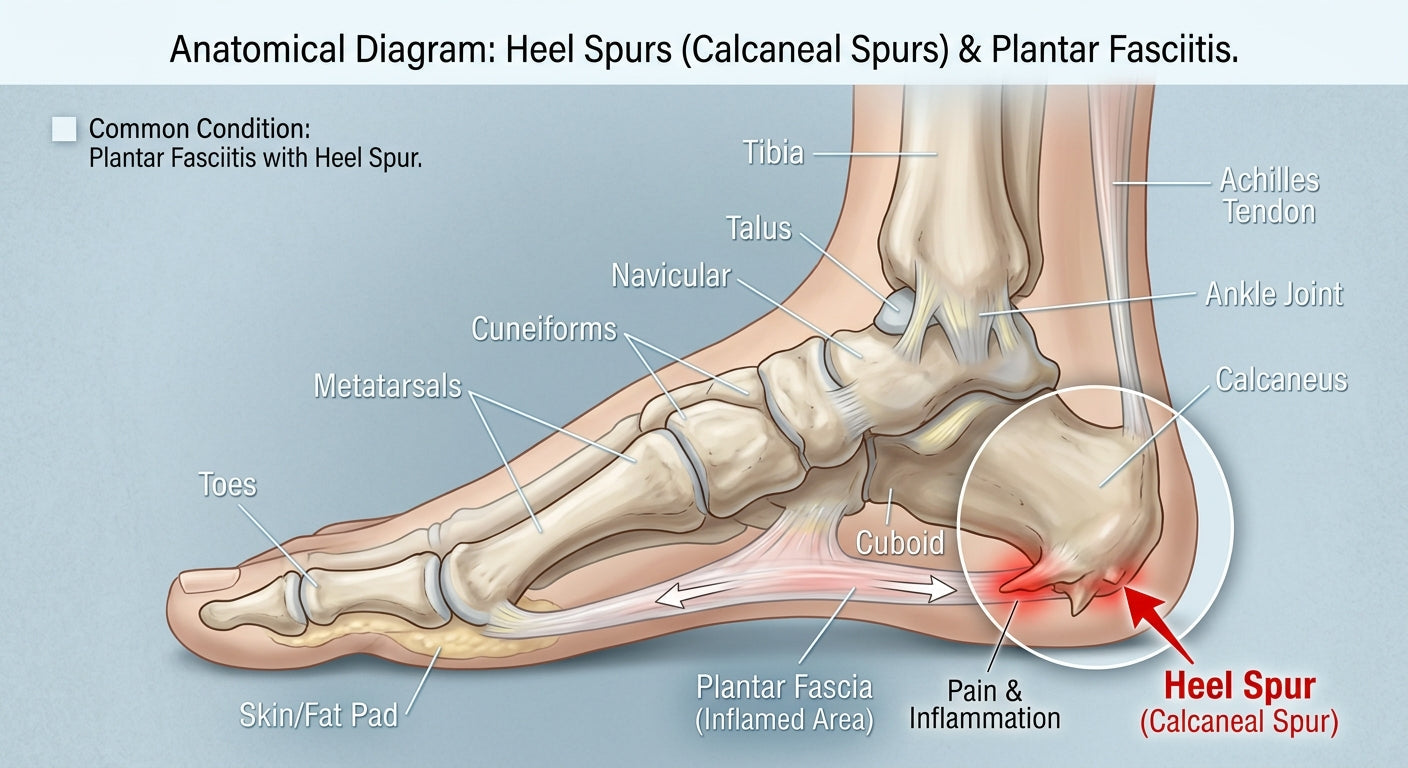
Heel spurs are bony, calcium-deposit growths on the underside of the heel bone. While the idea of a bony protrusion sounds alarming, they are common and often manageable with conservative treatments.

What Causes Heel Spurs?
Heel spurs don't appear overnight. They develop over a long period due to repetitive stress and strain on the foot's muscles and ligaments, particularly the plantar fascia—the thick band of tissue that connects your heel to the ball of your foot. This constant strain can lead to micro-tears in the membrane covering the heel bone, prompting the body to form a calcium deposit to protect the area.
This process is why heel spurs are almost inseparable from plantar fasciitis, the inflammation of the same tissue band. Many people wonder, can plantar fasciitis cause ankle pain? The conditions are closely linked, and the inflammation and strain of plantar fasciitis are the primary drivers of heel spur formation.
Common risk factors include:
- Gait Abnormalities: Walking patterns that place excessive stress on the heel.
- Physical Activities: Running or jogging, especially on hard surfaces.
- Footwear: Wearing ill-fitting or worn-out shoes that lack proper arch support.
- Obesity: Excess body weight increases pressure on the feet.
- Age: As we age, the fat pad in the heel thins, reducing its natural shock absorption.
- Certain Occupations: Jobs that require long hours of standing or walking.
Recognizing the Symptoms
Interestingly, the spur itself is often not the source of the pain. The pain comes from the inflamed soft tissue surrounding it. The symptoms are very similar to those of plantar fasciitis:
- Sharp Pain: A stabbing, knife-like pain in the bottom of the heel when you first stand up in the morning or after long periods of rest.
- Dull Ache: The sharp pain often subsides into a dull ache over the course of the day.
- Inflammation and Swelling: The front of the heel may feel tender and look slightly swollen.
While the pain is centered on the heel, compensating for it can lead to discomfort in other areas. You might find yourself asking, "Why does the back of my ankle hurt?" as you alter your gait to avoid pressure on the heel.
Diagnosis and Treatment Pathways
A healthcare professional can typically diagnose the issue through a physical examination and by discussing your symptoms. To confirm the presence of a heel spur, an X-ray is often used to clearly show the bony growth.
The good news is that over 90% of people find relief without surgery. The focus is on reducing inflammation and alleviating pressure on the heel.
Conservative, Non-Surgical Treatments
-
Rest and Ice: Reducing activities that aggravate the heel is crucial. Applying ice for 15-20 minutes several times a day can help decrease inflammation and numb the pain.
-
Stretching: Gentle calf and plantar fascia stretches can relieve tension and improve flexibility. Towel stretches and calf stretches against a wall are highly effective.
-
Supportive Footwear and Orthotics: Wearing shoes with good cushioning and support is essential. For more targeted relief, many people turn to an arch support brace or custom orthotic inserts. These devices help distribute pressure more evenly across the foot.
-
Bracing and Taping: Using an ankle wrap for plantar fasciitis can provide stability and compression to reduce swelling. Similarly, high-quality ankle support for heel pain helps cushion the affected area and support the ligaments. The goal is to experience unmatched comfort while allowing the tissue to heal.
-
Physical Therapy: A physical therapist can guide you through specific exercises and stretches to strengthen your lower leg muscles, helping stabilize your ankle and heel.
-
Medication: Over-the-counter anti-inflammatory drugs like ibuprofen can help manage pain and reduce inflammation.
For persistent issues, finding the best ankle support for plantar fasciitis can significantly improve daily comfort. A comprehensive general-purpose ankle brace for pain can also offer the necessary stability during recovery.
Frequently Asked Questions About Heel Spurs
What exactly are heel spurs?
Heel spurs are bony, calcium-deposit growths that develop on the underside of the heel bone over time. While they sound concerning, they are a common condition often manageable with non-surgical treatments.
It may sound concerning, but they are a common condition. What causes heel spurs to develop?
Heel spurs result from repetitive stress and strain on the foot's muscles and ligaments, particularly the plantar fascia. This constant strain can cause micro-tears, leading the body to form a calcium deposit as a protective response. Factors such as gait abnormalities, intense physical activity, poor footwear, obesity, and age can contribute.
Are heel spurs always painful?
Interestingly, the bony spur itself is often not the direct source of pain. The pain typically arises from the inflammation of the surrounding soft tissues, especially the plantar fascia. Many people have heel spurs without experiencing any pain.
How are heel spurs diagnosed?
A healthcare professional can diagnose heel spurs through a physical examination and by reviewing your symptoms. An X-ray is commonly used to confirm the presence of the bony growth and rule out other conditions.
What non-surgical treatments are available for heel spur pain?
Over 90% of individuals find relief with conservative treatments. These include rest, ice application, stretching exercises for the calf and plantar fascia, wearing supportive footwear, using orthotic inserts or specialized arch and heel supports, physical therapy, and over-the-counter anti-inflammatory medications.
Can supportive footwear and braces help with heel spur pain?
Absolutely. Wearing shoes with excellent cushioning and arch support is crucial. Orthotic inserts, ankle supports, and specialized heel braces can help distribute pressure evenly, reduce strain on the plantar fascia, and provide stability, significantly improving comfort and aiding recovery.
When is surgery considered for heel spurs?
Surgery is typically considered a last resort, usually only after 9-12 months of consistent non-surgical treatments have failed to provide adequate relief. Surgical options may involve releasing the plantar fascia or removing the spur.
When Is Surgery Considered?
Surgery is a last resort, typically considered only after 9-12 months of consistent, non-surgical treatment have failed to bring relief. The procedure may involve releasing the plantar fascia or removing the heel spur itself.
By understanding the causes of heel spurs and embracing effective treatments, you can manage the pain and return to your daily activities. A combination of rest, proper support, and targeted exercises is the most reliable path to recovery.
-
Posted in
Ankle Injuries