What Is the Most Effective Brace for Tennis Elbow?

As the weather warms up and we dive headfirst into summer sports, gardening, and weekend DIY projects, our bodies often remind us that enthusiasm isn't a substitute for conditioning. One of the most common—and frustrating—reminders is a sharp, burning ache on the outside of your elbow.
Known medically as lateral epicondylitis, "tennis elbow" rarely limits itself to tennis players. It strikes weightlifters, painters, office workers, and anyone who relies on repetitive wrist and arm movements. When the pain flares up, your first instinct is likely to look for support. But when you start searching, you are immediately bombarded with straps, sleeves, splints, and wraps.
It begs the question: What is the most effective brace for tennis elbow?
The truth is, "effective" means something entirely different depending on whether you are swinging a golf club, typing at a desk, or trying to sleep through an aching arm. In this guide, we will break down the science of how different braces work, how to match specific designs to your unique pain triggers, and what features to look for so you can start your journey back to pain-free movement.
The Science of Support: How Braces Actually Work
Before choosing a brace, it helps to understand what is happening under your skin. Tennis elbow is essentially an overuse injury of the extensor tendons—the connective tissues that attach your forearm muscles to the bony bump on the outside of your elbow. When you repeatedly grip, twist, or lift, these tendons suffer micro-tears.
A well-designed brace doesn't magically heal these tears. Instead, it alters the biomechanics of your arm to give that overworked tendon a much-needed break. This concept is called offloading.

By changing where your muscle contractions are absorbed, a brace reduces strain on the damaged tendon, letting you do daily activities with less pain while the tissue recovers.
The 4 Main Types of Tennis Elbow Braces
Not all elbow supports are created equal. They fall into four primary categories, each utilizing a different method to offload the tendon.
1. Counterforce Straps
Think of a counterforce strap like a capo on a guitar fretboard. By wrapping snugly around your upper forearm (just below the elbow), it compresses the extensor muscle. This creates a "false" attachment point. When you grip an object, the tension from your muscle stops at the strap instead of traveling all the way up to your injured elbow tendon. For many, a targeted counterforce elbow brace provides the immediate, localized relief needed for specific gripping activities.
2. Compressive Sleeves
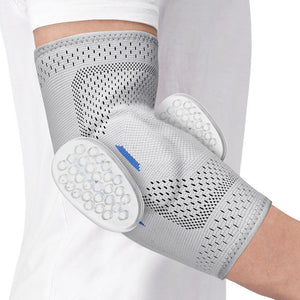
If a strap is like a capo, a sleeve is like a warm, supportive hug. Sleeves slide over the entire elbow joint, providing uniform compression. This broad compression increases localized blood flow, which helps reduce swelling and flush out cellular waste. The snug fit also provides proprioceptive feedback—meaning it makes your brain more aware of your elbow's position, subtly encouraging you to avoid movements that cause strain. When searching for the best support for tennis elbow, those looking for all-day comfort and warmth often turn to sleeves.
3. Hinged and Uniform Braces
For more severe instability or acute pain, structured braces with metal or plastic hinges restrict the elbow's range of motion. These focus less on offloading a specific tendon and more on preventing hyperextension and lateral movement. They are generally reserved for more severe injuries or post-surgical recovery rather than standard tennis elbow.
4. Wrist-Extensor Splints
You might be wondering, should i wear a wrist brace for tennis elbow? It sounds counterintuitive to treat an elbow problem at the wrist. However, because the muscles that extend your wrist attach at your elbow, immobilizing your wrist prevents those muscles from contracting in the first place. A wrist splint gives your elbow total rest, making it an incredibly effective tool for severe flare-ups or nighttime healing.
Matching Your Brace to Your Pain Profile
Choosing the right brace isn't about finding the one with the best reviews; it’s about finding the one that matches your specific lifestyle and pain triggers.

- For Sharp Pain During Specific Activities: If your elbow only hurts when you swing a racket, use a hammer, or grip heavy objects, a minimalist tennis elbow strap is often your best bet. It intercepts force at the moment of strain without restricting overall arm movement.
- For Dull, Aching Pain After Activity: If your elbow throbs after a long day of gardening or typing, a compressive sleeve can soothe the ache, reduce inflammation, and keep the joint warm.
- For the Gym Enthusiast: If heavy pulling and pushing aggravate your elbow, you need something that won't slip during a sweaty workout. Finding the best tennis elbow brace for weightlifting often means looking for a hybrid sleeve that offers both joint compression and an adjustable strap to lock down the tendon during heavy lifts.
- For Morning Stiffness and Night Pain: If you wake up with a stiff, burning elbow, you are likely curling your wrist in your sleep. A rigid wrist splint worn overnight prevents this unconscious movement, allowing the tendon to heal uninterrupted.
Key Features to Consider When Evaluating Effectiveness
Once you know the type of brace you need, it's time to evaluate the features that make a brace truly effective.

1. Adjustability and Fastening Systems
Our arms change slightly in size throughout the day due to swelling and activity. A brace with a high-quality, micro-adjustable closure system (like medical-grade hook-and-loop fasteners) allows you to dial in the perfect amount of tension. Too loose, and it does nothing. Too tight, and you risk cutting off circulation.
2. Targeted Padding
For counterforce straps, the pad is the secret weapon. Some feature a gel or EVA foam cushion designed to press directly onto the muscle belly. The placement of tennis elbow strap padding is critical; it should sit one to two inches below the painful bony bump, pressing into the meaty part of your forearm, not directly on the inflamed tendon.
3. Material Breathability
If a brace is uncomfortable, you won't wear it. If you don't wear it, it can't help. Look for moisture-wicking materials like specialized knit blends or perforated neoprene. If you work in a hot environment or plan to wear the brace during a summer hike, breathability is a non-negotiable feature for long-term compliance.
4. Precision Sizing
A "one-size-fits-all" approach rarely works in orthopedic support. Always measure your forearm or elbow joint exactly as the manufacturer instructs. A properly sized brace ensures therapeutic compression without causing nerve pinching or numbness.
Avoiding the "More Pain" Trap: Common Brace Mistakes
While braces are powerful tools, they are not magic cures. In fact, misusing a brace can sometimes slow your recovery.
The biggest mistake people make is wearing their active brace (like a counterforce strap) 24/7. When you artificially support a muscle all day, every day, it begins to rely on that support and weaken. This muscle atrophy can ultimately leave your elbow more vulnerable to future injuries. Use active braces only during activities that trigger your pain, and take them off when you are resting.
Also, view a brace as a bridge to a physical therapy routine, not a replacement for one. To truly conquer tennis elbow, you must eventually rebuild your forearm strength and flexibility through targeted exercises.
Frequently Asked Questions (FAQ)
Do tennis elbow braces really work?
Yes, when used correctly. Studies show that a properly fitted counterforce strap can significantly reduce the force transmitted to the tendon, immediately decreasing pain during gripping activities. However, they are symptom-management tools, not long-term cures.
How tight should my brace be?
It should be snug enough that you feel firm pressure when you make a fist, but not so tight that it causes your fingers to tingle, throb, or turn cold. You should comfortably be able to slide a finger under the edge of the strap.
Can I wash my elbow brace?
Absolutely, and you should, especially if you use it during summer sports. Hand wash your brace with mild soap and cold water, and always let it air dry to prevent the elastic materials and fasteners from breaking down in the dryer heat.
Your Next Steps to Pain-Free Movement
Understanding the biomechanics of offloading, recognizing your specific pain triggers, and learning which features matter most are the foundational steps to taking your life back from elbow pain. You now know that "effective" simply means finding the right tool for your specific job.
As you move from understanding your symptoms to actively seeking a solution, focus on finding a support that offers premium durability, an exact fit, and the right level of offloading for your daily routine. Ready to put this knowledge into action and find the perfect fit? Explore a high-quality tennis elbow brace designed to support your active lifestyle and help you get back to the activities you love, pain-free.