Can I sleep with my tennis elbow brace?
With the Memorial Day long weekend fast approaching, you're likely gearing up for a packed schedule of outdoor barbecues, getting your garden summer-ready, or finally hitting the tennis courts for your first match of the season. But there's a frustrating hurdle standing in your way: waking up at 3 AM with a deep, searing ache in your elbow.
If you're dealing with lateral epicondylitis (commonly known as tennis elbow), you already know that the pain doesn't clock out when you go to bed. In fact, for many, morning stiffness and overnight throbbing are the most agonizing parts of the recovery journey. This naturally leads to a very common question: should i wear tennis elbow brace at night?
The internet is full of conflicting advice. Some sources swear by nighttime immobilization, while others warn against it. Today, we're breaking down the science of nighttime elbow pain, reconciling the mixed advice, and showing you exactly how to optimize your sleep for a faster, more comfortable recovery.

Why Your Tennis Elbow Hurts More at Night
To understand whether you need protective gear at night, you first need to understand why the pain spikes when the sun goes down. It comes down to three main factors:
- Decreased Circulation: When you sleep, your heart rate slows and blood pressure drops. While this is great for deep rest, it means less oxygen-rich blood is delivered to your healing elbow tendons, leading to stiffness.
- Uncontrolled Sleep Positions: Without realizing it, you might be sleeping with your arms sharply bent, tucked tightly under your body, or with your hands curled into fists. These positions put extreme tension on the extensor tendons in your forearm for hours at a time.
- The Inflammatory Cycle: The micro-tears in your tendon from daytime activities (like typing, lifting, or swinging a racket) trigger an inflammatory response that often peaks during periods of rest.
The "To Brace or Not to Brace" Dilemma
If you are trying to find the best brace for tennis elbow, you might assume you should just wear it 24/7. However, the decision to wear support to bed is nuanced.
When Sleeping in a Brace Helps
For many people, wearing a gentle support to bed provides immense relief. A properly fitted brace acts as a physical reminder to keep your arm in a neutral, slightly stretched position. By preventing you from sharply bending your elbow or tightly gripping your hands in your sleep, you avoid the sustained tension that causes excruciating morning stiffness.
When Sleeping in a Brace Hurts
Conversely, wearing the wrong type of brace, or wearing one too tightly, can introduce new problems. If you've ever wondered how does a tennis elbow strap work, the answer is targeted, pinpoint compression on the forearm muscle. While fantastic for daytime activities, applying that concentrated pressure for eight hours overnight can compress nerves, restrict circulation, and even cause pressure sores.
Furthermore, wearing a rigid brace to bed every single night for months can lead to psychological and physical dependency, where your surrounding muscles begin to weaken because they are constantly relying on external support.
Choosing the Right Gear for Sleep
When comparing a tennis elbow brace vs compression sleeve for nighttime use, the rules change entirely from daytime wear.
- Daytime: A rigid counterforce elbow brace is excellent for absorbing the shock of active movements.
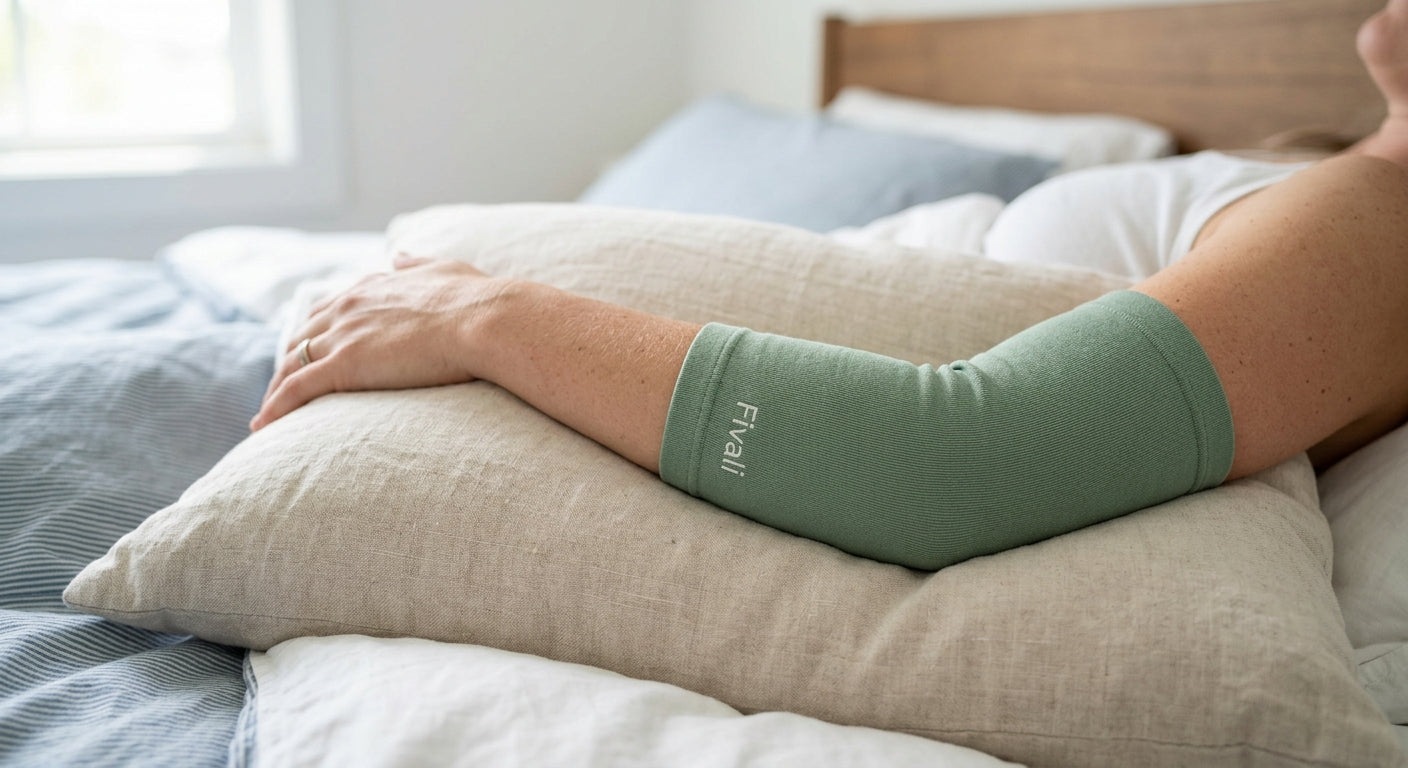
- Nighttime: You want a dedicated tennis elbow brace for sleeping. These are typically soft, breathable sleeves or splints designed for comfort, not impact absorption.
Look for lightweight, moisture-wicking materials that won't make you sweat. The fit should pass the "snug but not tight" test: you should feel supported, but you should easily be able to slide two fingers beneath the fabric.

Master Your Sleep Position
Even with the best nighttime support, your sleeping posture plays a massive role in your recovery.
Best Positions for Elbow Relief
- The Back Sleeper's Setup: Lie on your back and place a small, soft pillow underneath your affected arm. Keep the arm slightly elevated and relatively straight (but not rigidly locked out). This prevents the elbow from sagging and reduces swelling.
- The Side Sleeper's Hug: If you must sleep on your side, sleep on your unaffected side. "Hug" a thick body pillow to your chest and rest your bad arm over it. This stops your arm from twisting internally and keeps the tendons relaxed.
Positions to Strictly Avoid
Never sleep on your stomach with your arms tucked under your torso, and avoid sleeping with your hands resting behind your head. Both positions place your elbow in severe flexion, virtually guaranteeing you'll wake up in pain.
The 5-Minute Pre-Sleep Routine
Set your elbow up for success before your head even hits the pillow.
- Apply Gentle Heat: While ice is great after an acute daytime injury, a warm compress for 10 minutes before bed promotes blood flow and relaxes stiff forearm muscles.
- Light Stretching: Perform a gentle wrist flexor stretch (palm facing up, gently pulling your fingers down toward the floor). Hold for 20 seconds to release built-up tension.
- The Trial Run: If you are trying a night brace for the first time, wear it for 30 minutes while reading or watching TV before actually falling asleep. This helps you identify any irritating seams or over-tightness while you're still awake.

Troubleshooting: Signs You Should Stop Nighttime Bracing
Nighttime support is meant to be a temporary bridge to healing, not a permanent lifestyle change. You should immediately remove your gear and reassess your strategy if you experience:
- Tingling or Numbness: If your fingers feel cold, tingly, or "asleep," the fit is too tight and is restricting nerve function or blood flow.
- Skin Irritation: Red marks that don't fade within 30 minutes of removing the gear, or actual pressure sores, mean the material is rubbing incorrectly.
- Increased Morning Pain: If your elbow actually feels stiffer or more painful after a night of wearing support, your arm may be locked into an unnatural position.
- Dependency: If you feel deep anxiety about sleeping without support after several weeks of healing, it's time to slowly wean off it to ensure your muscles are regaining their natural strength.
Frequently Asked Questions
Can I just loosen my daytime strap and wear it to bed?
It's highly discouraged. Daytime straps are narrow and designed to compress a very specific point on the muscle belly. Even when loosened, shifting during the night can cause the strap to slide over the ulnar nerve, leading to sharp pain and numbness. Opt for a full, soft sleeve at night instead.
How many weeks should I sleep with elbow support?
Most experts suggest a short trial period of 1 to 2 weeks during the most acute, painful phase of your flare-up. As your morning stiffness improves, you should transition to sleeping without it to encourage natural mobility.
Does a brace cure the underlying issue?
No. Protective gear is a fantastic tool for managing pain, preventing further irritation, and keeping you active. However, true healing requires strengthening the tendons through physical therapy exercises over time.
Your Next Steps Toward Relief
Recovering from tennis elbow requires a holistic approach—balancing activity modification, targeted stretching, and the right protective gear for both day and night. By understanding how to safely navigate nighttime pain, you're setting yourself up to wake up refreshed and ready for those summer weekends.
If you are currently evaluating your daytime and nighttime recovery strategies, taking the time to explore a high-quality, comfortable tennis elbow brace ecosystem can make all the difference in keeping you active, pain-free, and moving naturally.