Activity and load management for tennis elbow: when to rest, modify, or keep moving
Memorial Day weekend is just around the corner, marking the unofficial kickoff to summer. It’s that time of year when we pull the tennis rackets out of storage, prep the yard for backyard barbecues, and gear up for a season of staying active outdoors. But if you’ve been dealing with a nagging, burning ache on the outside of your elbow, the thought of serving a tennis ball, pulling a stubborn weed, or even pouring a pitcher of lemonade might fill you with dread.
Welcome to the frustrating world of Lateral Elbow Tendinopathy—commonly known as tennis elbow.
If you are currently trapped in a cycle of resting your elbow until it feels better, only for the pain to roar back the second you return to your favorite activities, you are not alone. Most people try to manage this condition by completely shutting down their activity or blindly pushing through the pain. But modern research reveals a better way.
Let's dive into the fascinating mechanics of tendon recovery and explore a highly practical roadmap for activity and load management. You are going to learn exactly when to rest, when to modify, and when to keep moving so you can reclaim your active lifestyle.
The Big Misconception: Tendinitis vs. Tendinopathy
Here is a major "aha" moment that transforms how most people view their recovery: you probably don't have tendinitis.
For decades, elbow pain was attributed to "tendinitis," implying that the primary culprit was acute inflammation. This led to a standard, outdated playbook: ice it, take anti-inflammatories, and rest until the swelling goes away.
However, recent evidence-based research has shifted the paradigm. We now know that tennis elbow is more accurately described as "tendinopathy." Instead of acute inflammation, tendinopathy is an issue of load intolerance. It means the structural capacity of your tendon has temporarily degraded because it was asked to do "too much, too soon."
If you look at an image of tennis elbow anatomy, you’ll see where the forearm muscles attach to the lateral epicondyle (the bony bump on the outside of your elbow). When these tendons are overloaded, microscopic breakdown occurs. Because tendons have relatively poor blood supply compared to muscles, they heal differently.
Why does this matter? Because while resting calms down the initial irritation, prolonged rest actually weakens the tendon further. To heal a tendon, you have to progressively load it.
The "Goldilocks" Principle of Tendon Loading
The secret to conquering tennis elbow lies in finding the "Goldilocks Zone" of activity.
- Too Much Load: Pushing through sharp pain continues to exceed the tendon's capacity, leading to further breakdown and prolonged recovery.
- Too Little Load: Complete rest weakens the tendon, reducing its capacity. When you eventually return to your activity, the tendon is even less prepared for the stress, leading to immediate flare-ups.
- Just Right (The Goldilocks Zone): Engaging in modified activities that gently stress the tendon without overwhelming it. This stimulates collagen production and gradually rebuilds the tendon’s capacity to handle heavy loads.
How do you find your Goldilocks zone? By mastering the delicate dance of resting, modifying, and moving.
Phase 1: When to Rest (The Acute Phase)
Complete rest is a tool, not a lifestyle. You should only use the "rest" strategy during an acute flare-up.
If your elbow is throbbing while you are simply sitting at your desk, or if everyday tasks like turning a doorknob cause shooting pain, you are in the acute phase.
The Strategy: Back off from aggravating activities for 48 to 72 hours. Your goal here is to let the highly reactive tendon calm down. You aren't healing the tendon during this brief resting window; you are simply hitting the reset button so you can begin the real work of rehabilitation.
Phase 2: When to Modify (The Activity Matrix)
Once the severe, resting ache subsides, it is time to reintroduce movement. But you can't just jump back into the exact movements that caused the injury. You need to modify the load.
Pain is your guide here. Use the "24-Hour Rule": Mild discomfort (a 3 or 4 out of 10 on the pain scale) during an activity is generally acceptable, provided that the pain returns to its baseline level within 24 hours. If your elbow hurts worse the next morning, you exceeded your capacity and need to modify further.
Here is how to modify common daily and athletic activities:
In the Gym
Lifting weights doesn't have to stop, but grip orientation changes everything. Overhand grips place massive stress on the elbow extensors. Switch to neutral grips (palms facing each other) or underhand grips (palms facing up) to shift the load to stronger muscles. If you are wondering what weight lifting exercises can i do with tennis elbow, focus on pushing movements that don't require heavy grip strength, and utilize lifting straps for pulling movements to take the tension off your forearms.
On the Court or Course
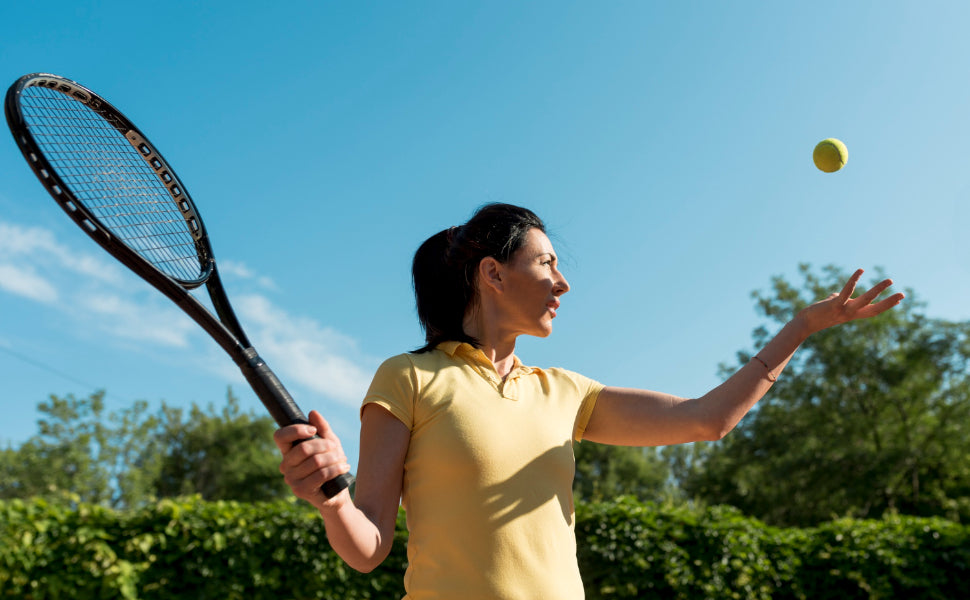
For tennis players, a tight, single-handed backhand is the ultimate tendon stressor. Modify your game by temporarily switching to a two-handed backhand to distribute the force, or transition to a racket with softer strings and a slightly larger grip. For golfers, adjusting your grip pressure and focusing on sweeping the ball rather than taking deep divots can keep you on the course during recovery.
At the Desk and in the Yard
Ergonomics matter. If typing aggravates your elbow, adjust your chair height so your elbows rest at a 90-degree angle, and consider a split ergonomic keyboard to prevent forearm pronation. When prepping the yard for that Memorial Day barbecue, use tools with thicker, padded handles to reduce grip fatigue, and break heavy tasks like mulching into smaller, 15-minute intervals.
Leveraging External Support
During the modification phase, external support can be a game-changer. By redirecting the mechanical forces away from the injured portion of your tendon, you increase your tolerance for movement.
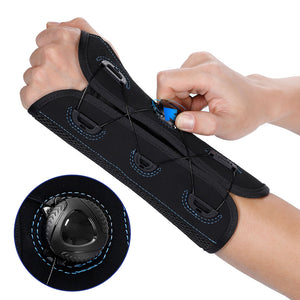
Many people debate whether to use a tennis elbow brace vs compression sleeve. A counterforce strap applies targeted pressure just below the elbow to disperse tension away from the tendon insertion, while a compression sleeve provides overall warmth and blood flow to the joint. Depending on your activity, utilizing high-quality tennis elbow braces can give you the temporary mechanical advantage you need to keep moving comfortably while your tendon remodels.

Phase 3: When to Keep Moving (Graded Return)
As your tendon’s capacity grows, you must progressively challenge it to ensure long-term resilience. This is the graded return phase.
Instead of avoiding forearm exercises, you must lean into them strategically.
- Isometrics: Begin with static holds. Hold a light weight with your wrist extended and simply resist gravity without moving the joint. This has been shown to reduce tendon pain and signal the brain that the area is safe to use.
- Eccentrics: Slowly lowering a weight down (the lengthening phase of a muscle contraction) is highly effective for tendon remodeling.
- Heavy Slow Resistance (HSR): Moving a heavier weight very slowly through a full range of motion.
By consistently challenging the tendon with controlled resistance, you ensure it heals stronger than before.
FAQ: Mastering the Moving Target of Elbow Recovery
How long does lateral elbow tendinopathy typically last?
Because tendons remodel slowly, recovery isn't an overnight process. With proper load management, mild cases can resolve in a few weeks, while more chronic, stubborn cases can take anywhere from 3 to 12 months of consistent progressive loading.
Should I stop all upper body workouts?
Absolutely not! Stopping all movement is counterproductive. You should continue to train your shoulders, back, and core. Modifying your grip and using supportive straps can allow you to maintain your fitness without aggravating the elbow.
People often ask, are there any contraindications to the use of elbow straps in patients with tennis elbow?
Generally, elbow straps are incredibly safe and effective for temporary pain relief and load distribution. However, they shouldn't be worn so tightly that they restrict blood circulation or cause numbness in the fingers. Furthermore, they are meant to be a bridge to activity, not a permanent substitute for strengthening the tendon itself. If you experience skin irritation or increased radiating nerve pain, remove the brace and reassess.
A Holistic Approach to Long-Term Resilience
It is easy to hyper-focus on the elbow joint itself, but your tendon is part of a larger systemic environment. Tendon recovery demands energy and resources from your body.
Poor sleep, chronic stress, and systemic metabolic issues can actually slow down the collagen synthesis required for tendon repair. Prioritizing high-quality sleep, staying hydrated, and managing systemic stress are the unspoken heroes of any tendinopathy recovery plan.
As you gear up for the beautiful summer months ahead, remember that dealing with elbow pain doesn't mean your active lifestyle is on pause. By shifting your mindset away from simply "resting" and embracing a strategic plan of activity modification and graded loading, you can rebuild your tendon's capacity from the inside out.
Listen to your body, respect the 24-hour rule, lean on supportive gear when you need a mechanical advantage, and confidently ease back into the activities you love most.