Ankle Sprain
An ankle sprain is one of the most common musculoskeletal injuries, affecting everyone from professional athletes to individuals simply stepping off a curb incorrectly. Understanding what an ankle sprain is, its severity, and the proper treatment steps is crucial for a full and speedy recovery.
What is an Ankle Sprain?
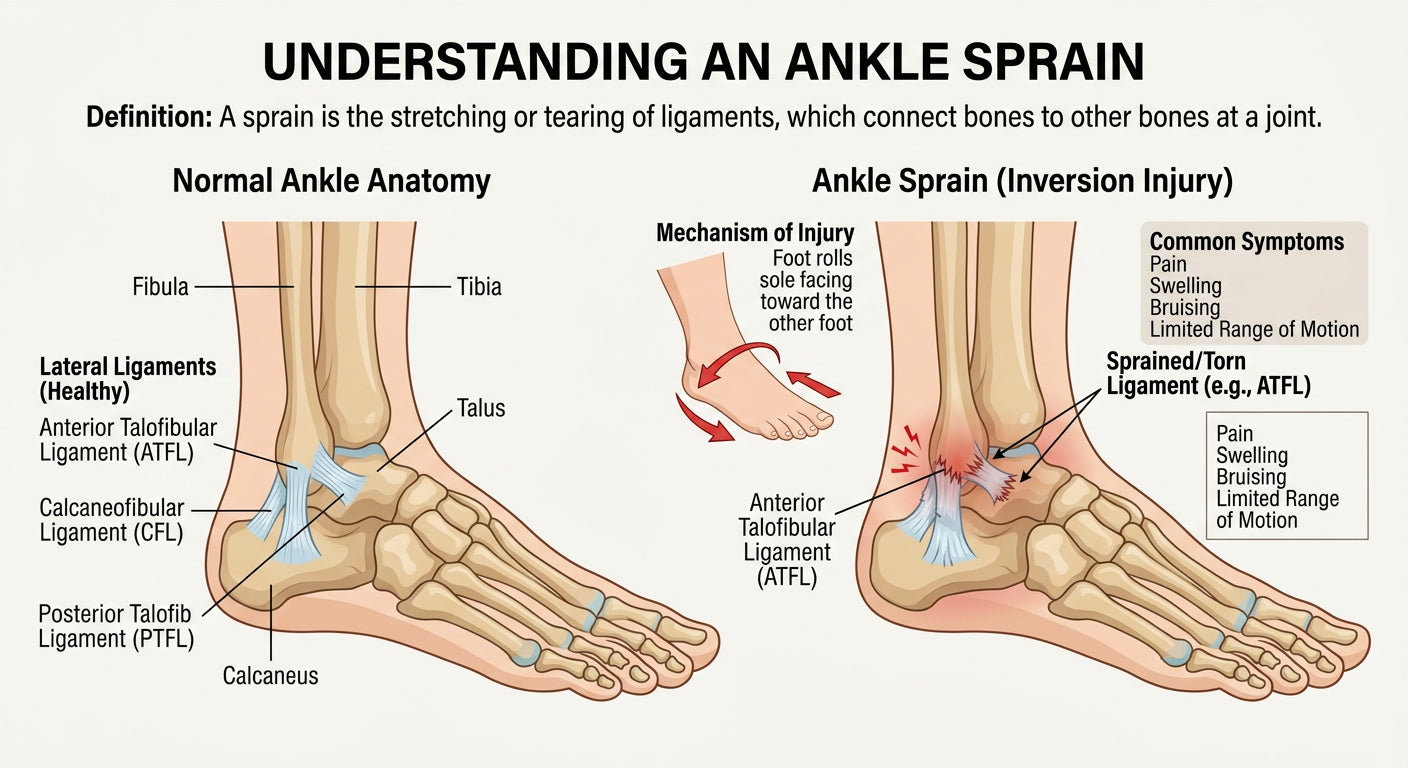
Contrary to what some might think, an ankle sprain is not an injury to the bone or muscle. It is a stretching or tearing of the ligaments—the tough, fibrous bands of tissue that connect bones to one another and provide stability to the joint.
The most common type is an inversion sprain, where the foot rolls inward, stretching or tearing the ligaments on the outside of the ankle. Less frequent is an eversion sprain, which occurs when the foot rolls outward, injuring the inner ligaments.
Key Symptoms of an Ankle Sprain
If you have an ankle sprain, you will likely experience a combination of the following symptoms at the injury site:
- Pain, especially when you try to bear weight on the foot.
- Swelling and tenderness to the touch.
- Bruising that may appear shortly after the injury.
- A restricted range of motion in the ankle joint.
- A feeling of instability, as if the ankle might "give way."
- In some cases, a popping sound or sensation at the moment of injury.
Understanding the Grades of an Ankle Sprain
Healthcare professionals classify an ankle sprain into three grades based on the extent of the damage to the ligaments.
- Grade 1 (Mild): This involves a slight stretching or microscopic tearing of the ligament fibers. You’ll likely experience mild pain and swelling, but the ankle should still feel stable enough to walk on with minimal discomfort.
- Grade 2 (Moderate): This is a partial tear of the ligament. The pain, swelling, and bruising are more significant. The joint will feel unstable, and walking will be painful.
- Grade 3 (Severe): This indicates a complete tear of one or more ligaments. It is associated with severe pain, significant swelling, and extensive bruising. The ankle is very unstable, and walking is typically impossible. A Grade 3 sprain requires medical attention to rule out a fracture and determine the best course of treatment.
What Causes an Ankle Sprain?
An ankle sprain happens when the ankle is forced to move out of its normal position, causing the ligaments to overstretch or tear. Common causes include:
- Awkwardly planting your foot when running or walking.
- Landing unevenly after a jump.
- Stepping on an irregular surface, like a hole or a curb.
- Another person stepping on your foot during a sporting event.
Previous ankle injuries, poor physical conditioning, and improper footwear can increase your risk of sustaining an ankle sprain.
Ankle Sprain Treatment and Recovery
Proper care is essential for healing and preventing long-term issues. While many people search for information on how to heal a sprained ankle overnight, it's important to understand that recovery is a process that takes time and patience. The recovery journey can be broken down into phases.
Phase 1: The R.I.C.E. Method (First 24-72 Hours)
The first step for most sprains is the R.I.C.E. protocol to manage pain and inflammation.
- Rest: Avoid activities that cause pain. Crutches may be necessary for moderate-to-severe sprains.
- Ice: Apply an ice pack for 15-20 minutes every 2-3 hours to reduce swelling and numb the pain.
- Compression: Use an elastic bandage or an ankle compression wrap to help minimize swelling. Ensure it's snug but not so tight that it cuts off circulation.
- Elevation: Keep the injured ankle elevated above heart level as often as possible.
Swelling is a primary concern in this phase. A common question patients have is how long does a sprained ankle stay swollen; the duration can vary from days to weeks depending on the sprain's severity.
Phase 2: Restoring Function
Once the initial swelling and pain subside, the focus shifts to regaining your ankle's strength, flexibility, and range of motion. This phase involves gentle exercises such as ankle circles, toe alphabet writing, and stretching. As you progress, you may need additional support for ankle sprains to protect the joint during activity. For more significant instability, a rigid ankle stabilizer might be recommended by a healthcare provider. Learning how to put on an ankle brace correctly is key to its effectiveness.
Phase 3: Returning to Activities
This final phase involves gradually reintroducing normal activities and sports. It’s vital to ensure the ankle is strong and stable enough to handle the stress. This includes more advanced exercises that challenge your balance and proprioception (your sense of joint position). Rushing back too soon is a leading cause of re-injury.
Prevention is Key
After recovering from an ankle sprain, your focus should turn to prevention.
- Strengthen and Stretch: Regularly perform exercises that strengthen the muscles around your ankle.
- Improve Balance: Incorporate balance exercises, such as standing on one leg, into your routine.
- Wear Appropriate Footwear: Choose shoes that are suitable for your activity and provide good support.
- Use Support: If you have a history of sprains or feel your ankle is weak, consider wearing an ankle brace for pain and support during high-risk activities.
-
Posted in
Ankle Injuries