Flat Foot
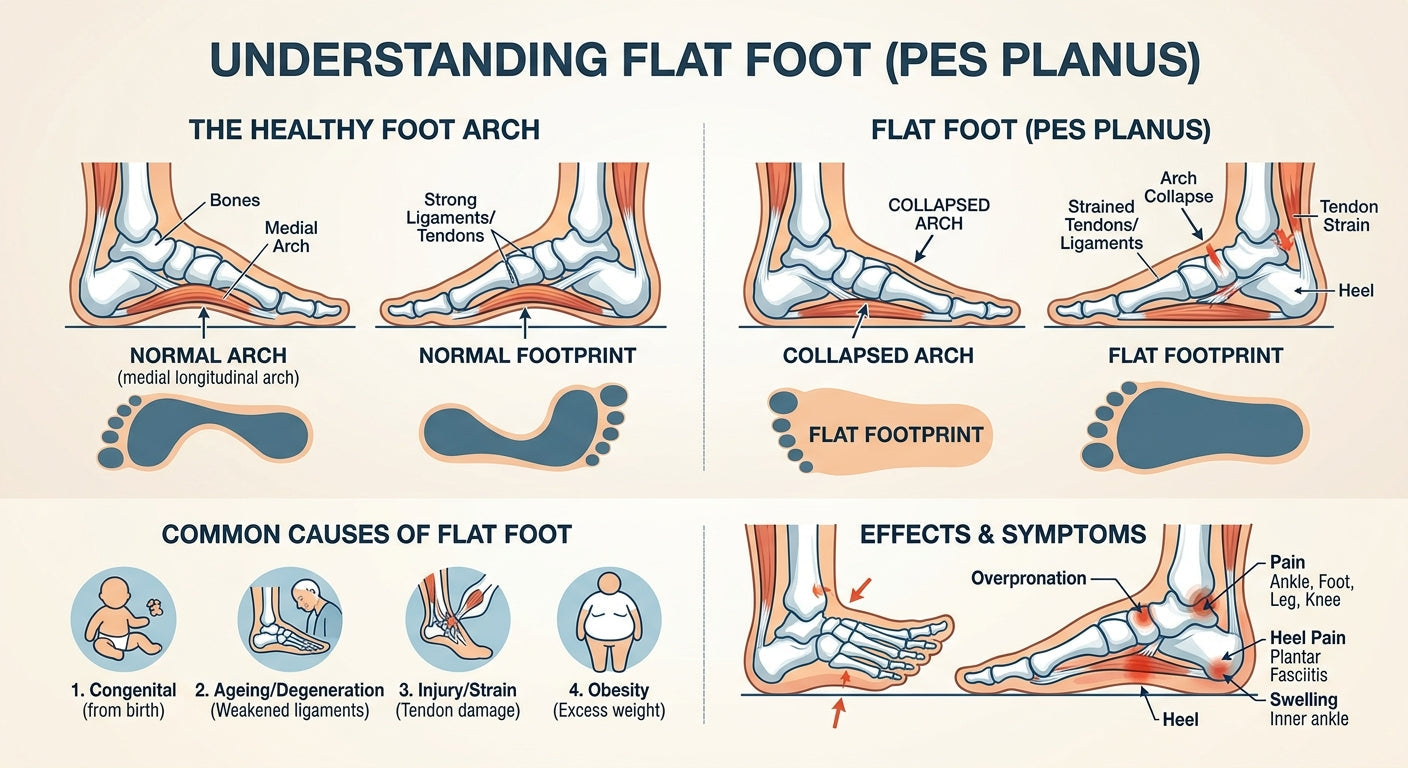
Having flat feet, a condition clinically known as pes planus, means the arch of your foot is flattened, allowing the entire sole to touch the floor when you stand. This is a common and often painless condition.
For many, flat feet are simply a normal variation in foot type. But when the arch of the foot collapses, it is sometimes called a fallen arch, which can develop in adulthood and may require attention.
What Causes Flat Feet?
The reasons for flat feet vary from person to person.
- Genetics: Many people simply inherit flat feet from their parents. For children, having flexible flat feet is normal, and arches typically develop as they grow.
- Aging: Over time, the wear and tear of daily life can weaken the posterior tibial tendon, which is the primary support structure for the arch. This can lead to acquired flatfoot in adults.
- Injuries: An injury to the foot or ankle can damage the tendons and ligaments that support the arch, causing it to collapse.
- Health Conditions: Certain conditions, such as rheumatoid arthritis and diabetes, can affect the joints and tendons in the feet, contributing to flat feet.
- Overpronation: A biomechanical issue in which the ankles roll too far inward with each step. It is closely linked with flat feet, and it can be difficult to know which came first. Addressing this is often a key part of a treatment plan, and many people look for information on how to correct pronated feet to relieve symptoms.
Recognizing the Symptoms of Flat Foot
While many people with flat feet experience no symptoms, others may notice a range of issues. The most common signs include:
- Pain in the arch, heel, ankle, or along the outside of the foot.
- Tired, achy feet, especially after long periods of standing or activity.
- Pain that radiates to the shins, knees, hips, or lower back.
- Swelling along the inside of the ankle.
- Stiffness in the feet.
- Uneven shoe wear, particularly on the inside of the heel.

Finding Relief: Treatment Options for Flat Feet
If your flat feet are causing pain, there are numerous effective strategies to find relief. Treatment is typically divided into conservative care and, in rare cases, surgical intervention.
Conservative (Non-Surgical) Care
For the vast majority of people, non-surgical treatments are highly effective at managing symptoms.
- Supportive Devices: Using orthotic inserts or wearing proper footwear can make a significant difference. For more pronounced discomfort, wearing the right ankle support for flat feet can provide stability and reduce strain on the arch and ankle. If pain is a primary concern, a dedicated ankle brace can help alleviate joint stress during daily activities. In addition to specialized braces, general arch braces for feet can offer everyday support.
- Stretching and Strengthening: Specific exercises can help stretch the Achilles tendon and strengthen the muscles that support your arch, thereby alleviating pain and improving foot function.
- Rest and Modification: If your flat feet are aggravated by certain activities, reducing or modifying them can help. Icing the affected area can also reduce pain and swelling.
- Targeted Support: If the flat foot is caused by a specific issue, such as Posterior Tibial Tendon Dysfunction (PTTD), a healthcare professional may recommend a targeted posterior tibial tendon dysfunction brace to provide focused support and prevent further progression of the condition.
Surgical Options
Surgery is typically reserved for severe cases where conservative treatments have failed to provide relief, and the condition significantly impacts quality of life. Surgical procedures aim to create an arch, repair tendons, or fuse joints to realign the foot and reduce pain.
When to Consult a Professional
You should consider seeing a doctor or physical therapist if:
- You develop new pain in your feet, ankles, or legs.
- Your flat feet are stiff or rigid.
- Your feet seem to be getting flatter.
- The condition is interfering with your ability to walk, run, or perform daily activities.
Living with flat feet doesn't have to mean living with pain. By understanding the cause and utilizing the right combination of supportive devices, exercises, and lifestyle adjustments, you can effectively manage your symptoms and keep your feet healthy and comfortable.
-
Posted in
Ankle Injuries