Achilles Bursitis
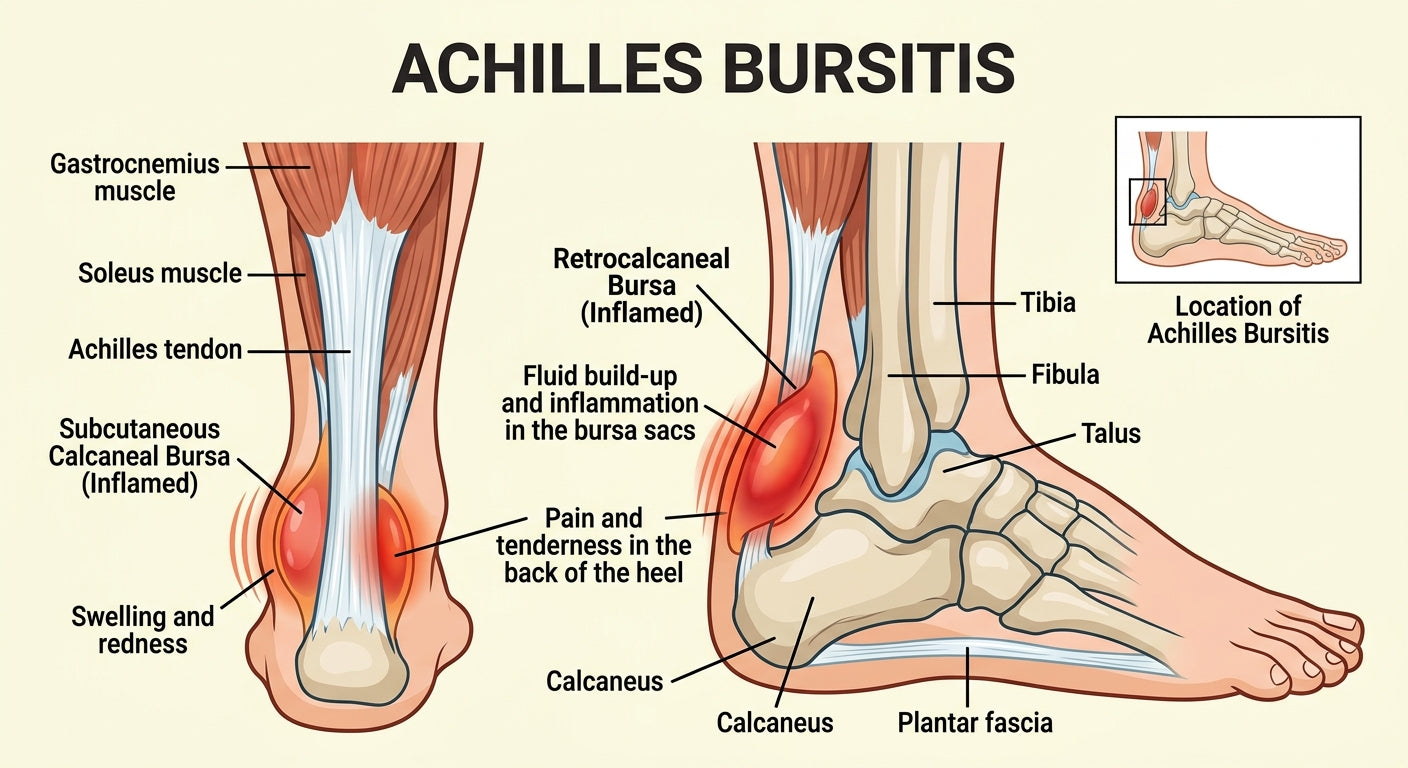
Achilles bursitis is a common condition that causes pain and inflammation at the back of the heel. It involves the bursa, a small, fluid-filled sac located between your Achilles tendon and your heel bone. This sac acts as a cushion to reduce friction, but when it becomes irritated, it can lead to significant discomfort. Understanding this condition is the first step toward finding relief and getting back to your daily activities, often beginning with the question, "Why does the back of my ankle hurt?"

Identifying the Symptoms of Achilles Bursitis
The symptoms of Achilles bursitis are typically localized to the area where the Achilles tendon meets the heel. Recognizing them early can help you take timely action.
- Pain at the Back of the Heel: This is the most common symptom, often described as a dull ache that worsens with activities such as walking or running.
- Swelling and Tenderness: The area may appear swollen and feel tender or painful to the touch.
- Redness and Warmth: The skin over the inflamed bursa may appear red and feel warm.
- Stiffness: You might experience stiffness in the ankle, especially in the morning or after periods of inactivity.
- Limited Range of Motion: Pain may increase when you flex your foot or stand on your tiptoes.
Common Causes and Risk Factors
Achilles bursitis is primarily an overuse injury, but several factors can contribute to its development.
- Repetitive Stress: Activities that repeatedly strain the Achilles tendon, such as running, jumping, or frequent stair climbing, are common culprits.
- Improper Footwear: Shoes that are too tight or have a rigid back can rub against the heel, irritating the bursa.
- Sudden Increase in Activity: Ramping up your training intensity or duration too quickly can overload the structures around the ankle.
- Tight Calf Muscles: Inflexible calf muscles can increase tension on the Achilles tendon, which, in turn, increases pressure on the bursa.
- Anatomical Factors: Certain foot structures or a bony enlargement on the back of the heel (Haglund’s deformity) can make you more susceptible.
Effective Treatment and Management Strategies
Managing Achilles bursitis usually begins with conservative, at-home treatments designed to reduce inflammation and alleviate pain.
The RICE Method
A foundational approach for most soft-tissue injuries, the RICE protocol is highly effective in the early stages:
- Rest: Avoid activities that aggravate the pain. Give your ankle the time it needs to heal.
- Ice: Apply a cold pack to the affected area for 15-20 minutes several times a day to reduce swelling and numb the pain.
- Compression: Gently wrapping the ankle can help control swelling. This leads many to wonder, "Do compression socks help with foot pain?" For many, the consistent pressure they provide offers relief and support.
- Elevation: Whenever possible, keep your foot elevated above heart level to help reduce swelling.
Supportive Measures and Gear
In addition to initial care, incorporating supportive measures can accelerate recovery and prevent recurrence.
- Proper Footwear: Switch to comfortable, well-cushioned shoes with an open back or soft heel counter to avoid direct pressure on the inflamed area.
- Stretching: Gentle calf muscle stretches can relieve tension on the Achilles tendon.
- Supportive Braces: Using an ankle brace for pain can be a practical step in managing discomfort during daily activities. For more targeted relief, an ankle support for heel pain can provide cushioning and stability. In some cases, a specific achilles tendonitis brace may be recommended to limit movement and allow the bursa to heal. Finding the right adjustable ankle brace support ensures a customized fit for optimal comfort.
Preventing Future Flare-Ups
Once the pain has subsided, the focus should shift to prevention. A few simple strategies can significantly reduce your risk of developing Achilles bursitis again.
- Gradual Progression: Always increase the intensity and duration of your exercise routine slowly.
- Warm-Up Properly: Before any physical activity, engage in a dynamic warm-up to prepare your muscles and tendons.
- Wear Appropriate Shoes: Ensure your footwear is right for your activity, fits well, and provides adequate support.
- Maintain Flexibility: Regularly stretch your calf muscles to maintain good flexibility and reduce strain on your Achilles tendon.
- Consider Proactive Support: For those who play high-impact sports, a common question is: "Should I wear an ankle brace while running?" Using supportive gear during strenuous activity can offer extra protection against overuse injuries.
Frequently Asked Questions About Achilles Bursitis
Understanding Achilles bursitis is key to effective management and prevention. Here are answers to some common questions:
Q1: What exactly is Achilles bursitis?
A1: Achilles bursitis is a condition characterized by pain and inflammation at the back of the heel. It involves the bursa, a small, fluid-filled sac located between your Achilles tendon and heel bone, which becomes irritated and inflamed.
Q2: What are the common symptoms of Achilles bursitis?
A2: Symptoms typically include pain at the back of the heel (often a dull ache worsened by activity), swelling and tenderness, redness and warmth over the inflamed area, stiffness in the ankle (especially in the morning), and limited range of motion.
Q3: What causes Achilles bursitis?
A3: It's primarily an overuse injury, often caused by repetitive stress from activities like running or jumping, improper footwear, sudden increases in activity intensity, tight calf muscles, or anatomical factors like Haglund’s deformity.
Q4: How can Achilles bursitis be treated?
A4: Initial treatment usually involves the RICE method (Rest, Ice, Compression, Elevation) to reduce inflammation and pain. Supportive measures such as proper footwear, gentle stretching, and the use of supportive braces can also aid recovery.
Q5: Can supportive gear like ankle braces help with Achilles bursitis?
A5: Yes, supportive gear can be beneficial. Using an ankle brace can help manage discomfort during daily activities. An ankle support specifically designed for heel pain can provide cushioning and stability, while an Achilles tendonitis brace may limit movement to allow the bursa to heal.
Q6: How can I prevent Achilles bursitis from recurring?
A6: To prevent future flare-ups, gradually increase exercise intensity, warm up properly before physical activity, wear appropriate and well-fitting shoes, maintain calf muscle flexibility through regular stretching, and consider proactive support like ankle braces during high-impact sports.
-
Posted in
Ankle Injuries