Elbow Sprains
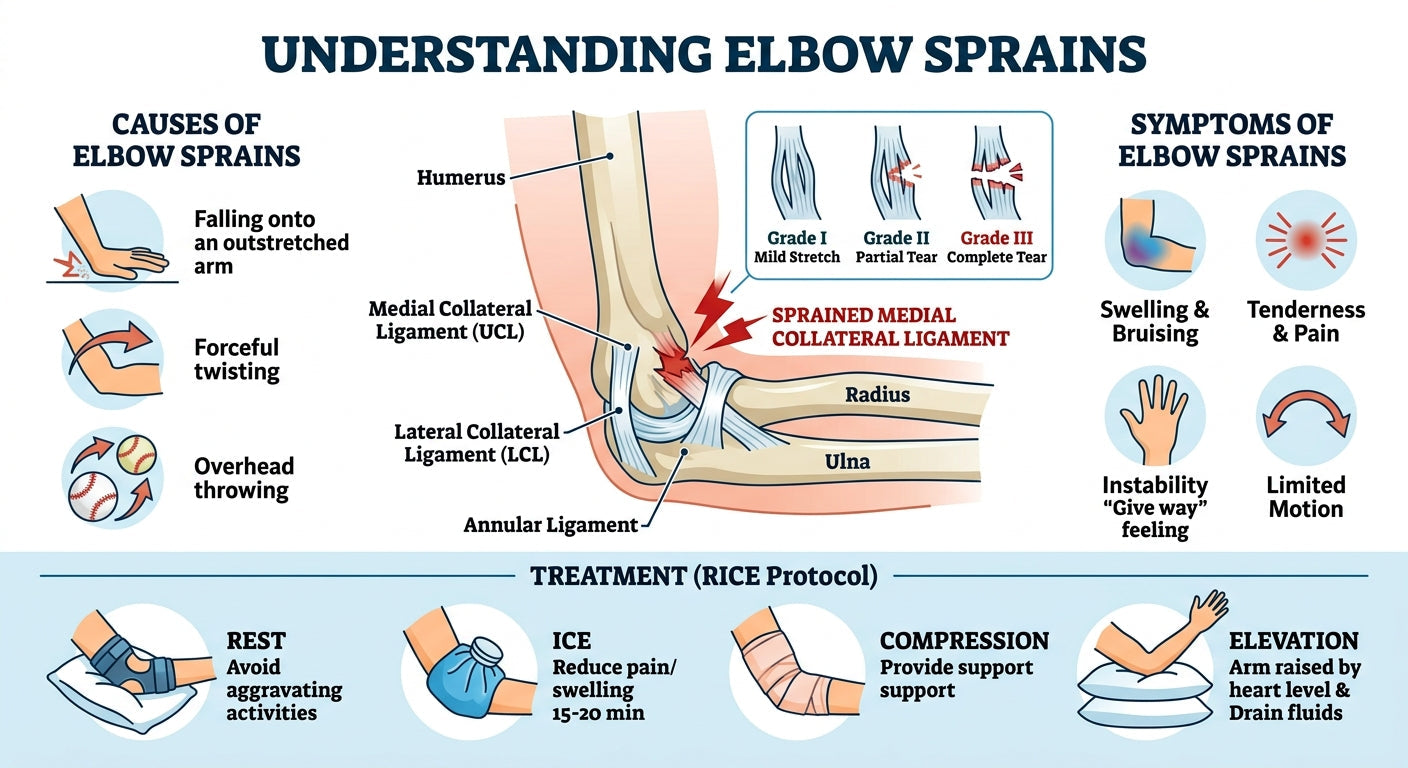
Elbow sprains are common injuries that occur when the tough ligaments connecting the bones in your elbow joint are stretched or torn. These ligaments are crucial for elbow stability and allow smooth, controlled movement. Whether it's a minor strain or a severe tear, an elbow sprain can significantly impact your daily activities and athletic performance.
What Causes Elbow Sprains?
Elbow sprains typically result from sudden, forceful movements that push the elbow beyond its normal range of motion. Common causes include:
- Falls: Falling onto an outstretched arm is a common cause, as the impact force can hyperextend or twist the elbow and strain the ligaments.
- Sports Injuries: Athletes, particularly those involved in throwing sports like javelin and baseball, as well as racquet sports such as tennis and golf, are susceptible to elbow sprains. Repetitive stress or sudden, awkward movements during play can damage the ligaments. Contact sports like football and wrestling also carry a high risk due to direct impacts or falls.
- Overuse and Repetitive Motion: While less common for acute sprains, chronic repetitive movements can weaken ligaments over time, making them more vulnerable to injury. This is often seen in certain occupations or hobbies.
- Direct Impact: A direct blow to the elbow can also cause ligaments to stretch or tear.
Recognizing the Symptoms of an Elbow Sprain
Elbow sprain symptoms vary in severity, ranging from mild discomfort to severe pain and instability. Common signs include:
- Pain: Immediate pain at the time of injury, which may worsen with movement or when touching the affected area.
- Swelling: The area around the elbow may swell rapidly due to inflammation and fluid accumulation.
- Bruising: Discoloration can appear around the elbow as blood vessels are damaged.
- Tenderness: The joint will likely feel tender to the touch, especially over the injured ligaments.
- Limited Range of Motion: Difficulty or pain when trying to bend, straighten, or rotate your arm.
- Instability: In more severe sprains (grade II or III), you might experience a feeling of looseness or instability in the joint, as if the elbow could "give way."
- Popping Sensation: Some individuals report hearing or feeling a "pop" at the moment of injury, especially with more severe tears.
If you experience these symptoms after an injury, it’s important to rest the elbow and avoid activities that aggravate the pain.
Diagnosing an Elbow Sprain
Accurate diagnosis is crucial for effective treatment. A healthcare professional will typically:
- Review Medical History: Ask about the injury mechanism, your symptoms, and any prior elbow issues.
- Physical Examination: Carefully inspect and palpate your elbow to identify areas of tenderness, swelling, and bruising. They will also assess your range of motion and joint stability through specific tests.
- Imaging Tests: Doctors may order X-rays to rule out fractures. In some cases, an MRI (Magnetic Resonance Imaging) might be recommended to visualize soft tissues like ligaments and assess the extent of the sprain.
Effective Treatment and Recovery Strategies
Treatment for elbow sprains focuses on reducing pain and swelling, promoting healing, and restoring full function. The approach depends on the sprain's severity.
Immediate Care
For mild to moderate Elbow Sprains, the RICE method (Rest, Ice, Compression, Elevation) is often recommended initially:
- Rest: Avoid activities that cause pain and give your elbow time to heal.
- Ice: Apply ice packs to the affected area for 15-20 minutes at a time, several times a day, to reduce swelling and pain.
- Compression: A compression sleeve or bandage can help minimize swelling. Understanding the benefits of elbow sleeves can help you select the right type of support for comfort and recovery.
- Elevation: Keep your elbow elevated above your heart to reduce fluid accumulation.
Supportive Aids and Rehabilitation
Depending on the severity, your doctor might recommend various supportive aids. For instance, an arm sling for the elbow can help immobilize the joint during the initial healing phase, providing essential stability. As you progress, you might move to less restrictive supports. Many find elbow support helpful during recovery to prevent reinjury and provide comfort. For specific conditions such as tennis elbow, a tennis-and-golf elbow brace is often used.
Physical therapy plays a vital role in recovery. A therapist can guide you through exercises designed to:
- Restore Range of Motion: Gentle stretches and movements to regain flexibility.
- Strengthen Muscles: Exercises for the forearm, upper arm, and shoulder to improve stability and support around the elbow joint.
- Improve Proprioception: Exercises that enhance your joints' sense of position are crucial for preventing future injuries.
If you play sports or do activities that commonly strain the elbow, specialized supports may help. For example, athletes dealing with tennis elbow might find a counterforce elbow brace useful in dispersing stress. If you're wondering whether a compression sleeve helps with elbow bursitis or similar conditions, consult a professional. When doctors recommend treatment for tennis elbow, they often emphasize rehabilitation and appropriate support.
Returning to Activity
Gradual return to activity is paramount to prevent re-injury. Your physical therapist will help you determine when it's safe to resume normal daily tasks and sports. For athletes, this often involves sport-specific drills that gradually increase intensity. Even with an injury, you may still do some upper-body exercises with tennis elbow, with modifications, to maintain fitness without overstressing the healing elbow. An adjustable elbow brace may offer versatility as you regain strength. If you experience persistent discomfort, options like an elbow brace for pain may provide additional relief and stability during rehabilitation.
Preventing Future Elbow Sprains
Preventing elbow sprains involves a combination of smart training practices and protective measures:
- Warm Up Properly: Always warm up before any physical activity, especially those involving repetitive arm movements.
- Improve Technique: Ensure proper form and technique in sports or work-related tasks to minimize stress on the elbow joint.
- Strength Training: Regularly strengthen the muscles surrounding the elbow, including the forearm, biceps, and triceps, to enhance joint stability.
- Flexibility: Maintain good flexibility in the elbow and wrist.
- Listen to Your Body: Avoid pushing through pain. If you feel discomfort, rest and allow your body to recover.
- Use Appropriate Gear: Consider supportive wraps or garments during high-risk activities for added stability and compression.
-
Posted in
Elbow injury