Golfer's Elbow
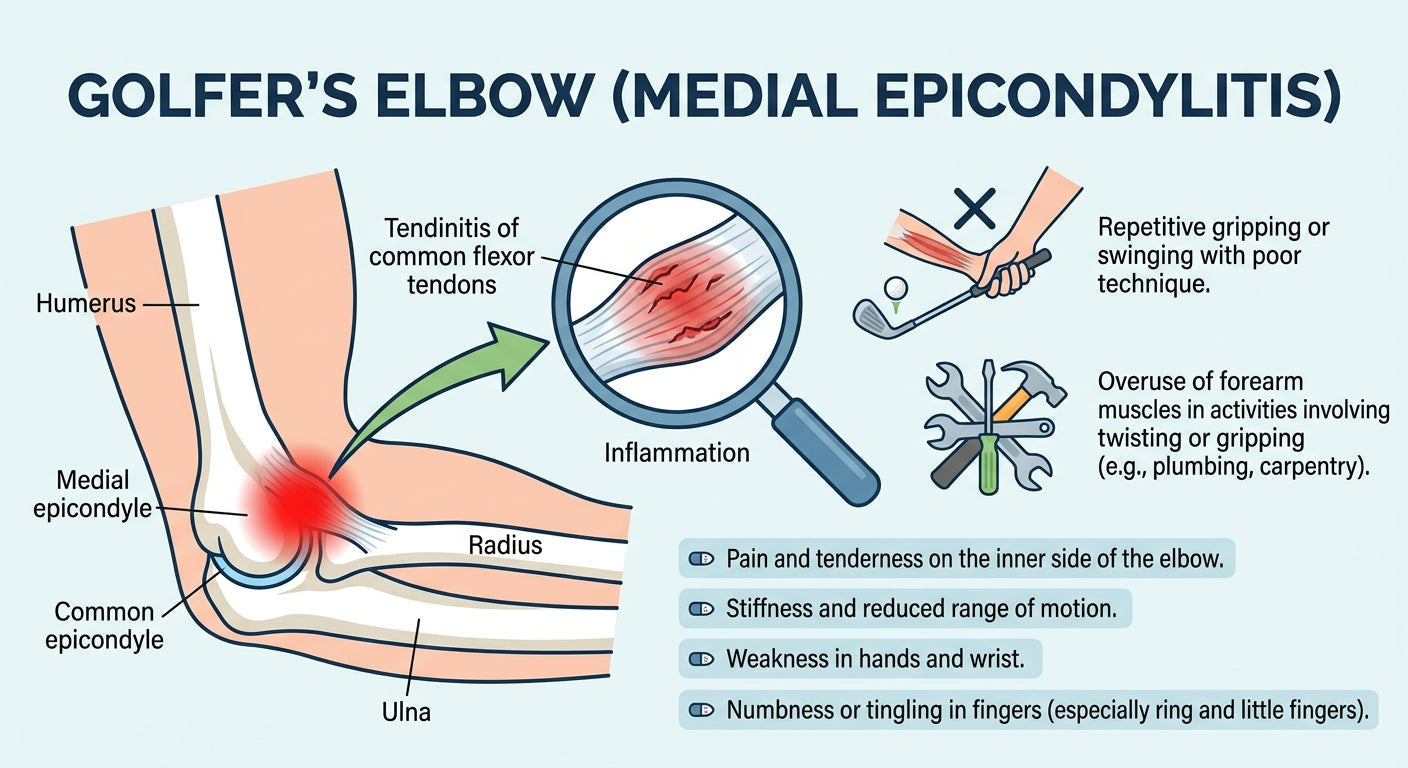
Golfer's elbow, medically known as medial epicondylitis, is a common condition characterized by pain and inflammation on the inner side of the elbow. Despite its name, you don't have to be a golfer to develop it; it often affects people who do activities that require repetitive wrist flexion and forearm rotation, such as tennis players, baseball pitchers, bowlers, and even those with certain occupational demands. This condition arises from damage to the tendons that connect the forearm muscles to the bony prominence on the inside of your elbow, known as the medial epicondyle.
Symptoms of Golfer's Elbow
The primary symptom of Golfer's Elbow is pain on the inner side of the elbow, which can sometimes radiate down the forearm to the wrist. Other common symptoms include:
- Tenderness: The inner elbow often feels tender to the touch.
- Weakness: A weakened grip or difficulty performing tasks that require gripping or lifting.
- Stiffness: The elbow joint may feel stiff, especially in the morning.
- Numbness or Tingling: In some cases, nerve compression can cause numbness or tingling that radiates into the fingers, particularly the ring and pinky fingers.
These symptoms are typically worse with activities that involve bending the wrist, gripping, or twisting the forearm, such as swinging a golf club, throwing a ball, or carrying groceries.
Causes and Risk Factors
Golfer's Elbow is an overuse injury. It develops from repetitive stress on the forearm muscles and tendons that control wrist and finger movements. This repetitive strain causes microscopic tears in the tendons, primarily the flexor-pronator tendons, leading to inflammation and pain. Common activities that can contribute to Golfer's Elbow include:
- Sports: Golf (especially with poor technique or too much gripping), baseball, bowling, archery, and weightlifting.
- Occupational Activities: Certain professions require repetitive movements, such as carpentry, plumbing, painting, assembly-line work, or using hand tools.
- Improper Technique: Incorrect form during sports or work-related tasks can place undue stress on the elbow tendons.
- Insufficient Warm-up: Not adequately preparing muscles for activity can increase injury risk.
- Weak Forearm Muscles: Weak forearm muscles can make them more susceptible to overuse injuries.
Diagnosis
Diagnosing Golfer's Elbow typically involves a physical examination by a healthcare professional. They will assess your symptoms and medical history, then gently press the affected area to pinpoint the exact pain location. They may also use specific movements, such as flexing your wrist against resistance, to confirm the diagnosis and rule out other conditions. Imaging tests like X-rays or MRI scans are usually not necessary but may be ordered to rule out other issues if symptoms are atypical or severe.

Treatment Options for Golfer's Elbow
Most cases of Golfer's Elbow respond well to conservative treatment, with many individuals improving significantly within weeks to months. Treatment aims to reduce pain and inflammation, promote healing, and prevent recurrence.
Conservative Management:
- Rest and Activity Modification: The first and most crucial step is to rest the affected arm and avoid activities that aggravate the pain. Modifying how you perform certain tasks or taking a break from sports can help your tendons heal.
- Ice Therapy: Applying ice packs to the inner elbow for 15-20 minutes several times a day can help reduce pain and swelling.
- Over-the-Counter Pain Relievers: Non-steroidal anti-inflammatory drugs (NSAIDs) such as ibuprofen and naproxen can help manage pain and inflammation.
- Physical Therapy and Exercises: A physical therapist can guide you through a series of exercises designed to stretch and strengthen the forearm muscles. These exercises improve flexibility and muscle endurance and help prevent future injury. Gradually increasing the load on the tendons promotes healing and resilience.
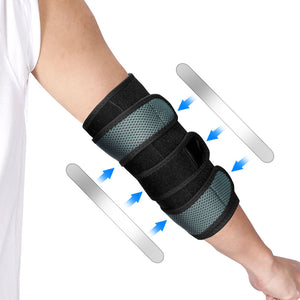
- Bracing and Support: Wearing an elbow support for golfer's elbow can provide compression and support to the affected tendons, helping to reduce strain during daily activities. Various types of support are available, including compression sleeves and specialized straps. Understanding what a counterforce brace is can help, as this type of support applies pressure just below the elbow to absorb forces that would otherwise reach the injured tendon. For those seeking targeted relief, a counterforce brace for Golfer's Elbow is often recommended. Knowing the correct golfer's elbow brace placement is crucial for maximizing its effectiveness. If you're looking for the best elbow brace for tendonitis, consider options that offer comprehensive support. Additionally, the best elbow sleeves can provide general compression and warmth, which may aid recovery. For persistent discomfort, finding the right support for elbow pain is essential. When considering options, keep in mind that counterforce brace effectiveness varies, and finding the right fit for your needs is paramount.
- Stretching: Gentle forearm stretching can improve flexibility and reduce tension on the tendons.
Prevention Strategies
Preventing Golfer's Elbow often involves addressing the root causes of repetitive strain:
- Warm up properly: Before sports or activities that use your forearms, do light cardio and dynamic stretches.
- Strengthen Forearm Muscles: Incorporate exercises that strengthen your wrist and forearm muscles to improve their resilience.
- Use Proper Technique: In sports, ensure your form is correct. Consider professional coaching if you suspect your technique is contributing to the problem.
- Gradual Increase in Activity: Avoid sudden increases in the intensity or duration of activities that stress your elbow.
- Ergonomics: For work-related tasks, set up your workstation ergonomically to minimize strain on your arms and wrists.
- Listen to Your Body: If you feel pain, stop the activity and rest. Ignoring early signs of discomfort can lead to more severe, longer-lasting injury.
-
Posted in
Elbow injury