Osteoarthritis of the Ankle
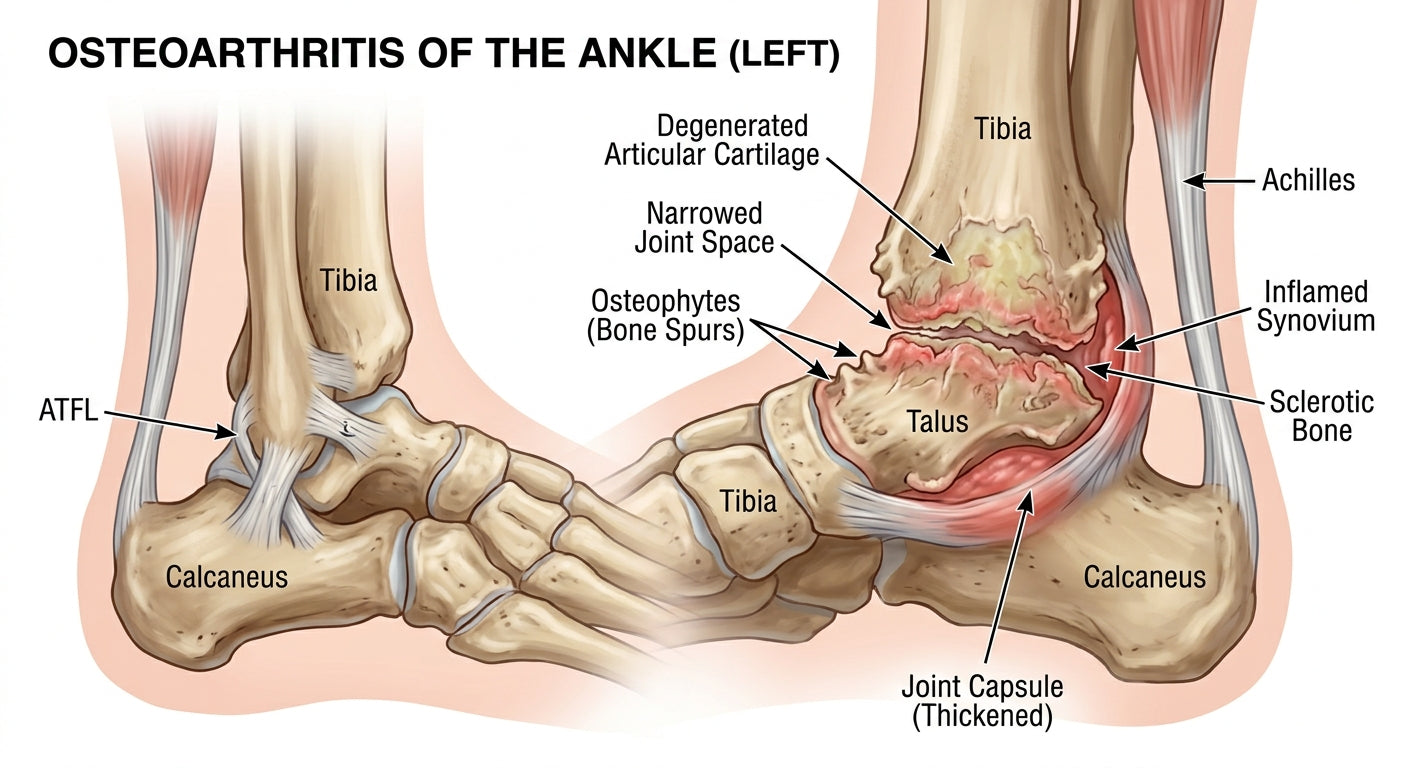
While many people associate osteoarthritis with the hips and knees, the ankle is also a common site for this degenerative joint condition. Osteoarthritis of the ankle occurs when the smooth cartilage that cushions the bones of the ankle joint gradually wears down. Without this protective cartilage, bones can rub directly against each other, leading to pain, stiffness, and a significant impact on mobility.
What is Osteoarthritis of the Ankle?
The ankle joint, or tibiotalar joint, is a complex structure formed by three bones: the tibia (shinbone), the fibula (the smaller bone in the lower leg), and the talus (a small bone in the foot). The ends of these bones are covered with articular cartilage, a tough, slippery tissue that allows them to glide smoothly against one another during movement.
In a healthy ankle, this cartilage acts as a shock absorber. However, in ankle osteoarthritis, this cartilage breaks down and thins. As the condition progresses, the body may form painful bone spurs (osteophytes), and the joint space can narrow, causing friction and inflammation.
What Causes Ankle Osteoarthritis?
Unlike osteoarthritis in other major joints, which is often due to age-related "wear and tear," ankle osteoarthritis is predominantly post-traumatic. This means it usually develops after a previous injury.
Key causes and risk factors include:
- Previous Ankle Injury: This is the leading cause, accounting for a large majority of cases. A history of ankle fractures, severe sprains, or significant ligament tears can damage cartilage or alter joint mechanics, accelerating degeneration over time. Even an injury from years ago can lead to post-traumatic arthritis. Finding the best ankle brace after a fracture is crucial during recovery to ensure proper healing and stability.
- Chronic Ankle Instability: Repeated ankle sprains can weaken ligaments and make the joint unstable. This instability causes subtle, abnormal movements in the joint, leading to uneven wear on the cartilage.
- Body Mechanics and Alignment: Poor foot and ankle alignment, such as severe flat feet or overpronation (where the ankle rolls inward), can place uneven stress on the joint. Understanding how to fix pronated ankles can be a key preventative and management strategy.
- Inflammatory Conditions: Systemic diseases like rheumatoid arthritis can cause inflammation that destroys cartilage, leading to a secondary form of osteoarthritis.
- Family History: A genetic predisposition can make some individuals more susceptible to cartilage breakdown.
- Excess Body Weight: Being overweight or obese increases the load-bearing stress on the ankle joints with every step, which can accelerate cartilage degeneration.
Recognizing the Symptoms of Ankle Osteoarthritis
The symptoms of ankle osteoarthritis often develop gradually and can worsen over time. Being aware of the early signs is important for seeking timely treatment.
Common symptoms include:
- Pain: Typically, a deep, aching pain within the ankle, which often worsens with activity like walking, standing, or climbing stairs.
- Stiffness: The joint may feel stiff and difficult to move, especially first thing in the morning or after a period of inactivity.
- Swelling: Fluid can accumulate in the joint, causing visible swelling and tenderness to the touch.
- Reduced Range of Motion: You may find it difficult to flex your foot up or point it down as far as you used to.
- Grinding or Clicking: A sensation of catching, locking, or grinding (crepitus) during movement as the rough bone surfaces rub together.
- Instability: The ankle may feel like it is "giving way" or unable to support your weight.
Managing and Treating Ankle Osteoarthritis
While there is no cure for osteoarthritis, there are numerous effective strategies to manage symptoms, slow the condition's progression, and improve your quality of life. Treatment is typically focused on conservative, non-surgical methods first.
Lifestyle and Activity Modification: Simple changes can make a big difference. Reducing high-impact activities like running and jumping in favor of low-impact exercises such as swimming, cycling, or using an elliptical machine can reduce stress on the joint while maintaining cardiovascular health.
Physical Therapy: A physical therapist can design a personalized program to improve your ankle's flexibility, strength, and range of motion. Exercises that strengthen the muscles around the joint can provide better support and stability.
Supportive Devices: Bracing and support are cornerstones of managing ankle OA pain and instability.
- An ankle compression sleeve for arthritis can help reduce swelling and provide mild support.
- For more significant instability or pain, a more structured ankle support for arthritis or a dedicated ankle brace for pain can limit excessive movement and offload pressure from the affected joint areas.
- If poor alignment is a contributing factor, an ankle brace for overpronation can help correct mechanics and promote more even weight distribution.
- A general-purpose ankle brace can offer the confidence and stability needed to stay active.
Medications and Injections. Over-the-counter anti-inflammatory medications can help manage pain and swelling. In more severe cases, a doctor might recommend corticosteroid injections directly into the joint to provide temporary but powerful relief.
When to See a Doctor
If you are experiencing persistent ankle pain, stiffness, or swelling that interferes with your daily activities, it's essential to consult a healthcare professional for an accurate diagnosis. Early intervention and a comprehensive management plan are key to living well with ankle osteoarthritis. A proper diagnosis can help you find the right tools for your needs, whether it's physical therapy, medication, or a specific ankle brace for pain to help you get back on your feet. Choosing the right ankle support for osteoarthritis can be a critical part of your overall treatment plan, providing the stability you need to move with greater comfort and confidence.
Frequently Asked Questions About Ankle Osteoarthritis
- What exactly is osteoarthritis of the ankle?
- Ankle osteoarthritis is a degenerative joint condition in which the smooth cartilage cushioning the bones of the ankle gradually wears down. This leads to bones rubbing against each other, causing pain, stiffness, and reduced mobility.
- What typically causes ankle osteoarthritis?
- Unlike other forms of osteoarthritis, ankle osteoarthritis is predominantly post-traumatic, meaning it usually develops after a prior injury such as an ankle fracture, severe sprain, or ligament tear. Other factors include chronic ankle instability, poor foot alignment, inflammatory conditions, family history, and excess body weight.
- What are the common symptoms of ankle osteoarthritis?
- Common symptoms include deep, aching pain that worsens with activity, stiffness (especially in the morning), swelling, reduced range of motion, grinding or clicking sensations during movement (crepitus), and a feeling of instability, with the ankle feeling like it may give way.
- How can ankle osteoarthritis be managed or treated?
- While there's no cure, management focuses on conservative strategies. These include lifestyle modifications (low-impact activities), physical therapy to improve strength and flexibility, supportive devices like ankle braces or compression sleeves, and medications or injections for pain and inflammation relief.
- When should I consult a healthcare professional for ankle pain?
- It's important to see a doctor if you experience persistent ankle pain, stiffness, or swelling that interferes with your daily activities. Early diagnosis and a comprehensive management plan are crucial for effectively living with ankle osteoarthritis.
- Can supportive devices like ankle braces help with ankle osteoarthritis?
- Yes, supportive devices are a cornerstone of managing ankle osteoarthritis. Ankle compression sleeves can reduce swelling and offer mild support, while more structured ankle supports and dedicated ankle braces can provide stability, limit excessive movement, offload pressure, and help correct poor alignment.
-
Posted in
Ankle Injuries