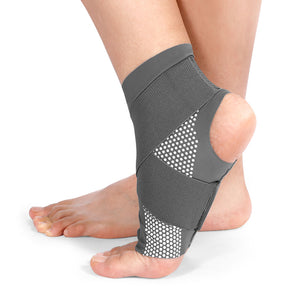
Best Ankle Support for Overpronation
- Black
- Grey
- Blue
- Pink
- Purple
- Black
- Orange
- Green
- Pink
- Black
- Red
- Blue
- Orange
How Do You Fix Overpronation in the Ankle?
Have you ever noticed the inner side of your shoe wearing down much faster than the outer edge? Or perhaps you experience unexplained leg fatigue, foot soreness, or joint stiffness after a long walk? You might be dealing with a very common gait abnormality known as overpronation.
Overpronation occurs when the foot rolls excessively inward during walking, running, or standing. This unnatural weight distribution causes the foot's arch to flatten and forces the ankle to deviate from its healthy, natural alignment. If ignored, this inward rolling can trigger a domino effect of joint and muscle problems throughout the body. It often leads to a range of chronic issues, including debilitating ankle pain, plantar fasciitis, shin splints, and even severe knee or lower back discomfort.
Addressing overpronation early on is crucial to prevent further injury, reduce daily joint strain, and dramatically improve your overall movement efficiency. Fortunately, there are several highly effective treatment options available today, each aimed at correcting abnormal foot motion and restoring proper biomechanical alignment.
Effective Strategies to Fix Overpronation
Correcting a collapsing arch and an inward-rolling ankle requires a multi-faceted approach. By combining proper footwear, targeted physical support, and alignment correction, you can train your feet to maintain a neutral stance.
1. Make Smart Footwear Adjustments
Proper shoes are the absolute foundation of overpronation treatment. Flimsy sneakers, flat sandals, and worn-out athletic shoes can easily exacerbate inward rolling. Instead, look for stability walking or running shoes that are specifically engineered to provide ample arch support.
Key features to look for include firm midsoles, reinforced heel counters, and a rigid midfoot bridge. These built-in stability elements help correct excessive inward rolling by physically guiding the foot into a more neutral position during your stride, effectively reducing strain on your ankles and lower legs.
2. Invest in Orthotic Inserts for Arch Support
Custom or over-the-counter orthotics can be incredibly effective in addressing overpronation and flat feet. These specialized insoles are designed to mimic and support the foot's natural arch, helping distribute body weight and pressure evenly across the entire sole.
By bolstering the arch from underneath, orthotic inserts act as a physical barrier that minimizes the inward roll. They can easily be swapped between your daily work shoes and your workout gear. For severe cases of pronation, a foot specialist can help create custom-molded orthotics tailored to the unique contours of your feet for maximum benefit and long-lasting pain relief.
3. Utilize Targeted Ankle Support
Sometimes, footwear and insoles need a little extra help to keep the ankle joint properly aligned, especially during physical activity, sports, or long shifts on your feet. The best ankle support for overpronation is typically an ergonomic ankle brace or compression sleeve that offers a precise balance of steadfast stability and dynamic flexibility.
These targeted supports help control the excessive inward roll of the foot by gently limiting erratic ankle motion while still allowing for natural, fluid movement. A well-designed ankle wrap or brace aligns the ankle and foot into a healthier, more neutral posture, providing immediate relief from joint pain and preventing further ligament damage. Modern ankle supports are crafted from highly breathable, lightweight materials, ensuring exceptional comfort for all-day wear while providing the necessary compression to address the underlying issue.
4. Incorporate Foot and Ankle Strengthening Exercises
While physical supports are excellent for immediate relief and alignment correction, strengthening the muscles that control your foot mechanics provides a long-term fix. Simple daily exercises can build up the intrinsic muscles of the feet and the stabilizing muscles around the ankle.
Movements such as calf raises, toe curls, towel scrunches, and targeted Achilles tendon stretches help reinforce the arch. A stronger, more muscular foot arch is far less likely to collapse under the body's weight, allowing your ankles to remain properly stacked and aligned.
Long-Term Benefits of Correcting Your Gait
Fixing your foot mechanics goes beyond simply eliminating current ankle pain; it is a vital preventative measure for your entire skeletal system. Every time your foot strikes the ground, your body has to absorb a significant amount of impact force. When overpronation throws your stride off balance, those shock waves travel unevenly up your legs, causing unnecessary wear and tear on your knees, hips, and spine.
By taking proactive steps to fix overpronation—such as utilizing stability shoes, arch-supporting orthotics, and proper ankle stabilization—you are actively protecting your body from premature joint fatigue. With the right adjustments, you can get back to running, walking, and enjoying your daily activities with confidence, comfort, and a perfectly aligned stride.