Shoulder Arthroscopy
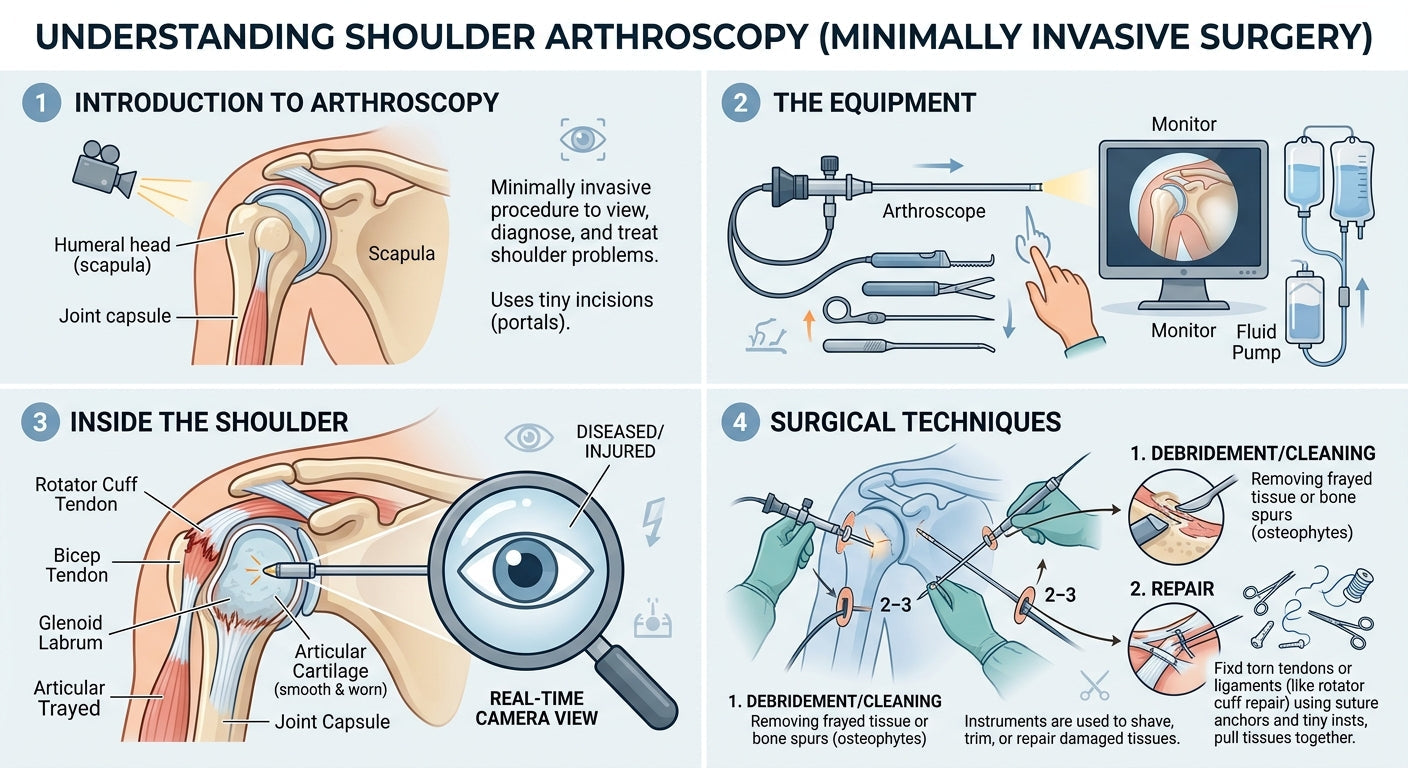
Shoulder arthroscopy is a sophisticated surgical technique that allows orthopedic specialists to diagnose and treat a wide range of shoulder problems with minimal invasiveness. Using small incisions, a miniature camera (arthroscope), and specialized instruments, this procedure provides a clear view of the joint without the need for large incisions. Patients often experience less pain, smaller scars, and a quicker return to daily activities compared to traditional open surgery.
When Is Shoulder Arthroscopy Recommended?
This minimally invasive procedure is typically considered when non-surgical treatments, such as physical therapy, rest, and medication, have not provided adequate relief. It's an effective option for various shoulder conditions.
Common reasons an orthopedic professional might recommend shoulder arthroscopy include:
- Rotator Cuff Tears: Repairing torn tendons in the group of muscles and tendons surrounding the shoulder joint. Many wonder whether a torn rotator cuff heals on its own, but significant tears often require surgical intervention. Post-surgery, a shoulder brace for a torn rotator cuff can provide essential support.
- Shoulder Impingement: Removing inflamed bursa or portions of bone that rub against the rotator cuff, causing pain and restricted movement. A shoulder impingement brace may be part of conservative or post-operative care.
- Labral Tears: Repairing tears in the labrum, the rim of cartilage around the shoulder socket, which can occur from trauma or repetitive motion.
- Shoulder Instability and Dislocations: Tightening stretched or torn ligaments that cause recurrent shoulder dislocations. A shoulder brace for dislocation can be crucial for stabilization and prevention. In some cases, a double compression shoulder brace may be considered for robust support.
- Inflammation: Removing inflamed joint lining (synovitis) or bursa (bursitis). Understanding bursitis and shoulder brace options can help manage certain symptoms.
- Cartilage Damage: Repairing or smoothing damaged cartilage surfaces within the joint.
- Removal of Loose Bodies: Extracting fragments of bone or cartilage that can cause pain and catching sensations.
- Frozen Shoulder (Adhesive Capsulitis): Releasing stiff scar tissue that restricts shoulder movement.

Compare the key benefits, quantified risks, and a typical 3–6-month recovery timeline to decide whether shoulder arthroscopy fits your treatment goals.
Recovery and Rehabilitation
Recovery after shoulder arthroscopy is a crucial phase that strongly affects the surgery's long-term success. Most patients go home the same day.
- Immediate Post-Op: You'll likely experience some pain, which you can manage with prescribed pain relief. Regular icing of the shoulder helps reduce swelling and discomfort. The sling is essential to immobilize the shoulder, protect the repair, and support early healing.
- Physical Therapy: This is a cornerstone of recovery. A tailored physical therapy program will begin shortly after surgery, often starting with gentle range-of-motion exercises. As healing progresses, exercises will advance to improve flexibility and strength and, ultimately, restore full shoulder function.
- Timeline: The overall recovery timeline varies widely based on the specific procedure performed, your general health, and your commitment to rehabilitation. While you may resume some light activities within weeks, a full return to strenuous activity or sports can take several months. It's common to wonder whether shoulder braces speed recovery, and while they offer support, consistent physical therapy remains key. Healing a sprained shoulder follows similar principles of rest, gradual movement, and strengthening, which also apply to post-surgical recovery. You might also need guidance on how to put on a shoulder brace correctly for optimal support during recovery.
-
Posted in
Shoulder pain