Shoulder Instability
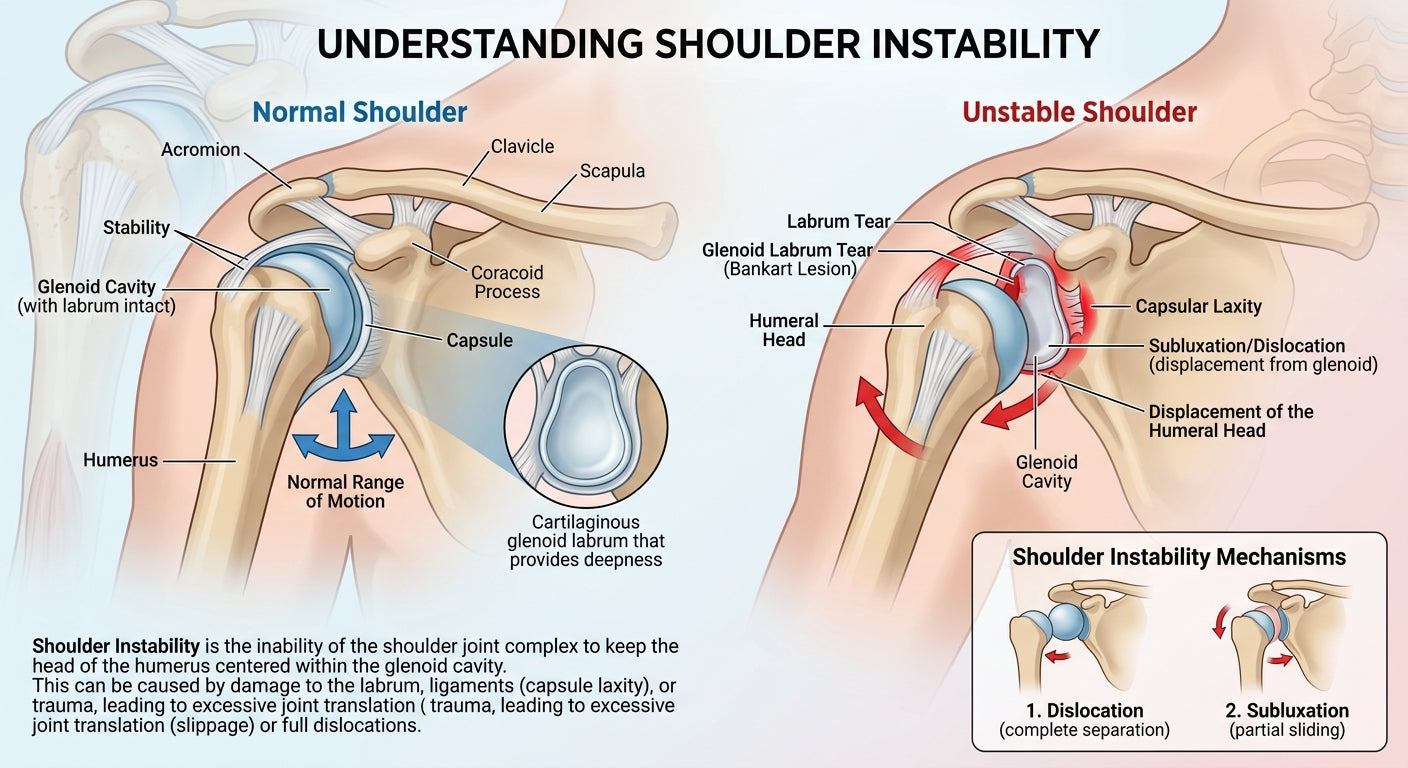
The shoulder is an incredibly mobile joint, allowing for a wide range of motion essential for daily activities, sports, and work. However, this mobility comes at a cost: a susceptibility to instability. Shoulder instability occurs when the structures surrounding the shoulder joint – including ligaments, the joint capsule, and muscles – are unable to keep the head of the humerus (upper arm bone) securely centered within the glenoid fossa (shoulder socket). This can cause looseness, pain, and a tendency for the shoulder to slip out of place, either partially (subluxation) or completely (dislocation).
The Complex Anatomy of the Shoulder
To understand shoulder instability, it's helpful to grasp the basic anatomy of this complex joint. The shoulder is a ball-and-socket joint, where the "ball" (head of the humerus) fits into a shallow "socket" (glenoid). This shallow design allows impressive mobility but relies heavily on surrounding soft tissues for stability. When these crucial components are compromised, the shoulder can become unstable.
Key components include:
- Glenoid Labrum: A rim of cartilage that deepens the socket, providing more stability.
- Joint Capsule: A fibrous sac that encloses the joint, reinforced by ligaments.
- Ligaments: Strong bands of tissue that connect bones and help hold the joint together.
- Rotator Cuff Muscles: A group of four muscles and their tendons that surround the shoulder joint, providing dynamic stability and facilitating movement. These muscles are key, and sometimes specific support, such as shoulder support for the rotator cuff, can help manage injuries in this area.
What Causes Shoulder Instability?
Common causes include:
- Traumatic Injury: A sudden, forceful event, such as a fall, a direct blow to the shoulder, or an injury sustained during sports (e.g., football, wrestling, rugby). This often leads to shoulder dislocation, which can damage the labrum, ligaments, or joint capsule and increase the likelihood of future dislocations.
- Repetitive Overhead Activities: Athletes involved in sports such as baseball, swimming, volleyball, or tennis may develop instability over time due to repeated stretching of the shoulder capsule and ligaments, even without a distinct traumatic event. This can make the joint lax.
- Ligamentous Laxity: Some individuals naturally have more flexible joints and looser ligaments, which can predispose them to instability.
- Prior Dislocations or Subluxations: Once a shoulder has dislocated, the risk of recurrence increases significantly because the initial damage to the stabilizing structures can be permanent.
- Shoulder Sprains: A sudden stretch or tear of the ligaments supporting the shoulder can also contribute to instability. Learning how to heal a sprained shoulder is an important part of preventing long-term issues.
Types of Shoulder Instability
Shoulder instability is broadly categorized into two main types, often referred to by the acronyms TUBS and AMBRI:
- Traumatic Unidirectional Bankart Surgery (TUBS): This type typically results from a specific, forceful injury that causes the shoulder to dislocate, usually forward (anteriorly). It's often associated with a Bankart lesion, which is a tear in the labrum at the front of the glenoid. Individuals with TUBS often require surgery to repair the damaged structures after an initial rehabilitation attempt.
- Atraumatic Multidirectional Bilateral Instability (AMBRI): This form of instability is not usually caused by a single traumatic event. Instead, it often involves generalized looseness or laxity of the shoulder joint, allowing it to dislocate or sublux in multiple directions (anterior, posterior, or inferior). It may affect both shoulders (bilateral) and often responds well to non-surgical approaches, particularly extensive physical rehabilitation.

Recognizing the Symptoms
The symptoms of shoulder instability can vary depending on the severity and type, but commonly include:
- Pain: Often sharp when the shoulder feels like it's slipping, or a dull ache after activity.
- Feeling of Looseness or "Dead Arm": A sensation that the shoulder is about to come out of its socket, or a sudden loss of strength and sensation.
- Repeated Dislocations or Subluxations: The most definitive symptom is when the shoulder completely or partially slips out of place.
- Apprehension: A feeling of fear or anxiety when the arm is moved into certain positions (e.g., overhead or abducted and externally rotated), anticipating that the shoulder might dislocate.
- Weakness: Difficulty performing tasks that require shoulder strength.
- Clicking or Catching Sensation: During movement, if there's damage to the labrum or other joint structures.
Treatment Approaches for Shoulder Instability
Non-Surgical Treatment
Many cases of shoulder instability, especially atraumatic types, respond well to conservative management.
- Rest and Activity Modification: Initially, avoid activities that provoke instability.
-
Physical Rehabilitation: A structured exercise program is often the cornerstone of non-surgical treatment. This focuses on:
- Strengthening: Targeting the rotator cuff muscles and scapular stabilizers to improve dynamic stability. For those wondering, do shoulder braces work for rotator cuff support? Many find them beneficial during recovery and activity.
- Proprioception Training: Exercises to improve the body's awareness of the shoulder's position in space, enhancing reflex stability.
- Range of Motion: Gradually restoring full, pain-free movement.
- Pain Management: Doctors may recommend over-the-counter pain relievers or anti-inflammatory medications. In some cases, doctors may consider injections.
- Supportive Garments: Using external support can be a key part of managing symptoms. Many ask: Do shoulder braces work to provide relief and stability? For some, a shoulder compression brace or specific shoulder compression sleeves provide stability and comfort. If you need a brace for shoulder instability, you have many options. For more comprehensive support, exploring the best double shoulder support brace options might be valuable, especially if you need a double shoulder brace for dislocations.
- Immobilization: After an acute dislocation, the shoulder may be temporarily immobilized in a sling to allow initial healing, though prolonged immobilization is generally avoided to prevent stiffness.
Surgical Treatment
If conservative treatments fail, or in cases of recurrent traumatic instability (like TUBS), surgery may be necessary. The goal of surgery is to repair the damaged structures and tighten the joint capsule to prevent further dislocations.
Rehabilitation After Treatment
Physical rehabilitation helps to:
- Restore Range of Motion: Gradually regain flexibility without compromising stability.
- Build Strength: Strengthen the muscles around the shoulder to better support the joint.
- Improve Stability and Control: Enhance neuromuscular control and proprioception to prevent recurrence.
- Facilitate Return to Activity: Guide the individual safely back to sports or daily activities.
Preventing Recurrence
- Strengthening Exercises: Regularly performing exercises that strengthen the rotator cuff and scapular muscles.
- Proper Technique: Using correct form in sports and weightlifting to avoid putting excessive stress on the shoulder.
- Warm-up and Cool-down: Preparing muscles for activity and aiding recovery.
- Listening to Your Body: Avoid movements or activities that cause pain or apprehension.
- Consider Protective Equipment: In sports where shoulder dislocation is common, a shoulder brace may help prevent it. Knowing how to wrap your shoulder effectively can also provide additional temporary support.
-
Posted in
Shoulder pain