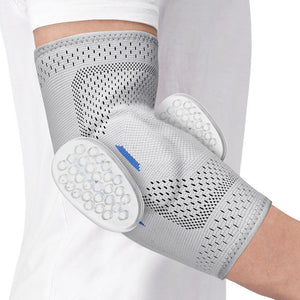
Elbow Brace for Hyperextension
- Black
- Grey
- Blue
- Purple
- Pink
- Black
- Dusty Blue
- Blue
- Pink
- White
- Pink
- White
- Yellow
- Purple
- Black
- Black
- Grey
- Grey
- Black
- Blue
- Grey
- Blue
- Black
- Black
- Blue
Do You Need a Brace for a Hyperextended Elbow?
A hyperextended elbow occurs when the elbow joint is forced to bend backward, extending far beyond its natural and safe range of motion. Whether this happens during high-impact sports, an awkward fall on an outstretched hand, or a sudden workplace accident, the result can immediately compromise your arm's function. The aftermath typically involves sharp pain, noticeable swelling, and a concerning sense of instability within the joint. As you navigate the initial stages of healing, a common and critical question arises: Is wearing a brace truly necessary to treat a hyperextended elbow?
Understanding Elbow Hyperextension and Its Symptoms
To determine the best course of action, it helps to understand how the injury works. Your elbow operates much like a hinge. When extreme force pushes that hinge past its normal 180-degree limit, the soft tissues, tendons, and crucial ligaments—such as the ulnar collateral ligament (UCL)—bear the brunt of the trauma.
Common symptoms of a hyperextended elbow include a distinct popping sound at the moment of impact, localized bruising, joint stiffness, and a decreased ability to bear weight. You might also experience a dull, throbbing ache that intensifies when you try to straighten your arm. Recognizing these signs early is vital to establish a proper recovery timeline and prevent chronic joint issues.
The Role of an Elbow Brace in Your Recovery
An elbow brace for hyperextension can be a game-changing part of your rehabilitation strategy. This specialized support is designed to limit excessive backward extension of the arm, providing much-needed structural support and stability to the compromised joint.
By physically restricting harmful movements, the brace acts as a protective barrier against further injury. This controlled environment lets damaged soft tissues, irritated tendons, and overstretched ligaments heal properly without being constantly re-aggravated by daily tasks.
Assessing the Severity of Your Injury
When considering whether to use protective arm gear, it is essential to honestly assess the severity of your hyperextension.
In mild cases—where you only feel a slight twinge and minimal swelling—conservative home treatments may suffice. Following the RICE method (Rest, Ice, Compression, and Elevation) with over-the-counter pain relief is often enough to support healing. In these minor cases, a rigid brace may not be necessary.
However, for moderate to severe hyperextension injuries characterized by significant pain, visible bruising, and ongoing joint instability, a brace becomes highly recommended. In these scenarios, the joint needs external support to maintain alignment and help the ligaments heal tightly rather than remain loose and overstretched.
Key Benefits of Wearing an Elbow Support
Utilizing a dedicated brace offers several distinct advantages throughout your recovery journey:
- Joint Stabilization: First and foremost, a brace securely stabilizes the elbow joint. This stability significantly reduces pain, allowing you to do everyday activities—like typing, lifting light groceries, or driving—with far less discomfort and a much lower risk of sudden reinjury.
- Optimized Healing Environment: Secondly, a supportive brace accelerates the natural healing process. By minimizing unintentional, jerky movements that could worsen the injury, it helps keep your recovery timeline on track.
- Restored Confidence: Finally, wearing a supportive garment provides immense psychological benefits. It gives active individuals the peace of mind and confidence to gradually increase their range of motion and return to physical therapy exercises as the healing progresses.
How to Choose the Right Brace for a Hyperextended Elbow
Choosing the right support is essential for effectively treating hyperextended elbow injuries. A high-quality brace should provide robust protection without cutting off circulation or feeling uncomfortably restrictive. Depending on your specific needs and the current stage of your recovery, there are a few primary styles to consider:
- Immobilizing Braces: Also known as immobilization splints, these are designed to completely limit all elbow movement. They are typically used in the days immediately after a severe injury to keep the joint completely still while acute inflammation subsides.
- Functional Hinged Braces: As your elbow begins to heal, you may transition to a functional brace. These advanced supports feature built-in hinges that prevent hyperextension while still allowing a safe, controlled range of flexion and extension. They are ideal for athletes looking to return to training safely.
- Compression Sleeves: For the final stages of recovery or very mild strains, a simple compression sleeve can provide gentle support, promote localized blood flow, and keep the joint warm without restricting your natural mobility.