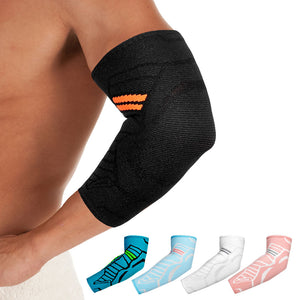
Tennis Elbow Compression Band
- Black
- Grey
- Blue
- Purple
- Pink
- Black
- Dusty Blue
- Blue
- Pink
- White
- Pink
- White
- Yellow
- Purple
- Black
- Black
- Grey
- Grey
- Black
- Blue
- Grey
- Blue
- Black
- Black
- Blue
Do Compression Bands Work for Tennis Elbow?
If you are experiencing a persistent, burning pain on the outside of your elbow, you might be dealing with tennis elbow. Medically classified as lateral epicondylitis, this common overuse injury affects the tendons that join your forearm muscles to the outside of your elbow joint.
Despite the condition's name, you do not need to be a professional racket sports player to develop it. Anyone who relies on repetitive arm, wrist, and hand motions—from carpenters, mechanics, and painters to everyday office workers, gamers, and weightlifters—can suffer from lateral epicondylitis. The discomfort can make simple daily tasks, like turning a doorknob, typing on a keyboard, or gripping a coffee cup, feel agonizing.
Fortunately, you have access to a variety of non-invasive remedies to alleviate your forearm pain. One of the most highly recommended solutions is a tennis elbow compression band. But how exactly do these supportive straps function, and do they actually help accelerate the healing process?
Understanding the Mechanics of Lateral Epicondylitis
Before exploring the treatment, it helps to understand the root cause of the pain. Tennis elbow arises from repeated contraction of the forearm muscles that you use to straighten and raise your hand and wrist. These repetitive motions and accumulated stress result in a series of micro-tears in the tendons that attach to the lateral epicondyle (the bony bump on the outer elbow).
Common lateral epicondylitis symptoms include:
- Pain radiating from the outside of your elbow down into your upper forearm and wrist.
- Weakened grip strength when shaking hands or holding objects.
- Increased discomfort and stiffness during morning routines or after a long day of repetitive arm use.
How Does an Elbow Support Strap Work?
A specialized forearm support strap is engineered to provide targeted stability and pressure to the upper arm muscles. Typically worn roughly one to two inches below the elbow joint, this supportive band works on a mechanical level by directly applying pressure to the extensor muscles and tendons.
When you wear a targeted arm strap, it effectively changes the angle at which the tendon pulls on the bone. By redistributing the forces exerted during physical activities, the band creates a new, temporary attachment point for the muscles. This mechanical action significantly reduces the pulling strain placed on the injured lateral epicondyle, allowing the micro-tears to rest and recover even while you continue some of your daily movements.
The Proven Benefits of Compression Therapy
Widespread observation and ergonomic studies have shown that targeted forearm compression is an excellent strategy for managing the frustrating symptoms of lateral epicondylitis. Here is why incorporating a supportive strap into your daily routine is beneficial for joint health:
1. Pain Reduction and Force Redistribution
By stabilizing the forearm and decreasing muscle vibration, the strap helps prevent early muscle fatigue. Lower fatigue and reduced tendon tension directly translate to immediate pain relief, especially when you are engaged in activities that demand a strong, sustained grip.
2. Improved Blood Circulation
The snug fit of a supportive strap provides therapeutic warmth and gentle compression. This combination naturally increases localized blood flow to the damaged tissue, supplying the essential oxygen and nutrients necessary for natural healing while simultaneously helping to reduce unwanted swelling and joint inflammation.
3. A Gentle Proprioceptive Reminder
Beyond the mechanical benefits, wearing an arm strap acts as a constant physical reminder to your brain. It makes you more aware of your arm positioning, helping you consciously avoid harmful, jerky movements that could easily exacerbate the tendon strain.
Complementary Treatments for Faster Recovery
While wearing an elbow strap is a highly effective way to mitigate discomfort and protect your arm, it is most beneficial when used as part of a comprehensive recovery plan. To fully resolve lateral epicondylitis and prevent future flare-ups, consider combining compression therapy with the following at-home treatments:
- Adequate Rest: Give your arm a break from the specific repetitive tasks that initially caused the injury. Modifying your workstation ergonomics can also prevent unnecessary strain.
- Ice Therapy: Applying a cold compress to the outer elbow for 15 to 20 minutes several times a day can rapidly reduce acute inflammation and numb sharp pain.
- Targeted Physical Therapy: Engaging in targeted stretching is crucial. A physical therapist can guide you through eccentric strengthening exercises tailored to your forearm muscles, building tendon resilience over time.
- Over-the-Counter Relief: Standard non-prescription anti-inflammatory options can be utilized as needed to manage sudden spikes in discomfort during the early stages of recovery.