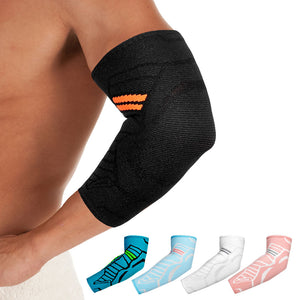
Tennis Elbow Clasp
- Black
- Grey
- Blue
- Purple
- Pink
- Black
- Dusty Blue
- Blue
- Pink
- White
- Pink
- White
- Yellow
- Purple
- Black
- Black
- Grey
- Grey
- Black
- Blue
- Grey
- Blue
- Black
- Black
- Blue
How Does a Tennis Elbow Clasp Work?
If you are experiencing a sharp ache on the outer part of your elbow, you might be dealing with lateral epicondylitis, commonly known as tennis elbow. Despite its name, this painful condition is not restricted to athletes swinging racquets on the court. Anyone engaged in repetitive arm motions—from typing at a computer desk and using power tools to painting a house or gardening—can easily develop it. A highly effective and non-invasive method for managing this daily discomfort is utilizing a tennis elbow clasp, which is also frequently referred to as a counterforce brace or a forearm band. But exactly how does this supportive device help alleviate pain and promote tissue healing?
Understanding the Root Cause of Outer Elbow Pain
To understand the solution, we must first look at the problem. Tennis elbow results from chronic overuse of the forearm muscles and tendons responsible for extending your wrist and lifting your fingers. Repeated stress causes micro-tears and stubborn inflammation in the tendon right where it attaches to the lateral epicondyle—the prominent bony bump on the outside of your elbow. This repetitive strain injury leads to localized tenderness, a weakened grip, and sharp, shooting pain during everyday tasks.
The Biomechanics: How a Forearm Brace Provides Relief
A tennis elbow clasp is scientifically engineered to mitigate the heavy strain placed on your vulnerable forearm muscles and tendons. Instead of completely immobilizing the arm, this specialized band works through several key biomechanical mechanisms to speed up your recovery and get you back to your active lifestyle.
Targeted Pressure and Stress Redistribution
The primary function of a counterforce brace is to apply focused, targeted pressure directly to the upper forearm muscles. By tightly compressing the muscle belly, the brace acts as a secondary, artificial "attachment point" for the tendon. When you grip an object, lift your wrist, or rotate your arm, the mechanical tension is absorbed by the band rather than pulling directly on the inflamed epicondyle. This vital redistribution of mechanical stress provides an immediate reduction in joint load, protecting the injured tissue from further micro-trauma.
Enhanced Muscle Stabilization
Wearing a forearm strap provides essential stabilization during physical activity. The localized compression minimizes muscle vibration and limits the excessive expansion of the forearm muscles when they contract under load. By gently restricting harmful ranges of motion just enough to prevent tendon irritation, the clasp creates an optimal, stable healing environment for the arm while still allowing you to perform your necessary daily tasks.
Proper Placement: How to Wear Your Support Band Correctly
The effectiveness of any joint support relies heavily on proper placement. A common mistake many individuals make is placing the band directly over the painful elbow joint itself. Instead, a tennis elbow clasp should be positioned approximately one to two inches below the elbow crease, resting directly over the widest and fleshiest part of the upper forearm muscle.
It needs to be snug enough to apply firm, noticeable pressure when you clench your fist, but it should never be so tight that it restricts blood circulation, causes throbbing, or leads to numbness in your hand or fingers. Achieving this perfect, comfortable fit ensures you can wear the brace continuously throughout the workday or during rigorous recreational sports without any negative side effects.
A Comprehensive Approach to Lateral Epicondylitis Recovery
While an elbow strap is a powerful aid in pain management, it is crucial to recognize that it is not a standalone cure. For long-term relief and complete tendon repair, wearing a tennis elbow clasp should ideally be integrated into a broader, multi-faceted rehabilitation strategy.
- Active Rest and Activity Modification: Give your arm a break from the specific repetitive motions and heavy lifting that triggered the initial flare-up.
- Cold Therapy: Applying ice packs to the outer elbow for short periods can significantly reduce acute swelling and sharp, stabbing nerve pain.
- Targeted Physical Therapy: Engaging in specific stretching and strengthening exercises designed for the forearm, wrist, and shoulder will rebuild tendon resilience, increase flexibility, and prevent future repetitive strain injuries.