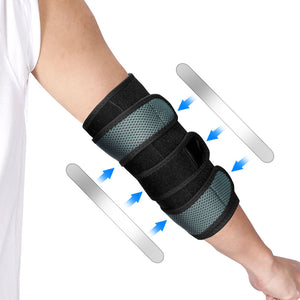
Brace for Tennis Elbow Pain
- Black
- Grey
- Blue
- Purple
- Pink
- Black
- Dusty Blue
- Blue
- Pink
- White
- Pink
- White
- Yellow
- Purple
- Black
- Black
- Grey
- Grey
- Black
- Blue
- Grey
- Blue
- Black
- Black
- Blue
Is There a Brace to Help with Tennis Elbow?
Yes, there are specialized supports specifically designed to alleviate the nagging discomfort of tennis elbow. Also known as lateral epicondylitis, this common condition stems from overuse, repetitive strain, or microtearing of the tendons in your forearm. As a manager of a premier tennis facility, I have seen firsthand how debilitating this injury can be. When players experience sharp twinges from repetitive motions, improper stroke technique, or simply from hours spent on the court, I highly recommend using a tennis elbow brace to help manage symptoms and keep them active.
Understanding Lateral Epicondylitis
Tennis elbow occurs when the extensor carpi radialis brevis (ECRB) tendon becomes inflamed due to repetitive stress. Despite its name, you do not have to be a professional racket sports athlete to develop this condition. Everyday activities that require repetitive gripping, twisting, or lifting—such as golfing, gardening, typing at a desk, carpentry, or weightlifting—can easily trigger outer elbow discomfort.
Because the pain is typically localized around the lateral epicondyle (the bony bump on the outer part of the elbow), finding targeted relief is crucial. Ignoring the early signs of forearm tendonitis can lead to chronic inflammation, reduced grip strength, and a longer recovery timeline.
How Counter-Force Arm Supports Work
You might wonder how a simple strap around your arm can effectively resolve joint and tendon discomfort. The secret lies in counter-force compression. When you wear a high-quality brace for tennis elbow pain, it serves as a secondary attachment site for the muscles. By applying targeted pressure directly below the elbow joint, the strap absorbs the kinetic energy and stress that would normally travel up the forearm and irritate the damaged tendon.
Key Features of an Effective Forearm Strap
To get the most out of your recovery gear, it is important to understand what makes these accessories so effective:
- Targeted Compression Pads: Many modern supports include strategically placed EVA foam padding or gel cushions that press gently against the extensor muscle. This specific targeting helps to offload mechanical stress and rapidly reduces localized inflammation.
- Adjustable Hook-and-Loop Fasteners: Because arm sizes and swelling vary, an adjustable strap lets you customize the level of compression. You want a snug fit that supports the forearm without cutting off healthy blood circulation.
- Breathable Materials: Moisture-wicking, skin-friendly fabrics ensure that athletes and active individuals can wear the support comfortably during intense physical exertion or long hours at the office.
Staying Active While Healing
One of the greatest advantages of using targeted forearm compression is that it allows athletes and hobbyists to maintain their active lifestyles. Wearing a strap during practice sessions, league games, or heavy lifting helps minimize further irritation of the forearm tendons. By redistributing the workload away from the injured area, athletes can confidently swing a racket, grip a club, or lift weights while their body naturally heals.
For individuals with a history of recurrent elbow issues, using these supports is an effective preventive measure. Proactively wearing a band during high-stress activities can stop micro-tears from forming in the first place, keeping you off the sidelines and in the game.
Comprehensive Recovery Strategies
While an elbow strap is a highly effective tool, it should be part of a broader approach to wellness and injury recovery. Ultimately, integrating a brace for tennis elbow pain into a holistic rehabilitation routine yields the best and fastest results.
Essential Tips for Maximum Relief:
- Prioritize Rest and Recovery: Give your arm adequate time to heal by temporarily stepping back from the specific activities that caused the strain.
- Incorporate Proper Warm-Ups: Never jump straight into vigorous activity. Dynamic stretches that target the wrists, forearms, and shoulders increase blood flow and prepare your tendons for repetitive loads.
- Refine Your Technique: Many racket sports injuries stem from improper form, such as leading with the elbow on a backhand stroke. Working with a certified coach to adjust your mechanics can eliminate unnecessary strain on your arm.
- Strengthen the Muscles: Once the initial inflammation has subsided, engaging in light resistance training to strengthen your forearm flexors and extensors will build a stronger, more resilient arm.
By combining targeted compression with smart physical habits, you can overcome tennis elbow and return to your favorite activities stronger and pain-free.