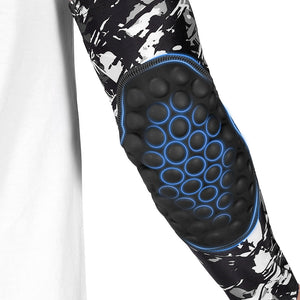
Counterforce Brace for Golfers Elbow
- Black
- Grey
- Blue
- Purple
- Pink
- Black
- Dusty Blue
- Blue
- Pink
- White
- Pink
- White
- Yellow
- Purple
- Black
- Black
- Grey
- Grey
- Black
- Blue
- Grey
- Blue
- Black
- Black
- Blue
What is a Counterforce Elbow Brace?
If you have ever experienced a sharp, aching pain shooting down your forearm after swinging a golf club, playing a vigorous game of tennis, or even typing for hours at your desk, you are likely dealing with a repetitive strain injury. To address this widespread issue, many people turn to a specialized orthopedic support called a counterforce elbow brace.
Designed to relieve debilitating pain and discomfort associated with forearm and joint injuries, this wearable tool is highly recommended for athletes, weightlifters, and everyday professionals who perform repetitive arm motions. This brace plays a critical role in managing, recovering from, and preventing common inflammatory conditions, most notably lateral epicondylitis (tennis elbow) and medial epicondylitis (golfer's elbow).
The Mechanics: How a Forearm Strap Works
The term "counterforce" perfectly describes the brace's biomechanical function. Instead of fully immobilizing the joint, the strap sits tightly around the thickest part of the forearm, just below the elbow crease.
By applying targeted, localized pressure to the forearm muscles, the strap effectively acts as a secondary anchor point. It redistributes the sheer forces and tension exerted on the tendons during movement. By doing so, the brace intercepts the stress before it can travel up to the already inflamed epicondyle—the bony prominence on the outside or inside of your elbow. This reduced tension during elbow flexion, extension, and gripping motions significantly eases strain on the injured soft tissue.
Targeting Inner Arm Pain: Medial Epicondylitis
While these straps are well known for treating tennis elbow, they are equally useful for those with inner elbow pain. Medial epicondylitis, commonly referred to as golfer's elbow, is characterized by inflammation, micro-tears, and tenderness in the tendons that connect the flexor and pronator muscles of the forearm to the inner bony bump of the elbow.
This condition is frequently exacerbated by repetitive gripping, lifting, and swinging motions. It is highly prevalent not just in golf, but also among tennis players, bowlers, baseball pitchers, and enthusiasts of America’s fastest-growing sport, pickleball.
Using a counterforce brace for golfer's elbow is an effective way to manage these symptoms. When fastened correctly, this specific variant compresses the affected flexor tendons. Many modern designs incorporate integrated cushioning elements, such as gel pads or air pockets, to absorb vibration and shock during physical activity. This precise adjustment significantly reduces the localized strain on the inner elbow joint, actively promoting cellular healing while allowing the athlete to continue enjoying their favorite sports with minimal discomfort.
Biomechanical Correction and Posture Awareness
Beyond simple pain relief and shock absorption, the brace serves a secondary, often overlooked psychological function: it acts as a constant physical reminder to maintain proper mechanics.
When athletes or manual laborers experience chronic pain, they naturally develop poor compensatory movement patterns to avoid hurting themselves. These altered mechanics can lead to secondary injuries in the wrist, shoulder, or back. The brace supports better biomechanics by improving proprioception—the body's awareness of its position in space. By gently limiting the extreme ranges of motion that place dangerous stress on the arm, the support strap teaches the wearer safer, more efficient movement strategies.
Essential Tips for Wearing Your Support Correctly
To get the most out of your orthopedic accessory, correct placement is vital. If you position it incorrectly, you won't get the desired pain relief.
- Placement: Slide the strap onto your forearm and position it approximately one to two inches below the painful bony bump of your elbow.
- Pressure Pad: If your strap has a raised compression pad, make sure it rests directly over the muscle belly that attaches to the painful tendon.
- Tightness: Fasten the strap so it is snug and applies firm pressure when you flex your muscles, but not so tight that it restricts blood flow or causes numbness in your fingers.
A Comprehensive Approach to Tendon Recovery
While this orthopedic accessory is incredibly beneficial for immediate pain management, it is not a standalone magic cure. True recovery from a repetitive strain injury requires a holistic, multi-faceted approach.
For best results, use the brace alongside other conservative therapeutic strategies. These include guided physical therapy, targeted wrist extensor and flexor stretching, deep-tissue massage, and progressive strengthening exercises tailored to your specific physical needs. Additionally, applying ice after rigorous activities can help keep localized inflammation at bay.
Consult a licensed healthcare professional, physical therapist, or sports medicine specialist before starting any new rehabilitation routine. They can ensure the strap fits properly and accurately diagnose your pain to rule out underlying issues, such as nerve entrapment or ligament tears, which may require different treatment strategies.
Get Back to Your Active Lifestyle
Living with chronic arm pain does not mean you have to give up your favorite hobbies or struggle through your workday. A counterforce elbow brace is a practical, cost-effective, and highly efficient tool for managing epicondylitis. By providing essential structural support, dampening harmful vibrations, and offering immediate pain relief during activities, it serves as a cornerstone of joint rehabilitation. Whether you are an amateur weekend golfer, a dedicated weightlifter, or someone who spends hours typing at a keyboard, adding this simple yet powerful tool to your daily routine can dramatically improve your performance and speed your journey to a pain-free life.