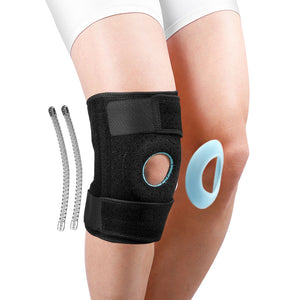
Strong Ankle Support
- Black
- Grey
- Blue
- Pink
- Purple
- Black
- Red
- Blue
- Orange
- Black
- Orange
- Green
- Pink
How Long Does It Take to Build Ankle Stability?
Ankle stability is the critical foundation of our overall mobility. Whether you are an avid runner, a weekend athlete, or someone who simply enjoys a leisurely neighborhood stroll, resilient joints are essential for preventing painful injuries. If you have ever suffered from a rolled ankle or struggle with chronic weakness, you are likely asking a very common question: how long does it actually take to build lasting ankle stability?
Generally, the timeline to develop robust ankle stability can vary widely depending on the individual. However, for most people, noticeable improvements in strength, balance, and joint confidence can be seen within six to twelve weeks of consistent training and rehabilitation.
To help you optimize your recovery and injury-prevention strategy, let us dive deeper into the factors that influence this timeline, the anatomy of your joints, and the most effective methods for strengthening weak ankles.
Factors That Influence Your Ankle Stability Timeline
While the standard six-to-twelve-week window is a great baseline, several personal factors will dictate exactly how long your journey takes:
- Pre-Existing Conditions: If you are recovering from a severe sprain or suffer from chronic ankle instability (CAI), your ligaments may take longer to heal and tighten compared to those of someone who is simply out of practice.
- Age and Fitness Level: Younger individuals or those with a higher baseline of fitness often experience faster muscle adaptation. However, older adults can still achieve excellent stability with dedicated, low-impact training.
- Consistency of Training: Doing rehabilitation exercises once a week will yield much slower results than following a dedicated routine two to three times per week.
Understanding Ankle Anatomy and Chronic Instability
The journey to building resilient lower legs begins with a basic understanding of ankle anatomy. The ankle joint complex consists of bones, ligaments, tendons, and muscles that must work in perfect harmony to enable smooth movement.
Stability is primarily provided by the ligaments (the tough bands of tissue connecting bone to bone) and the surrounding muscles that support the joint, such as the calves and peroneals. When you suffer an injury, such as an inversion sprain, these ligaments can be overstretched or torn. Weakness in either the ligaments or the surrounding muscular structures leads to mechanical instability, drastically increasing your risk of recurrent sprains and strains.
The Best Exercises for Ankle Strengthening
To start building dynamic ankle stability and accelerate your six-to-twelve-week timeline, you must incorporate exercises that target mobility, strength, and balance.
Range of Motion Exercises
Before you can build strength, you need a healthy range of motion. Simple movements like ankle circles or "writing" the alphabet in the air with your big toe can help lubricate the joint, increase blood flow, and improve baseline mobility.
Targeted Strength Training
Strengthening the muscles around the lower leg acts as an internal brace for your joints. Effective strength exercises include:
- Calf Raises: Standing on flat ground or on the edge of a step, press up onto your toes.
- Toe Raises (Dorsiflexion): Lifting your toes toward your shins to strengthen the anterior tibialis.
- Resistance Band Work: Using bands to provide resistance while pushing your foot inward, outward, backward, and forward.
Balance and Proprioception Training
Proprioceptors are sensory receptors located deep within your joints and muscles. They act as your body’s internal GPS, telling your brain exactly where your joint is in space. When you injure an ankle, these receptors get damaged, which is why your balance suffers.
You can retrain these receptors through balance exercises. Start by simply standing on one leg for thirty seconds. As you progress, you can introduce unstable surfaces like balance boards, foam pads, or rolled-up towels to further challenge your proprioception and enhance your awareness of joint positioning.
The Role of External Support in Your Rehabilitation
During the initial stages of your stability training, or when you are transitioning back into high-impact sports and daily physical activities, relying on strong ankle support can be incredibly beneficial.
Supportive wraps, sleeves, and proper footwear provide vital external stability, keeping the joint aligned and preventing the overextension or excessive lateral movement that often leads to re-injury. However, it is essential to view these external supports as a temporary bridge rather than a permanent crutch. As your intrinsic muscles strengthen and your natural balance improves over the weeks, you should gradually reduce your reliance on external aids during routine activities.
Consistency is the Key to Success
Rebuilding weak joints is not an overnight process, and consistency is the most important component of your journey. Aim to engage in your targeted strength and stability training exercises at least two to three times a week.
As you follow this structured routine, you will notice your muscles strengthening, your balance improving, and your confidence returning. This methodical process ensures that your ankle becomes robust enough to handle everything from uneven hiking trails to demanding sports.
While the timeline for building ankle stability can vary from person to person, a focused, proactive approach that combines strength training, balance exercises, and appropriate external support can lead to significant, life-changing improvements within a few months. Always remember to listen to your body, avoid pushing through sharp pain, and consult a healthcare professional if you experience prolonged discomfort. With dedication and the right strategy, you can achieve resilient ankle stability that supports an active, pain-free lifestyle for years to come.