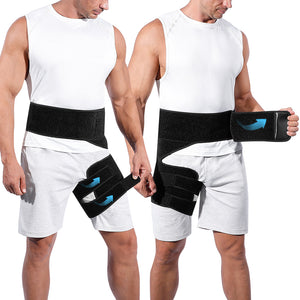
Ankle Instability Brace
- Black
- Grey
- Blue
- Pink
- Purple
- Black
- Orange
- Green
- Pink
- Black
- Red
- Blue
- Orange
How do you fix ankle instability?
Have you ever stepped off a curb or pivoted during a workout, only to feel your ankle suddenly give out beneath you? This frustrating and often painful sensation is the hallmark of ankle instability. Most commonly resulting from a history of previous sprains or untreated injuries, this condition leaves the joint feeling chronically weak and highly susceptible to repeated rolling or twisting.
If left unaddressed, chronic ankle instability can significantly impact your active lifestyle, making simple tasks like walking on uneven surfaces or participating in recreational sports feel like a risky endeavor. Fortunately, fixing this issue does not always mean a lengthy recovery on the couch. By adopting a comprehensive, multi-step approach that focuses on rehabilitation and strategic support, you can rebuild strength and regain total confidence in your footing.
Understanding the Root Causes of Weak Ankles
To effectively fix the problem, it helps to understand why your ankles feel like they are giving way. When you suffer an initial ankle sprain, the ligaments—the strong bands of tissue that connect your bones—stretch or tear. If these ligaments do not heal correctly, or if you rush your recovery, they remain loose.
This laxity compromises the structural integrity of the joint. Furthermore, the nerves within the ligaments that communicate with your brain about the ankle's position can become damaged. This disrupts your body's natural balance mechanisms, creating a vicious cycle of rolling, pain, and further ligament damage. Breaking this cycle requires a targeted action plan.
The Best Approaches to Fix Ankle Instability
Recovering from wobbliness and chronic joint weakness requires dedication to a three-pronged strategy: building muscular strength, retraining your body's spatial awareness, and utilizing the right external support structures.
Targeted Strengthening Exercises
Since the ligaments may be permanently stretched, you must rely on the surrounding muscles to act as dynamic stabilizers for the joint. A robust physical conditioning routine should target the calves, the peroneal muscles (along the outside of the lower leg), and the intrinsic muscles of the foot.
- Calf Raises: Standing on a flat surface or the edge of a step, slowly raise your heels to stand on your tiptoes, then lower them back down with control. This builds the foundational strength needed for pushing off the ground safely.
- Resistance Band Work: Loop a resistance band around your foot and anchor the other end to a heavy piece of furniture. Practice pointing your toes away, pulling them toward you, and sweeping your foot from side to side against the tension. This specifically isolates and strengthens the exact muscles responsible for preventing the ankle from rolling outward.
- Towel Scrunches: While seated barefoot, place a hand towel flat on the floor in front of you. Use only your toes to grab and scrunch the towel toward you. This fortifies the arch of the foot, providing a better foundation for the ankle above it.
Proprioceptive Training for Balance
Proprioception is your body's subconscious ability to sense its position in space. After an injury, this communication pathway becomes sluggish. Proprioceptive training focuses on retraining your brain and nervous system to react rapidly to sudden changes in terrain, ultimately preventing future twists.
- Single-Leg Stands: Begin by simply standing on your unstable leg for 30 to 60 seconds. Once this becomes easy, increase the difficulty by closing your eyes or tossing a tennis ball against a wall and catching it.
- Balance Board Exercises: Using a wobble board or a foam balance pad forces your lower leg muscles to make constant, micro-adjustments to keep you upright. Spending just ten minutes a day on a balance board can drastically improve your neuromuscular control.
Utilizing External Joint Support
While rehabilitation exercises are the key to long-term joint health, your ankle needs protection while you rebuild that strength, especially when you are navigating daily commutes, hiking uneven trails, or returning to the gym.
Wearing a high-quality Ankle instability brace provides crucial additional support during any physical activity. A well-designed brace acts as an external ligament, stabilizing the joint and absorbing the shock of abrupt movements. By limiting excessive side-to-side motion (inversion and eversion) while still allowing for a normal forward-and-backward range of motion, the right brace significantly reduces the chances of suffering another sprain. It grants you the peace of mind needed to stay active, which encourages better blood flow and ultimately promotes a quicker, safer recovery.
Lifestyle Adjustments for Long-Term Ankle Health
Beyond exercises and bracing, fixing ankle instability involves making smart daily choices. Always ensure you are wearing properly fitted, supportive footwear tailored to your specific activity—avoid unsupportive flat shoes or excessively high heels if you know you are prone to rolling your ankles. Additionally, always incorporate a proper warm-up routine before engaging in strenuous physical activities to ensure your muscles and joints are primed for movement.
By consistently combining targeted strengthening workouts, daily balance training, and the strategic use of supportive bracing, you can effectively manage and reverse ankle instability. This proactive approach will help you break free from the cycle of chronic sprains, drastically improve your lower body function, and confidently get back on your feet.