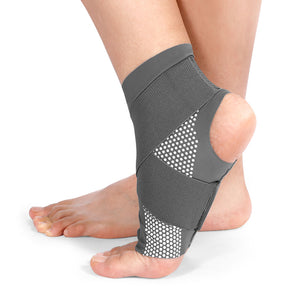
Best Ankle Brace For Soccer
- Black
- Grey
- Blue
- Pink
- Purple
- Black
- Red
- Blue
- Orange
- Black
- Orange
- Green
- Pink
What Do Soccer Players Wear on Their Ankles?
Soccer is a dynamic and physically demanding sport that requires explosive sprints, rapid changes of direction, and aggressive tackles. Because of these intense movements on the pitch, players' lower extremities are highly susceptible to injury. So, what do soccer players wear on their ankles to stay in the game and avoid being sidelined? From amateur local leagues to the professional stage, athletes rely on a variety of supportive soccer gear essentials to protect their joints, prevent painful sprains, and maintain peak athletic performance.
The Importance of Ankle Protection in Soccer
The constant pivoting, jumping, and striking involved in soccer put immense stress on the ligaments. A rolled or sprained ankle is one of the most common setbacks an athlete can face during a season. To counteract this, wearing proper ankle protection has become a standard part of a player's uniform, right alongside shin guards and cleats. Providing joint stability not only helps prevent physical injuries but also gives players the mental confidence to tackle hard and maneuver through defenders without hesitation.
Top Ankle Support Options for Soccer Players
Depending on their specific physical needs and injury history, athletes choose from several reliable options to keep their joints secure during rigorous soccer matches and training sessions.
1. Traditional Lace-Up Designs
For athletes recovering from a previous injury or those who naturally have weaker joints, maximum stability is a top priority. These supports feature a traditional shoelace design that allows the user to adjust the tightness for a snug, customized fit. By firmly wrapping around the foot and lower leg, Lace-up ankle braces severely limit excessive joint movement, preventing the foot from rolling awkwardly during a high-speed pivot. This rigid protection is often favored by central defenders and physical midfielders who require steadfast joint security against aggressive challenges on the turf.
2. Flexible Compression Sleeves
Not every player wants rigid support; many offensive players prioritize a full, unhindered range of motion. Elastic sleeves, often crafted from flexible, stretchy materials like neoprene, offer a brilliant balance between mobility and protection. They deliver consistent compression around the joint, which is highly effective in increasing blood flow, keeping the muscles warm, and reducing swelling. Choosing an adjustable elastic ankle support is an excellent strategy for players dealing with a minor tweak or localized soreness, or for those who simply want a lightweight, preventive layer of security without sacrificing their agility and footwork speed.
3. Athletic Taping and Fabric Wraps
Another incredibly popular method seen in locker rooms is the use of long, stretchable fabric wraps. Athletic trainers or the players themselves frequently apply these wraps to provide a highly customized layer of stability. A properly applied Sports ankle support bandage actively restricts unwanted inward rolling (inversion) or outward rolling (eversion) while naturally enhancing proprioception—the body's subconscious ability to sense its position in space. This heightened awareness helps athletes control their foot placement much better on uneven grass. While they are highly effective for mild sprains or extra game-day confidence, proper wrapping technique is vital. If applied too tightly, they can restrict blood circulation; if wrapped too loosely, they lose their protective benefits entirely.
How Players Choose the Right Ankle Gear
Deciding exactly what to wear under those long soccer socks comes down to a few critical, personalized factors:
- Injury History: Chronic issues and frequent sprains might warrant maximum, rigid security, while a fully healthy athlete might only use light compression for peace of mind.
- Playing Position: Wingers and forwards who rely on blazing speed, rapid acceleration, and delicate ball control often prefer lightweight, flexible options. In contrast, goalkeepers and center-backs might prioritize heavy-duty stability to withstand high-impact collisions.
- Comfort and Cleat Fit: Any supportive gear worn must fit comfortably inside a snug soccer cleat. It should never cause debilitating blisters or alter the player's natural running gait.
Selecting the right ankle protection is a highly personal choice. By understanding the sport's rigorous physical demands and listening closely to their bodies, soccer players can select the right supportive gear to stay aggressive, agile, and, most importantly, injury-free throughout the entire competitive season.